Color differentiation Math Worksheets for Ages 5-6
3 filtered results
-
From - To
Welcome to our Color Differentiation Math Worksheets for Ages 5-6! These engaging worksheets are designed to help young learners develop essential math skills through color recognition and application. With a variety of fun and interactive activities, children will practice identifying colors while exploring basic math concepts like counting and sorting. Our thoughtfully crafted worksheets encourage creativity and critical thinking, making learning an enjoyable experience. Perfect for use at home or in the classroom, these resources will help build a strong foundation in math and enhance color differentiation skills. Get ready for a colorful math adventure that fosters learning and curiosity!
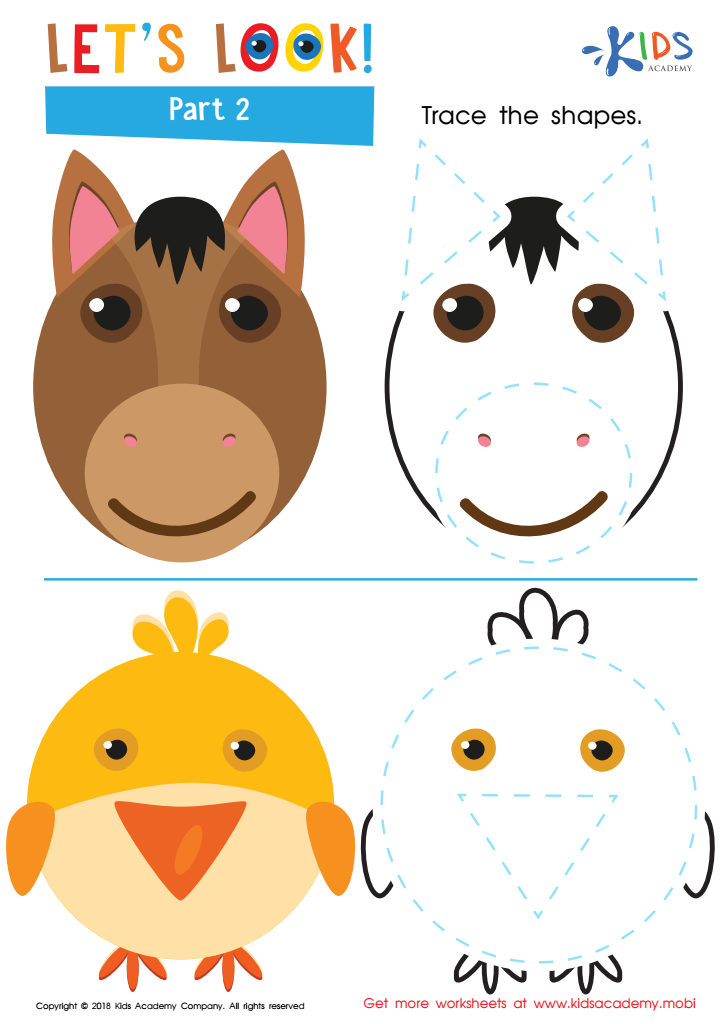
Let's Look! Part 2 Worksheet
 Assign to My Students
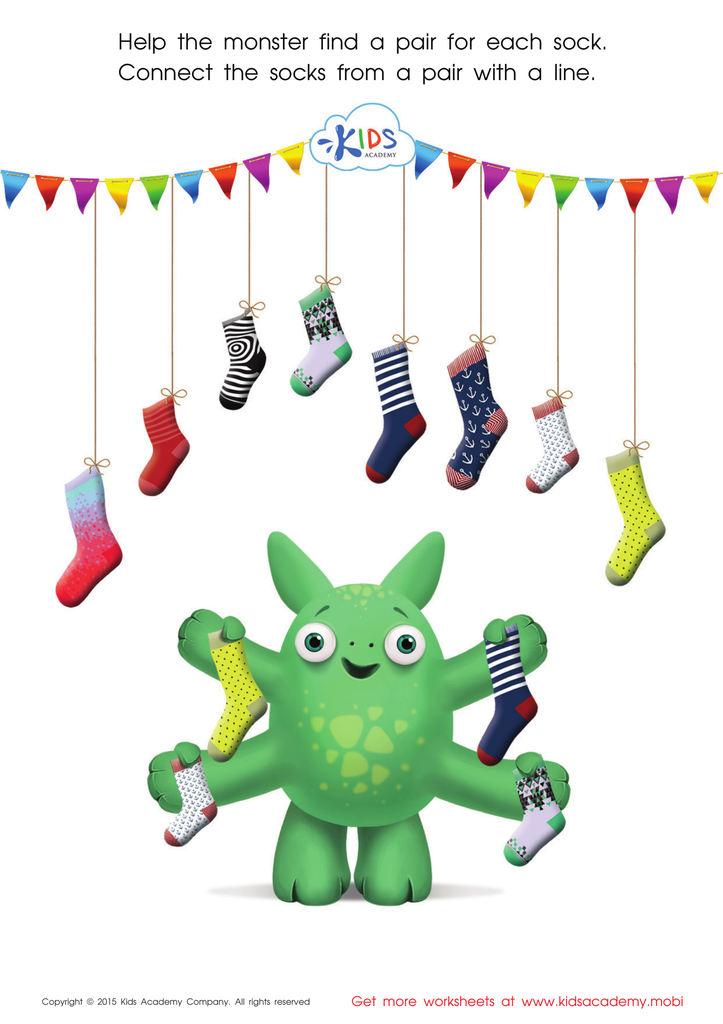
Math Matching Pairs Game: Monsterв's Socks Worksheet





.jpg)


Color differentiation plays a crucial role in math education for children ages 5-6. At this developmental stage, children are naturally curious and learn best through engaging, multi-sensory experiences. Integrating color into math concepts helps create a visual and tangible connection, making abstract ideas more concrete. For instance, using colored counters or blocks to represent numbers not only aids in counting but also enhances recognition and differentiation of quantities.
Moreover, incorporating color into mathematical activities fosters cognitive development. By associating specific colors with certain quantities or shapes, children improve their categorization and relational understanding. This technique supports problem-solving skills as students learn to identify patterns and relationships in numerical data.
Additionally, color differentiation can make learning fun and motivate young learners. Bright colors often capture children's attention, keeping them engaged and excited about math activities. It promotes an enjoyable learning atmosphere, reducing anxiety around math and encouraging exploration and experimentation.
Last but not least, color vocabulary can enhance language skills, encouraging communication about math concepts. For parents and teachers, adopting color differentiation in math not only enriches children’s understanding but also cultivates a love for learning that can last a lifetime.








