Comparison Skills Math Worksheets for Ages 5-6
6 filtered results
-
From - To
Enhance your child's mathematical understanding with our "Comparison Skills Math Worksheets" designed for ages 5-6! These engaging and interactive worksheets focus on fundamental comparison concepts, helping young learners differentiate between quantities, sizes, and values. Activities include matching, sorting, and visual comparisons, fostering critical thinking and boosting confidence in math. Each worksheet is crafted to captivate young minds, making learning fun and effective. With our resources, children will develop essential skills that lay the groundwork for more advanced mathematics. Explore our comprehensive collection and watch your child thrive as they build their comparison skills with ease and excitement!
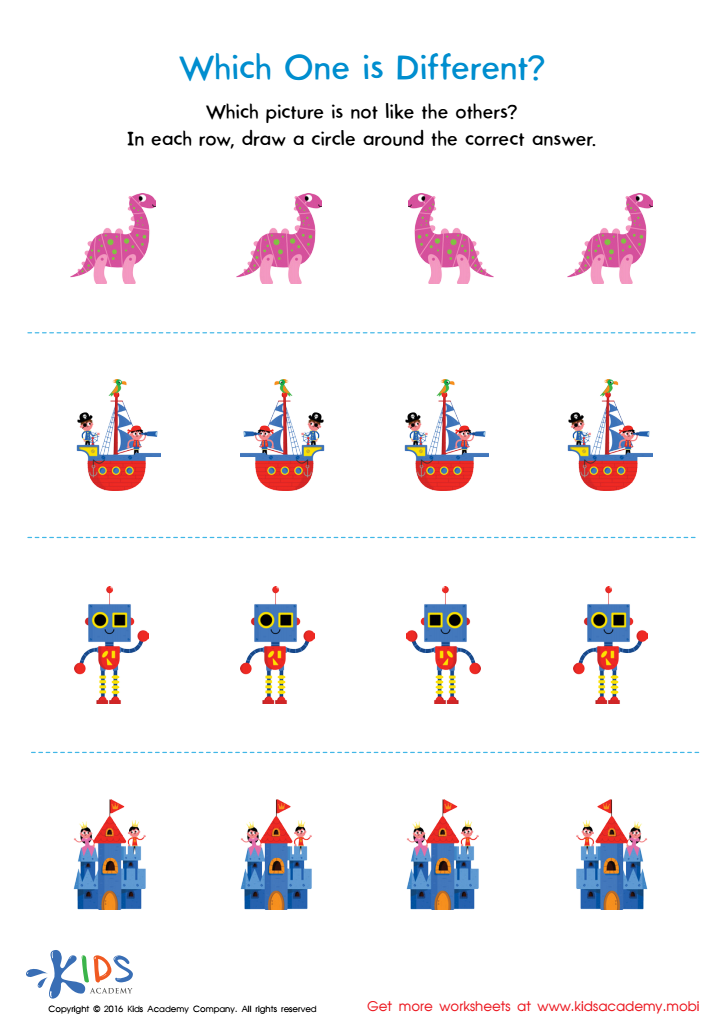
Which One Is Different Worksheet
 Assign to My Students
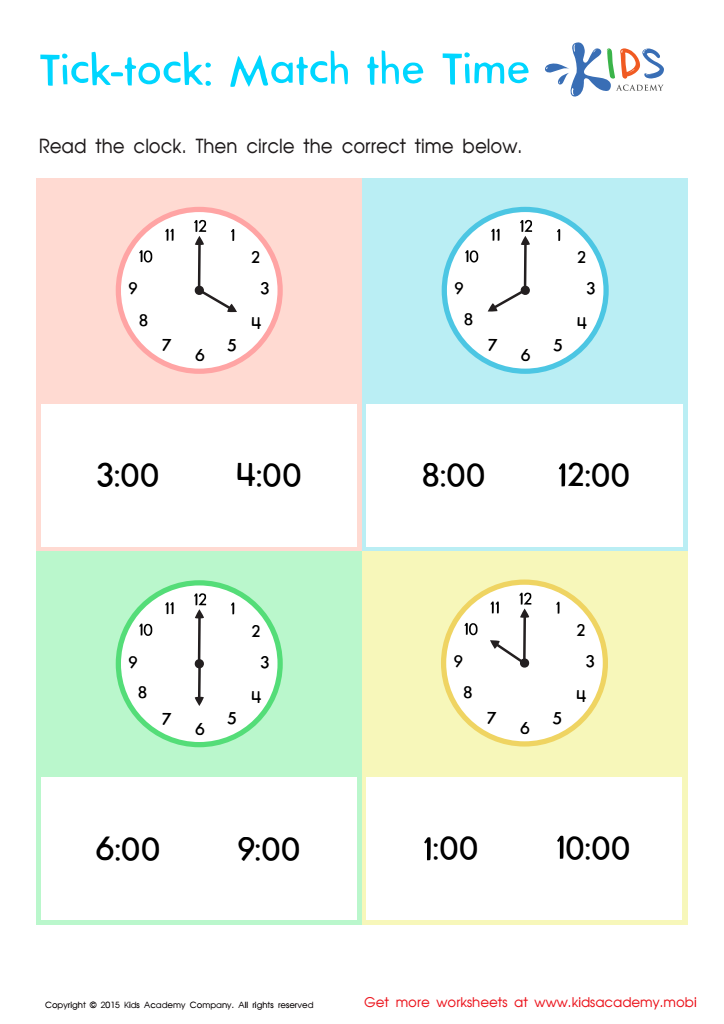
Telling The Time Worksheet: Part 4
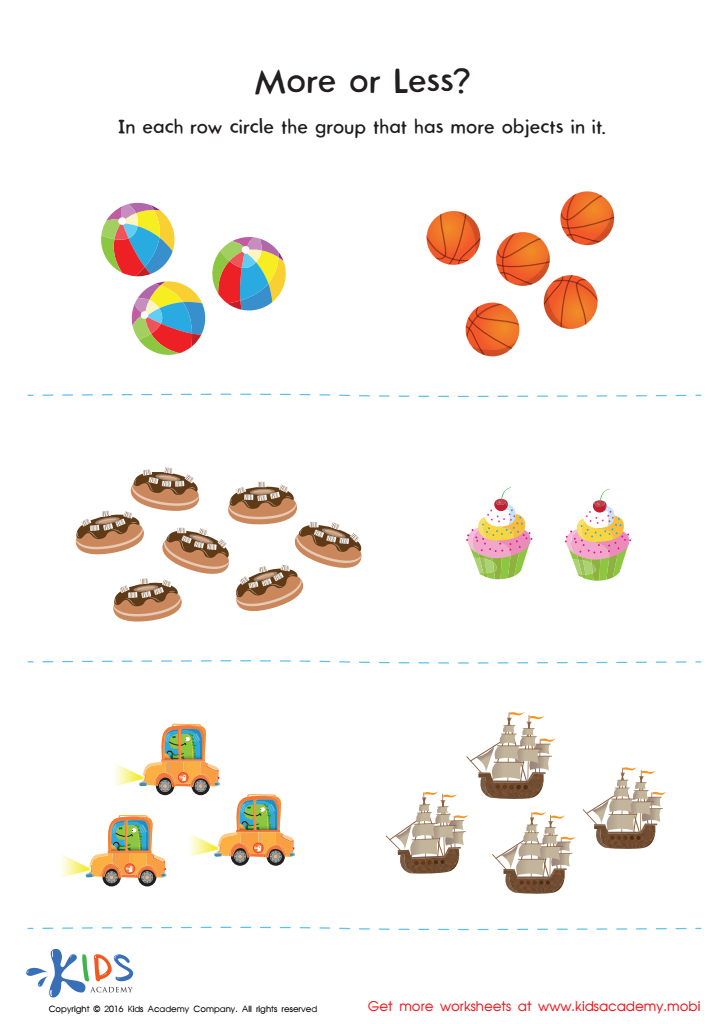
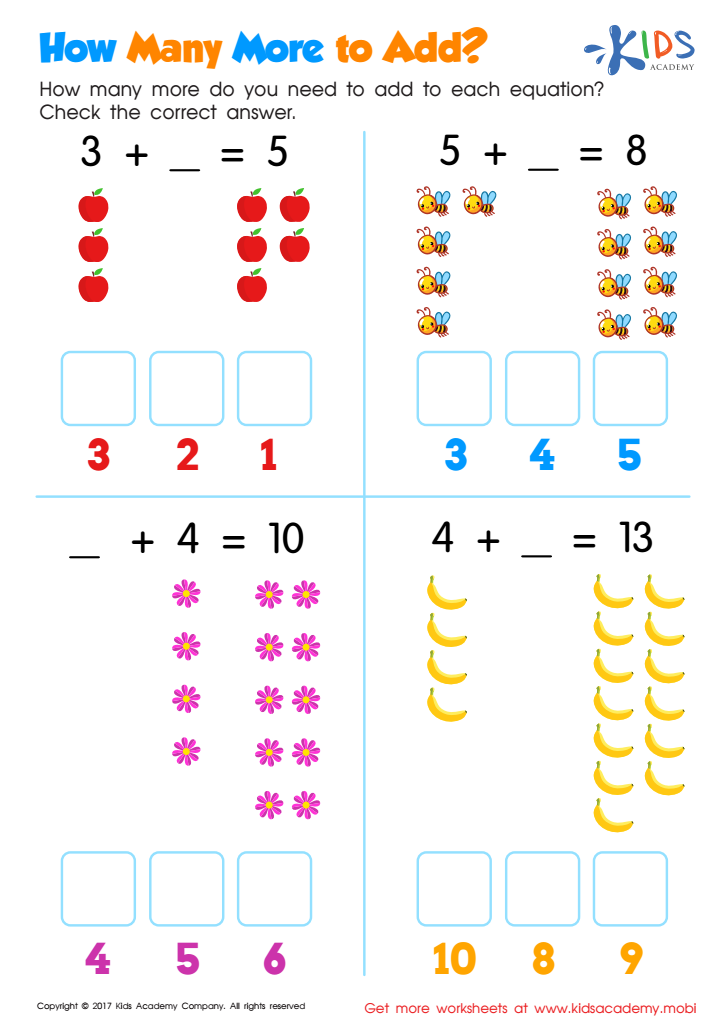
How Many More to Add Worksheet
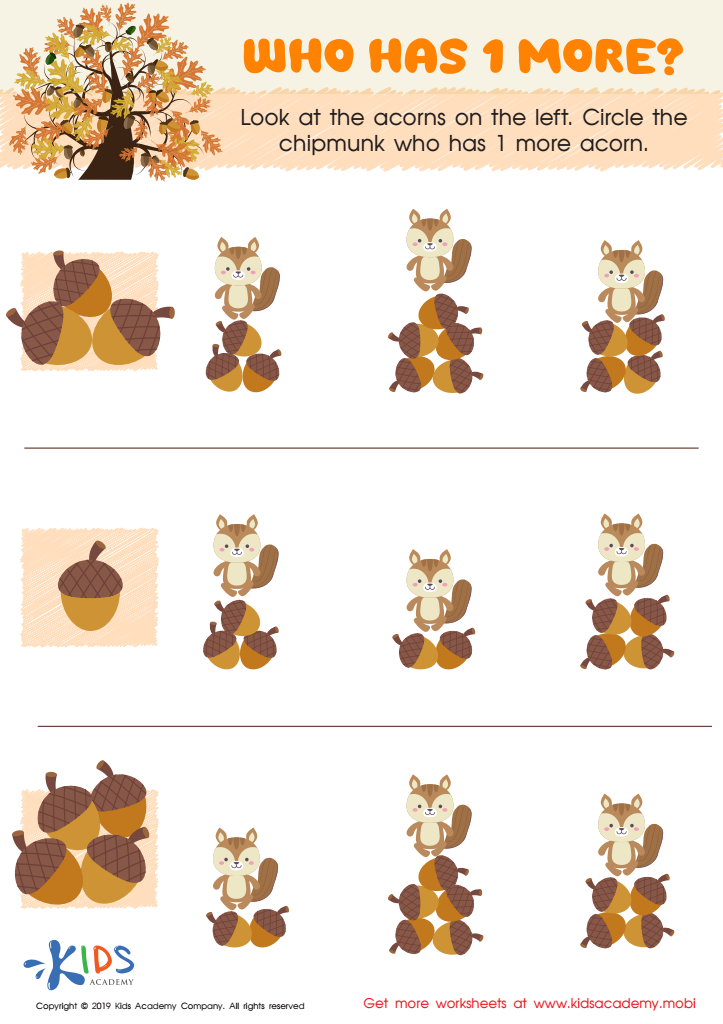
Who Has 1 More? Worksheet
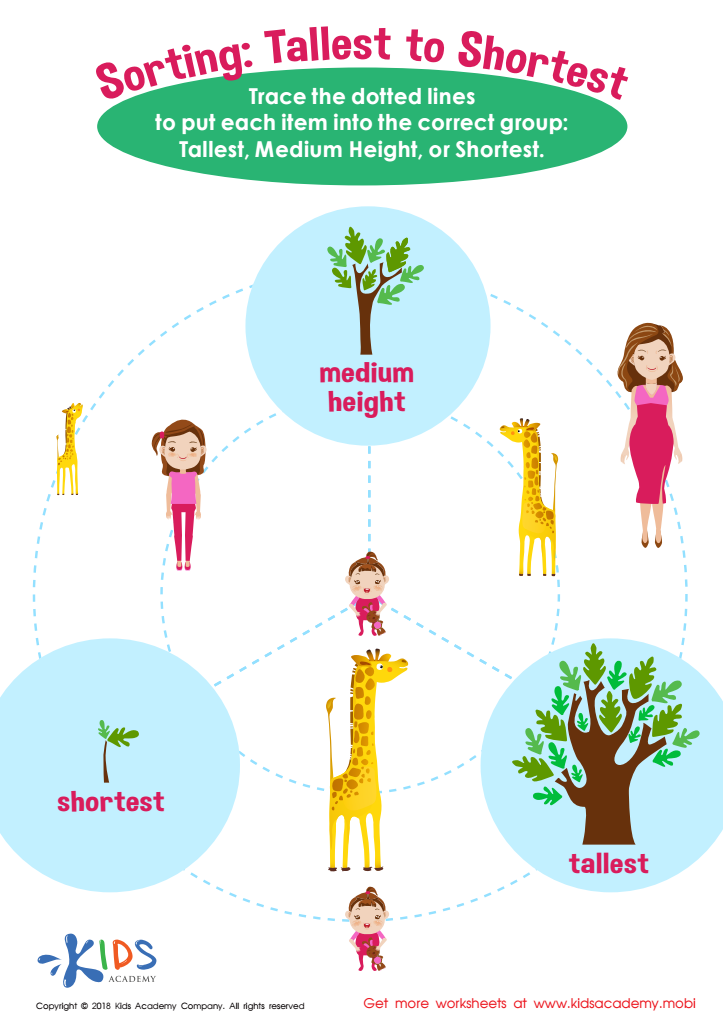
Sorting: Tallest to Shortest Worksheet



.jpg)



Comparison skills in math are crucial for children aged 5 to 6 as they lay the foundation for essential mathematical concepts and reasoning abilities. At this age, children begin to explore and understand numerical relationships through comparison—learning to identify which quantity is greater, lesser, or equal. This skill enhances their ability to analyze and interpret information, fostering critical thinking.
Parents and teachers should recognize that comparison skills help develop social-emotional skills as well, enabling children to articulate opinions and make decisions in collaborative settings. These mathematical interactions can foster discussions about fairness, size, or quantity, enriching language development and communication skills.
Additionally, strong comparison skills serve as building blocks for more complex mathematical operations such as addition and subtraction. Nation-wide assessments highlight that students who grasp these basic concepts tend to perform better in later math assignments, promoting long-term academic success.
Investing time in developing comparison skills prepares kids not only for future mathematical learning but also cultivates their aptitude for problem-solving, analytical thinking, and real-world applications. By nurturing these foundational skills, parents and teachers contribute to their children’s confidence and enthusiasm for mathematics down the line.








