Developing observational skills Math Worksheets for Ages 5-6
3 filtered results
-
From - To
Enhance your child's observational skills with our engaging math worksheets designed specifically for ages 5-6. These worksheets focus on helping young learners recognize patterns, compare quantities, and identify shapes through fun and interactive activities. By honing their observational skills, children not only improve their math aptitude but also develop critical thinking and problem-solving abilities. Our worksheets are colorful, easy to understand, and tailored to ignite curiosity while making learning enjoyable. Explore a variety of exercises that encourage exploration and observation, ensuring your little ones build a solid foundation in math. Start their journey towards confident mathematics today!
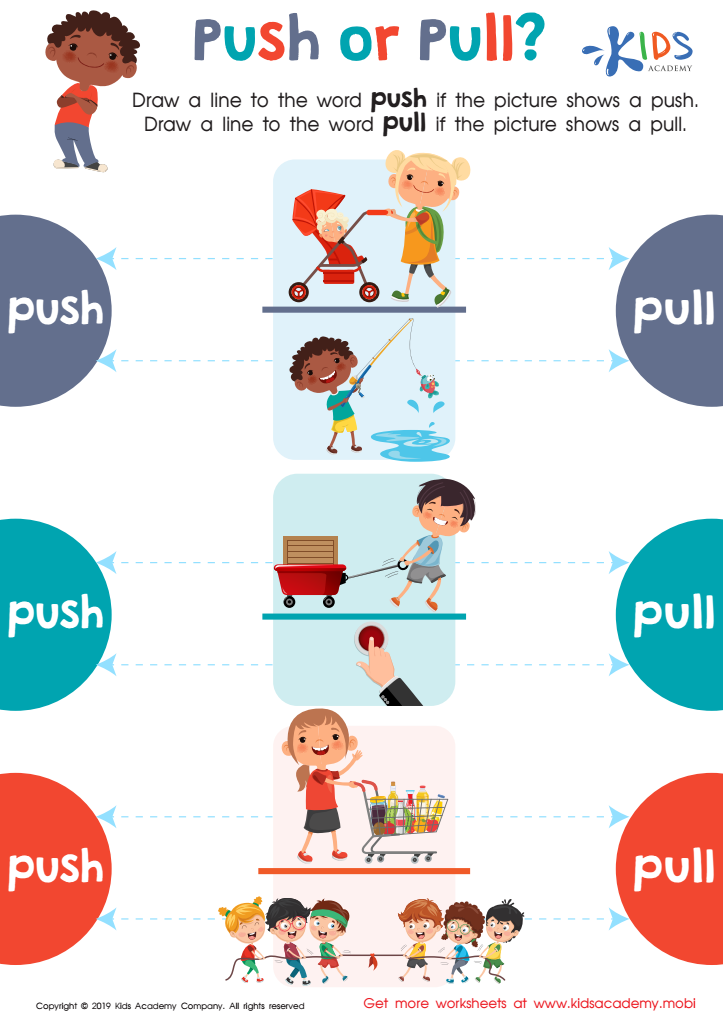
Push or Pull? Worksheet
 Assign to My Students
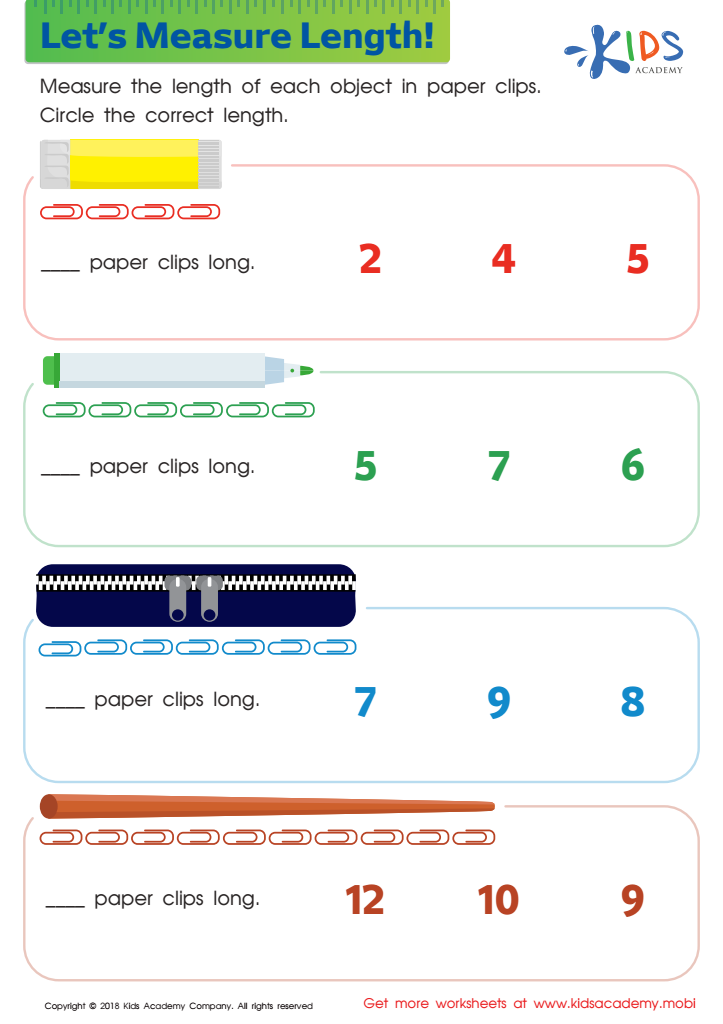
Lets Measure Length Worksheet
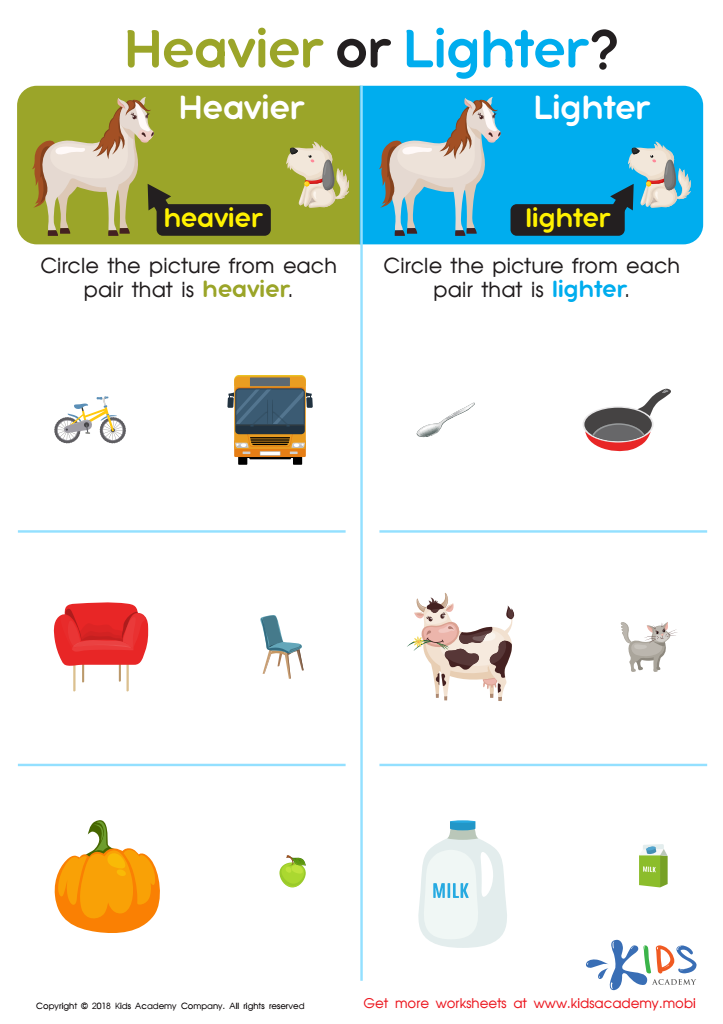
Heavier or Lighter? Worksheet





.jpg)


Developing observational skills in mathematics for children aged 5-6 is crucial for several reasons. Firstly, these skills lay the foundation for critical thinking and problem-solving abilities. At this early stage, children learn to notice patterns, shapes, and relationships between objects, which are all essential elements of math. Encouraging young learners to observe their surroundings fosters curiosity, enabling them to ask questions, make connections, and form concepts intuitively.
Secondly, strong observational skills enhance mathematical communication. As children articulate their observations, they develop an active vocabulary related to math, such as identification of shapes, comparisons of size, and understanding of quantities. This verbalization reinforces their learning and helps them articulate their thought processes clearly.
Additionally, observational skills promote engagement and enthusiasm in learning. When children are encouraged to explore and observe mathematically meaningful features in the environment, they see math not just as numbers on a page but as an integral part of their world.
Lastly, nurturing these skills cultivates confidence. As children make their own observations and discoveries, they build a sense of competence in their abilities, setting the stage for lifelong learning and appreciation of mathematics. By investing in these skills, parents and teachers empower children to become competent thinkers and problem solvers.








