Enhancing math skills Math Worksheets for Ages 5-6
5 filtered results
-
From - To
Enhance your child's math skills with our engaging worksheets designed specifically for ages 5-6. Our comprehensive collection includes fun activities that focus on essential early math concepts such as counting, addition, subtraction, and understanding shapes. Each worksheet is crafted to encourage critical thinking and problem-solving while keeping your young learner entertained. With colorful illustrations and interactive exercises, these resources make mastering math enjoyable and effective. Watch as your child builds a strong mathematical foundation, setting the stage for future success in their education. Explore our worksheets today and empower your little mathematician with essential skills for a lifelong love of learning!
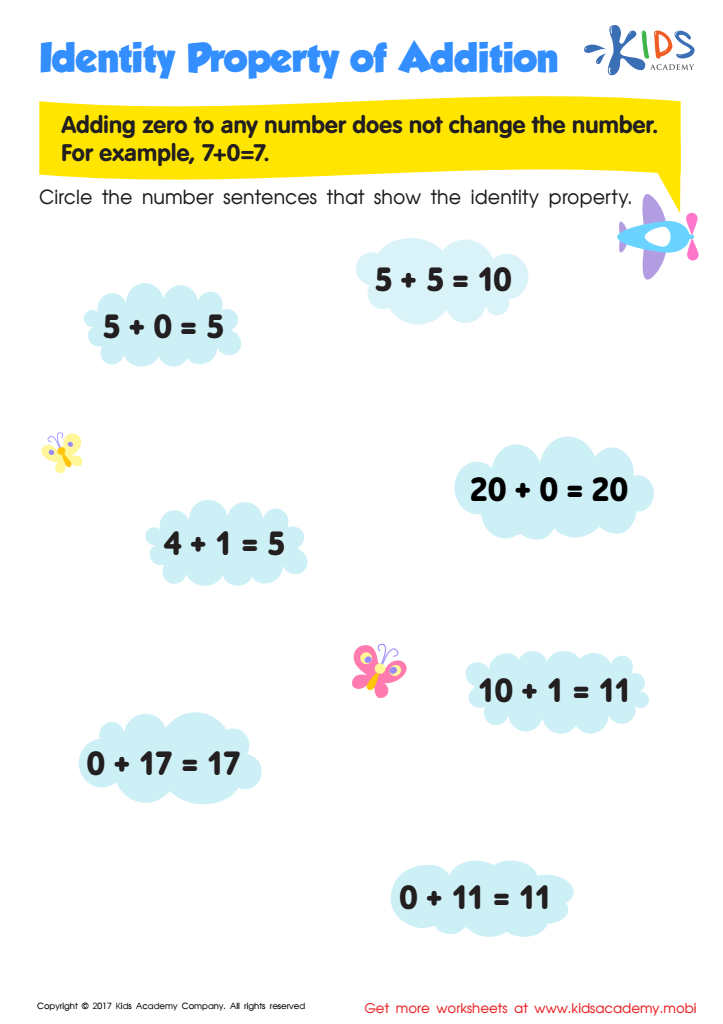
Identity Property of Addition Worksheet
 Assign to My Students
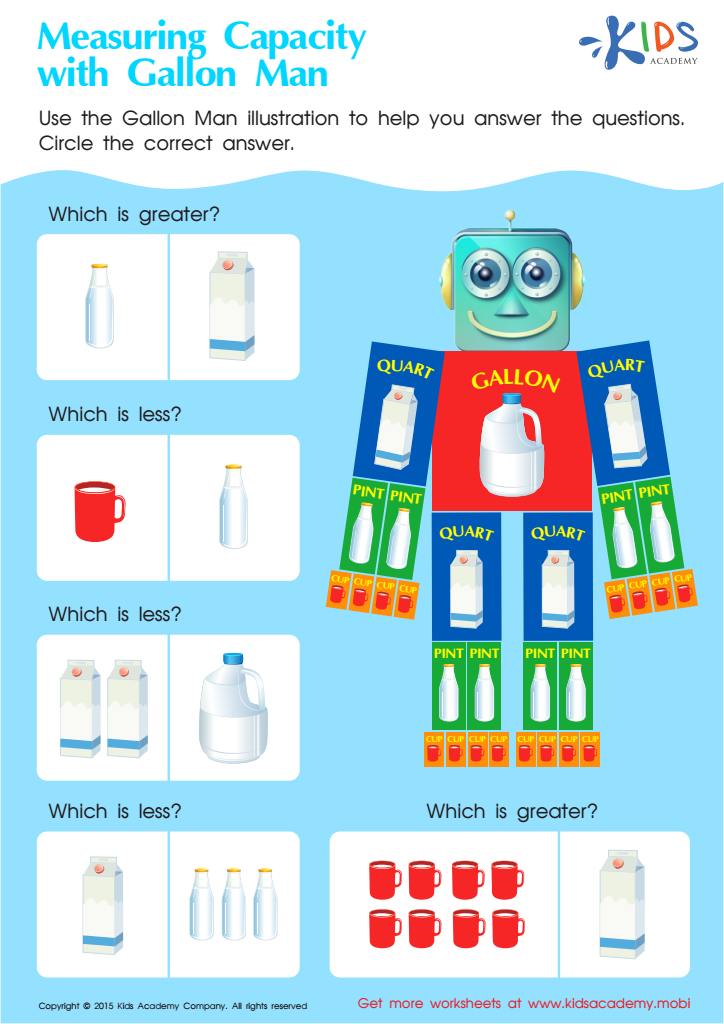
Measurement: Measuring Capacity with Gallon Man Worksheet
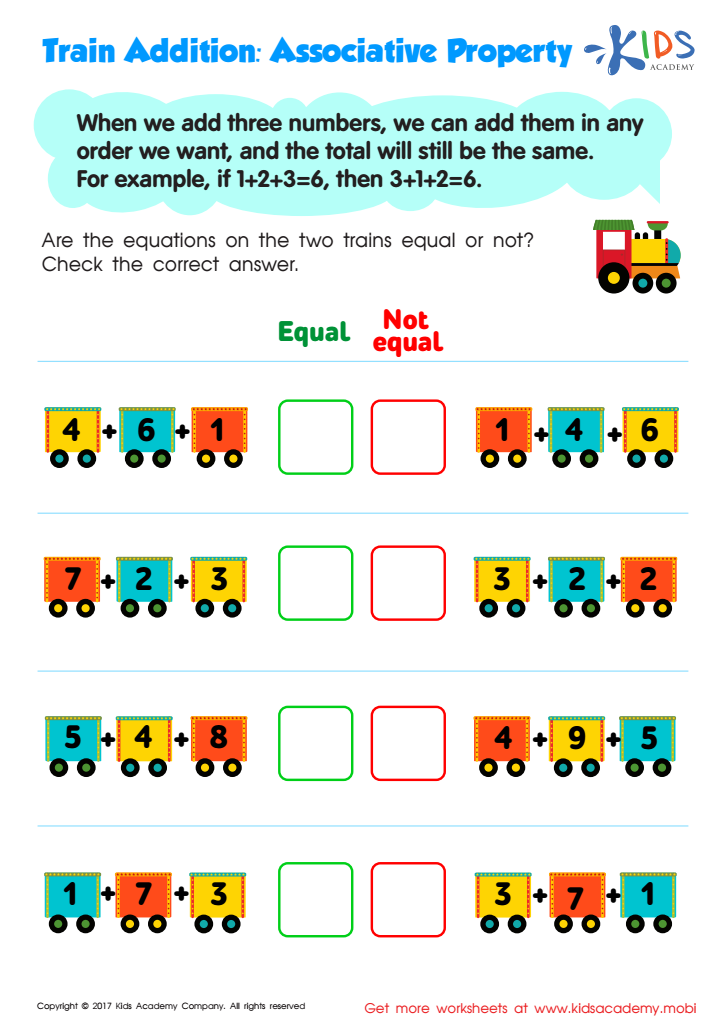
Train Addition: Associative Property Worksheet
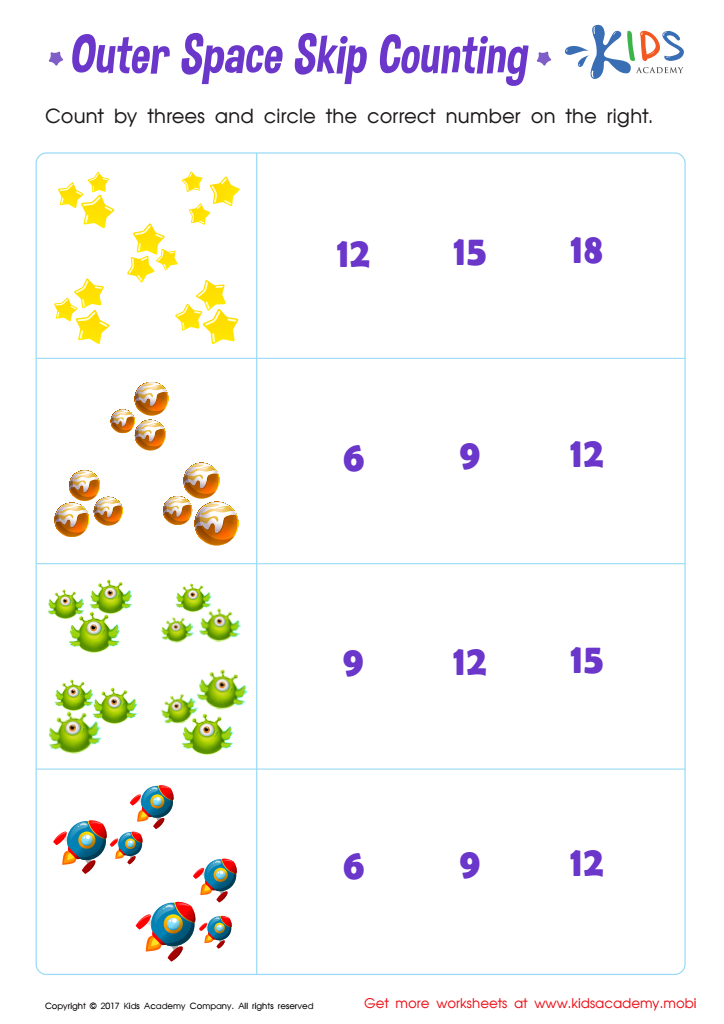
Skip Counting by 3s: Outer Space Skip Counting Printable
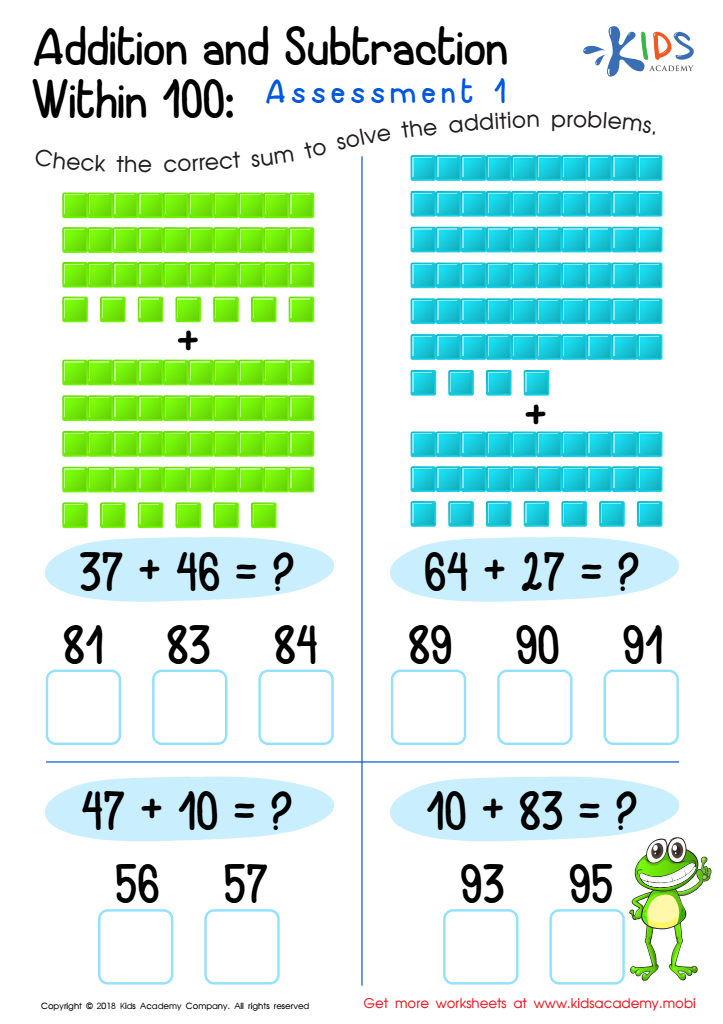
Addition and Subtraction Within 1: Assessment 1 Worksheet








Enhancing math skills for children aged 5-6 is crucial for several reasons. First, early math education lays the foundation for a child’s overall academic success. Research shows that strong arithmetic skills are closely tied to higher achievement in later grades, not just in math but across disciplines.
At this age, children are naturally curious and possess an eagerness to learn, making it an ideal time to introduce mathematical concepts through playful and engaging activities. Mastering basic skills such as counting, simple addition, and number recognition helps develop critical thinking, problem-solving abilities, and logical reasoning.
Moreover, enhanced math skills boost confidence in children, enabling them to tackle more complex subjects as they progress. Parents and educators should also recognize that math is intertwined with daily life; understanding it equips children with essential skills for future tasks like budgeting, measuring, and even cooking.
Finally, fostering a positive attitude toward math from a young age can help dispel common stereotypes that often discourage children, especially girls, from pursuing STEM fields. By prioritizing early math skill development, parents and teachers contribute to creating a nurturing learning environment, ensuring that children are well-prepared for future academic challenges and life opportunities.








