Improving observation Math Worksheets for Ages 5-6
3 filtered results
-
From - To
Explore our "Improving Observation Math Worksheets" tailored for ages 5-6, designed to enhance your child's observational skills while making learning engaging and fun. These worksheets encourage critical thinking through interactive activities that promote problem-solving abilities. Children will identify patterns, shapes, and quantities, helping them build a strong foundation in early math concepts. With vibrant illustrations and varied exercises, these printable resources will captivate young learners and keep them motivated. Perfect for both home and classroom use, our worksheets support educational growth while fostering a love for learning. Start enhancing your child's observational math skills today!
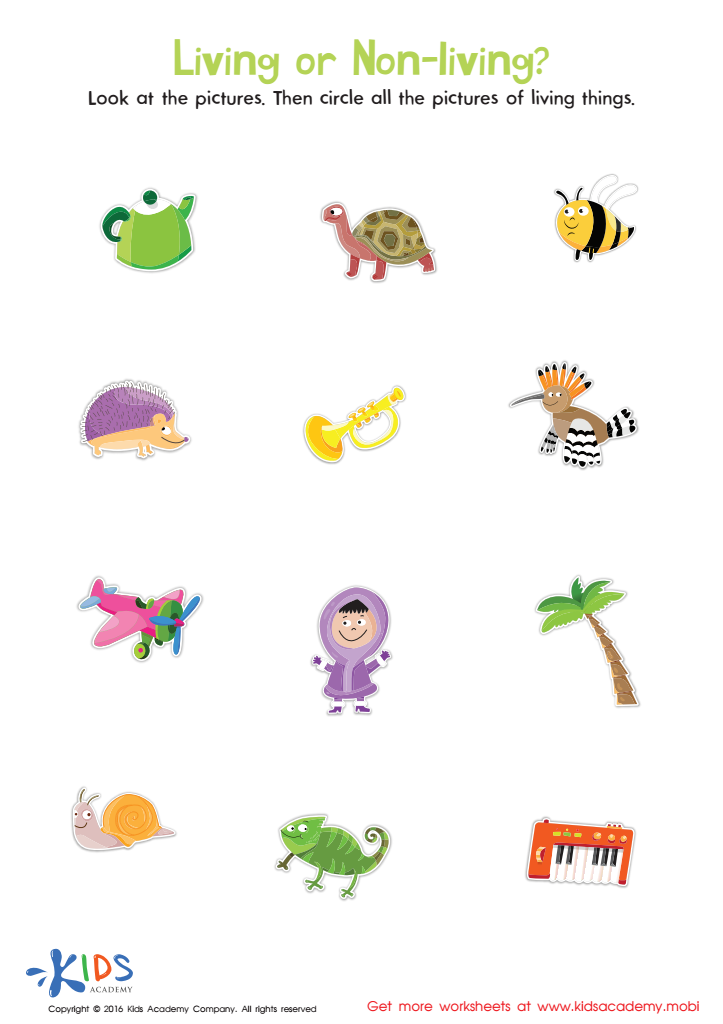
Identifying Living and Non–living Things Sorting Worksheet
 Assign to My Students
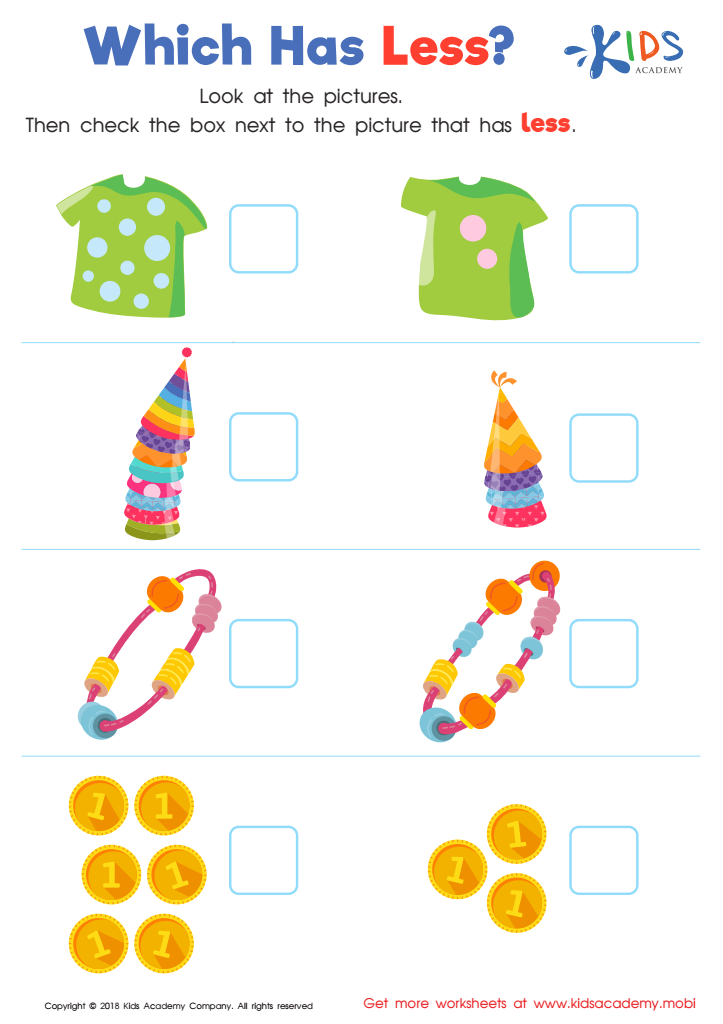
Which Has Less? Worksheet
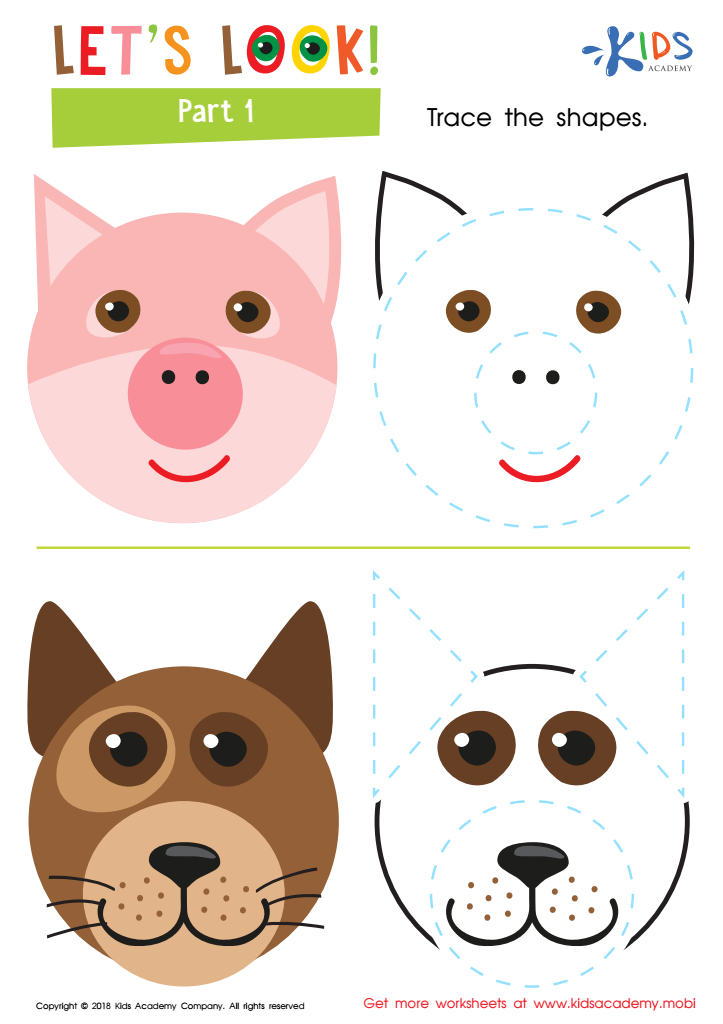
Let's Look! Part 1 Worksheet







Improving mathematical observation skills in young learners aged 5-6 is crucial for several reasons. First, this foundational period in a child's education is vital for building successful math-related competencies. By enhancing observational skills, children learn to notice patterns, relationships, and mathematical concepts in their environment, fostering a deeper understanding of numbers and their applications.
Second, children's ability to observe and make sense of mathematical information directly correlates with their critical thinking and problem-solving skills. When parents and teachers nurture these skills, they equip children with the tools needed to approach challenges with confidence and curiosity, setting the stage for future academic success.
Furthermore, improved observational math fosters communication skills. As children discuss their thoughts and findings, they enhance their language abilities, which supports overall cognitive development.
Lastly, engaging in practical, observational math activities can be enjoyable, often allowing for hands-on learning that keeps children motivated and eager to explore. Parents and teachers play a pivotal role in guiding these experiences, ensuring that children's early positive encounters with math promote a lifelong love for the subject. Therefore, focusing on observational math is essential for cultivating well-rounded, enthusiastic learners.








