Number tracing Math Worksheets for Ages 5-6
3 filtered results
-
From - To
Enhance your child's early math skills with our Number Tracing Math Worksheets, ideal for ages 5-6! These free, printable worksheets from Kids Academy are designed to help young learners build a strong foundation in number recognition and counting through fun, interactive tracing exercises. Children will practice writing numbers, improving their hand-eye coordination and fine motor skills. The engaging, colorful design keeps them motivated while making learning enjoyable. Perfect for home or classroom use, these worksheets prepare kids for future math success. Download now and watch them excel in early numeracy!
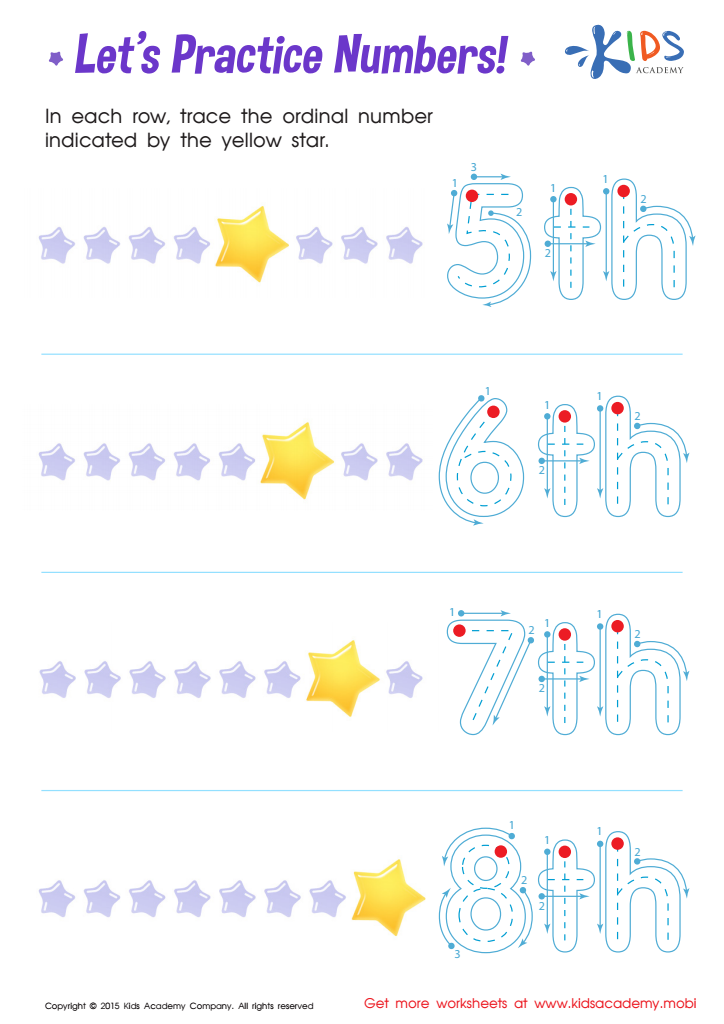
 Assign to My Students
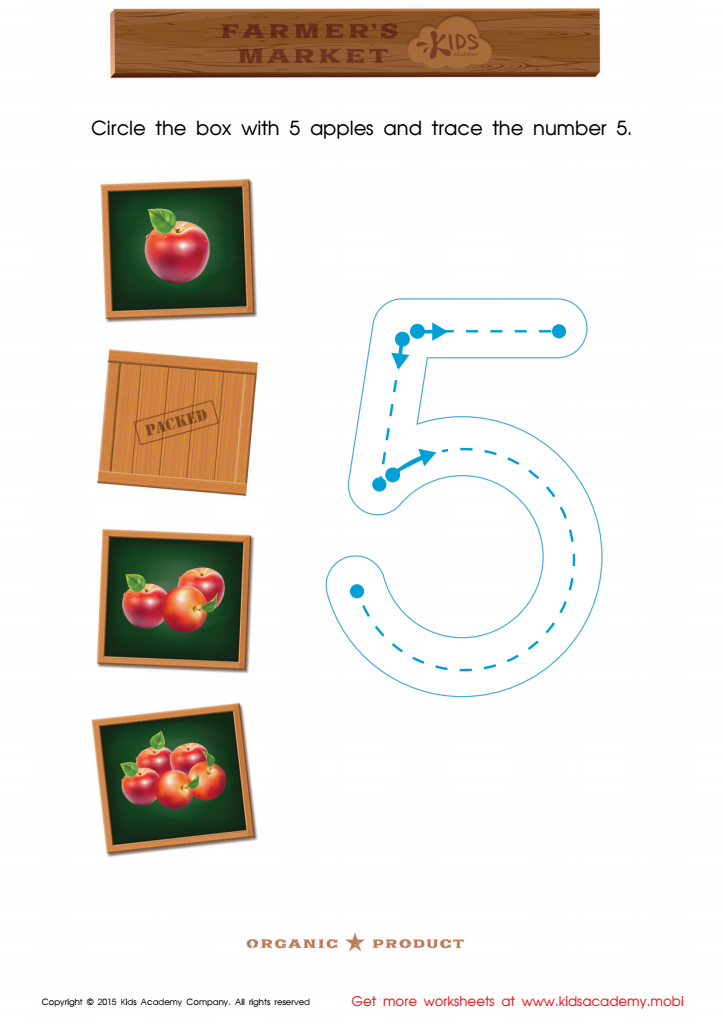
Count the Apples and Trace the Number 5 Printable
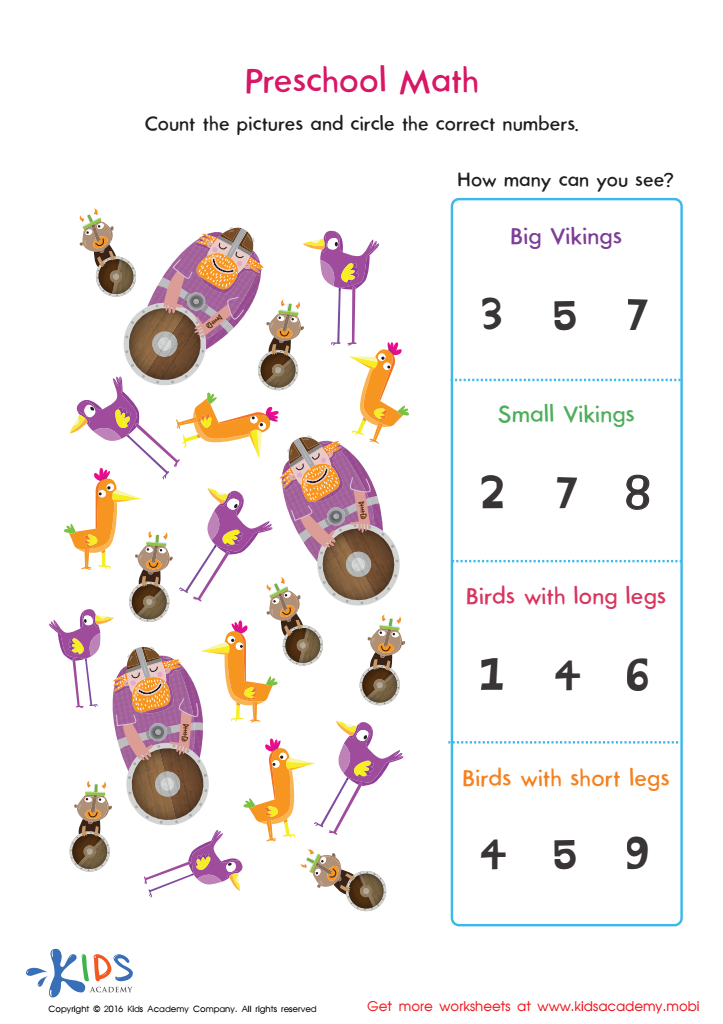








Number tracing is a foundational activity that plays a crucial role in early childhood education, particularly for children ages 5-6. At this developmental stage, kids are acquiring the essential skills needed for more advanced mathematics. Number tracing helps solidify their understanding of numerical concepts by providing a hands-on, interactive way to learn number shapes and structures.
One key benefit is enhancing fine motor skills. As children trace numbers, they refine their hand-eye coordination and muscle memory, crucial for both writing and overall physical development. Secondly, it fosters number recognition. Repetitively tracing numbers helps children become familiar with these symbols, enabling quicker and more accurate identification later.
Understanding the sequence and formation of numbers also aids cognitive development. This activity encourages kids to focus and follow patterns, which are foundational for more complex math and logical reasoning skills. Furthermore, number tracing builds confidence as children witness their own progress, fueling a positive attitude toward mathematical learning.
For parents and teachers, enforcing number tracing in early math education ensures children have a firm grasp of numbers, laying a robust groundwork for future mathematical success. Their active engagement not only supports academic achievement but also nurtures a child’s overall willingness to learn and explore new concepts.








