
Reading clocks Math Worksheets for Ages 5-6
4 filtered results
Difficulty Level
Grade
Age
-
From - To
Subject
Activity
Standards
Introducing our engaging Reading Clocks Math Worksheets for Ages 5-6! Young learners will delight in these colorful, interactive worksheets designed to make telling time both fun and educational. Our materials are tailored to help children grasp the basics of reading both analog and digital clocks, understanding hours and minutes, and distinguishing between different times of the day. With a variety of activities and progressive challenges, these worksheets build confidence and reinforce essential math skills. Perfect for classroom use or at-home practice, they lay a strong foundation for future time-telling expertise. Start your child’s time-telling journey today!
Favorites
With answer key
Interactive
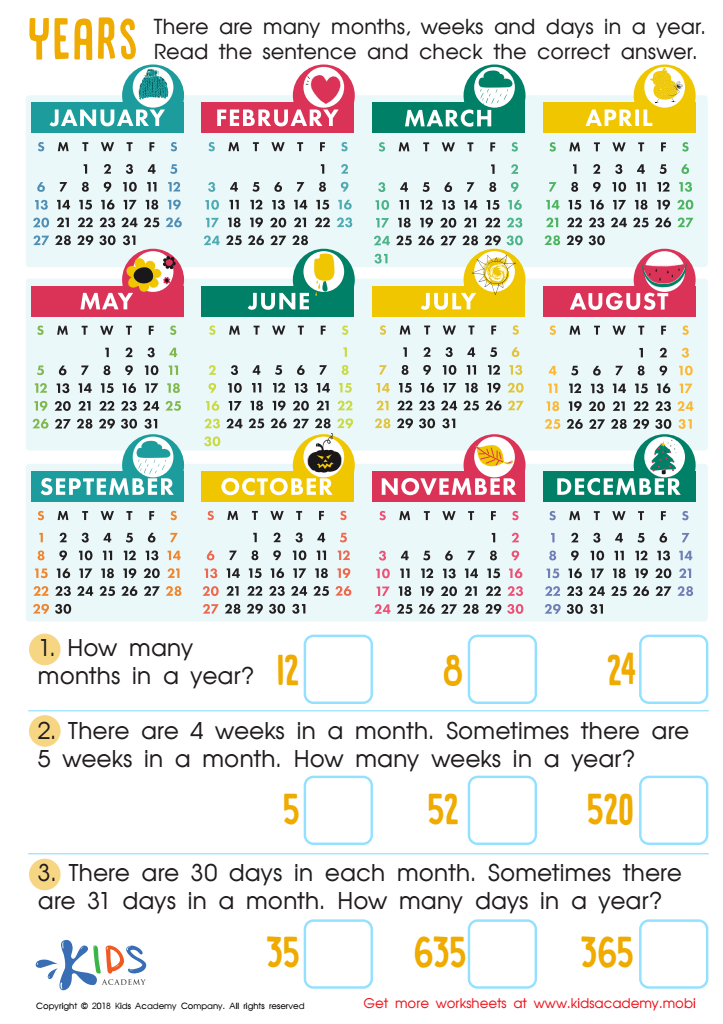
Years Worksheet
This worksheet is a great way to test your children's knowledge of the calendar. Ask them if they can name the days of the week and months in a year. Read and discuss the questions with them and help them find the right answers. Encourage them to check their answers.
 Assign to My Students
Years Worksheet
Worksheet
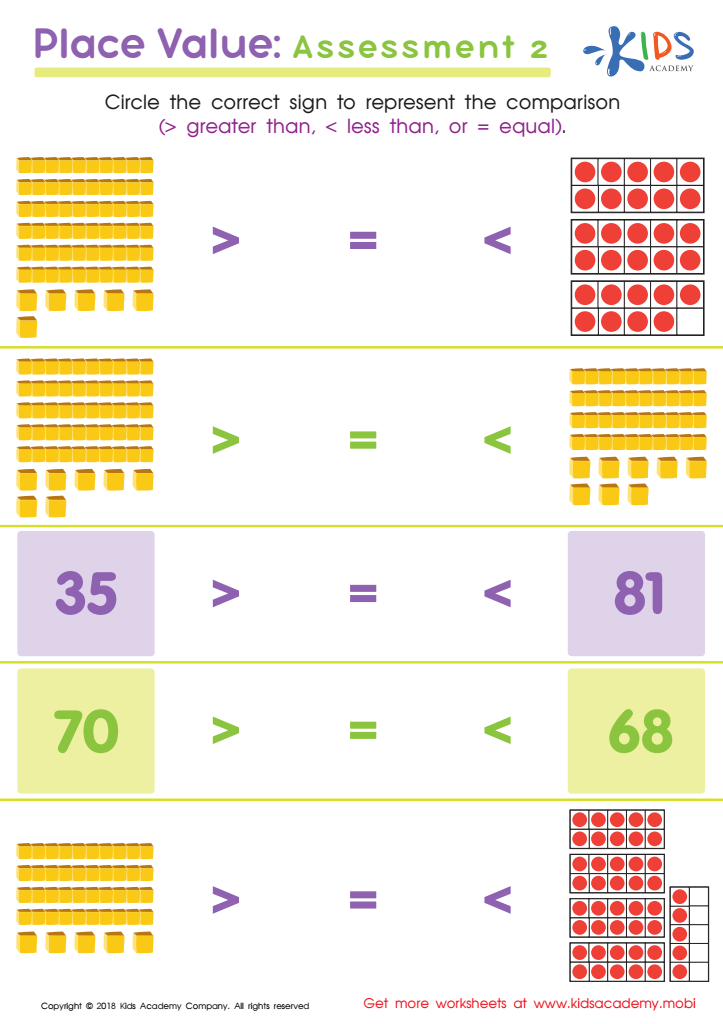
Place Value: Assessment 2 Worksheet
Children must learn to recognize the value of numbers and break them into chunks of ten. They must also be able to compare numbers to know if one is greater, less than or equal to another. The Place Value Assessment PDF is a great tool to assess their skills and identify what requires more practice.
Place Value: Assessment 2 Worksheet
Worksheet
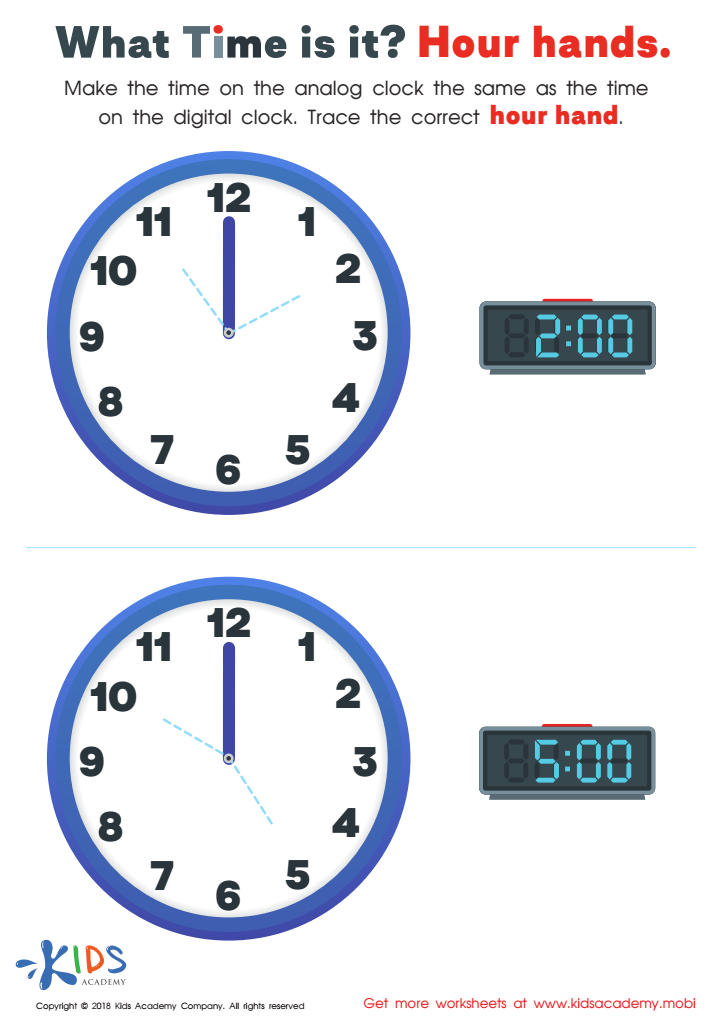
What Time Is it? Hour Hands Worksheet
Does your child know how to read analogue and digital clocks? This worksheet will help them learn. Trace the correct hour hand to match the time on a digital clock to the analogue clock. Help them read the time correctly, both on analogue and digital clocks.
What Time Is it? Hour Hands Worksheet
Worksheet
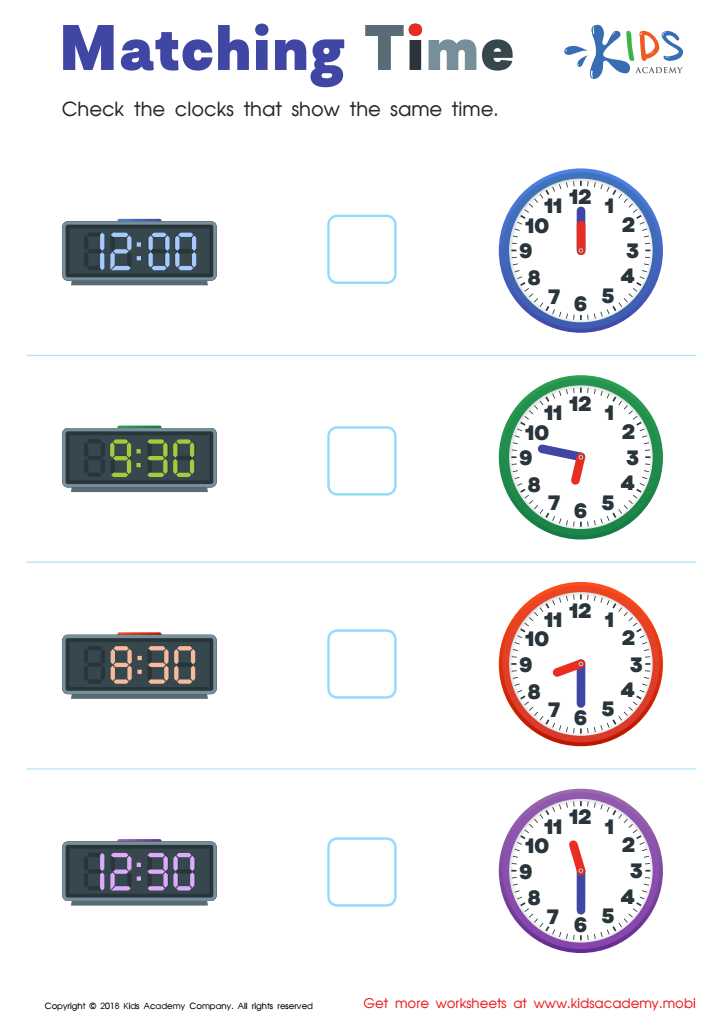
Matching Time Worksheet
Teach your child to read time in both digital and analog formats with this helpful printout. They'll identify clocks that match in both formats and check them off. Colorful and engaging, it's a great way to help your child understand the concept of time-telling.
Matching Time Worksheet
Worksheet
Join Kids Academy for Free
Who is primarily going to use this learning content?






Reading clocks is a foundational math skill that parents and teachers should prioritize for children aged 5-6. Understanding clocks promotes both mathematical and practical life skills. It introduces young learners to numbers in a real-world context, reinforcing their counting abilities and basic concepts of division and fractions as they comprehend how an hour is broken into minutes. This helps in developing their numerical fluency and enhances their conceptual understanding of time management.
Additionally, being able to tell time fosters a sense of independence in young children. It allows them to begin organizing their daily routines, understanding schedules, and grasping the concept of past, present, and future events. This skill can reduce anxiety linked to transition times during the day, as children feel more in control of what’s coming next.
Moreover, clock reading activities engage motor skills through drawing clock hands and writing numbers, strengthening their fine motor development. It also supports cognitive growth by challenging memory and problem-solving abilities through time-related queries, such as “What time is lunch?” or “How long until recess?”
In essence, integrating clock reading into early math education lays the groundwork for essential life skills, enriching academic growth and personal independence. It’s a vital step in a child's holistic learning trajectory.








