Shape comparison Math Worksheets for Ages 5-6
3 filtered results
-
From - To
Welcome to our engaging Shape Comparison Math Worksheets designed specifically for children aged 5-6! These printable resources provide exciting activities that help young learners understand the concept of comparing shapes. Through interactive exercises, kids will explore differences and similarities in size, shape, and attributes, enhancing their observational skills. Our worksheets are thoughtfully crafted to foster critical thinking and boost confidence in early math learners. Perfect for both classroom settings and home practice, these materials inspire a love for learning while developing essential mathematical foundations. Dive into shape comparison today and support your child's educational journey with fun and effective worksheets!
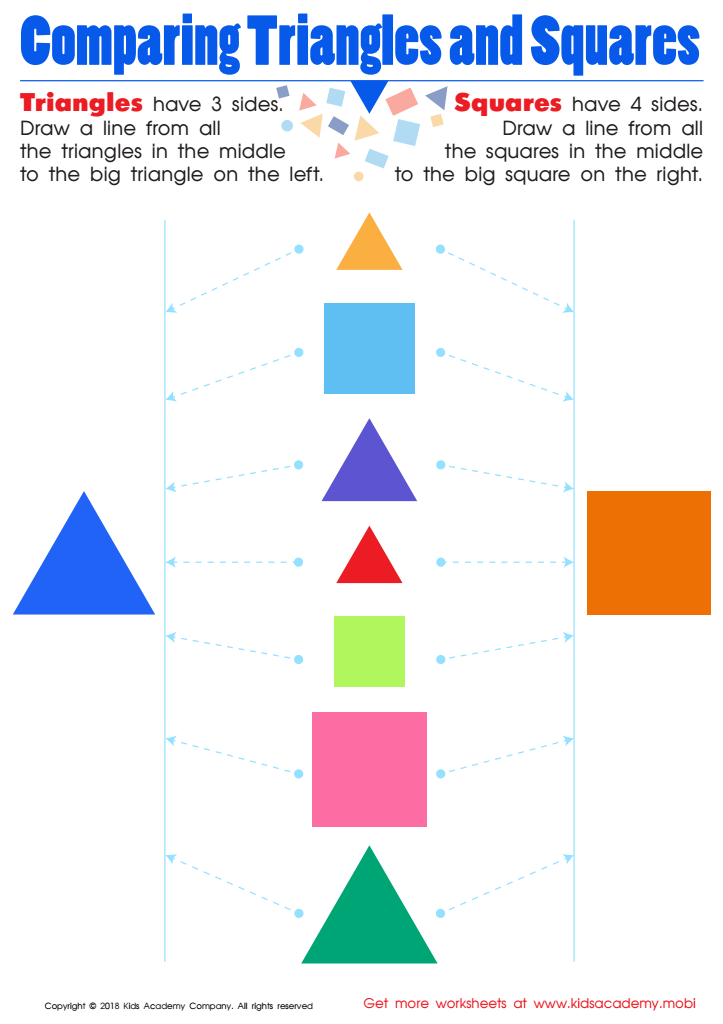
Comparing Triangles Squares Worksheet
 Assign to My Students
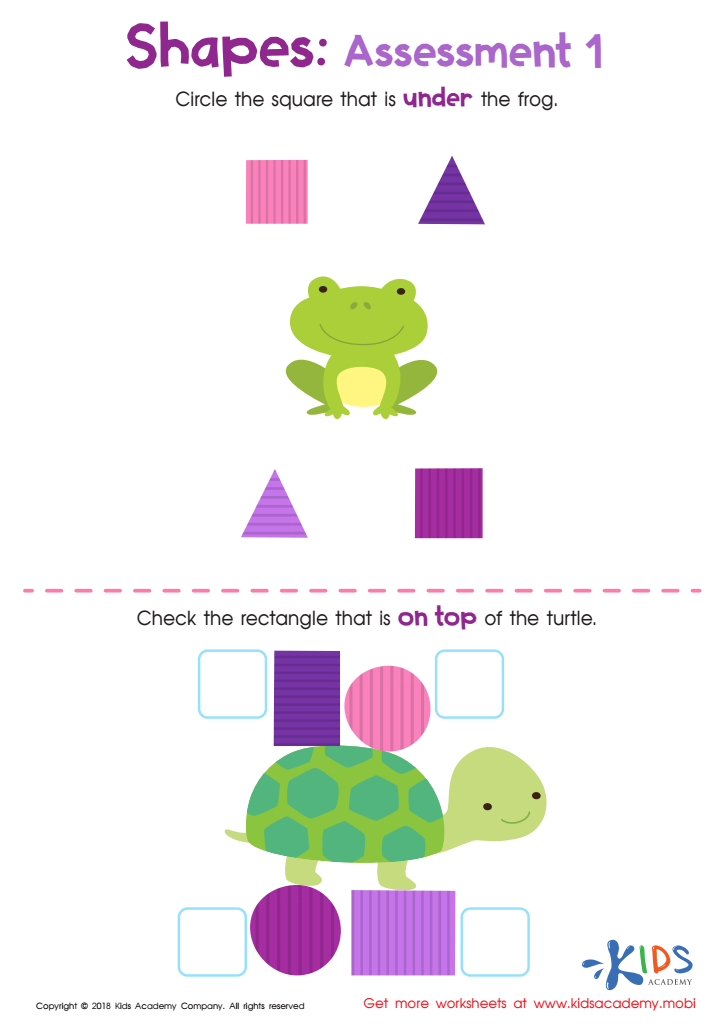
Geometry – Assessment 1 Worksheet
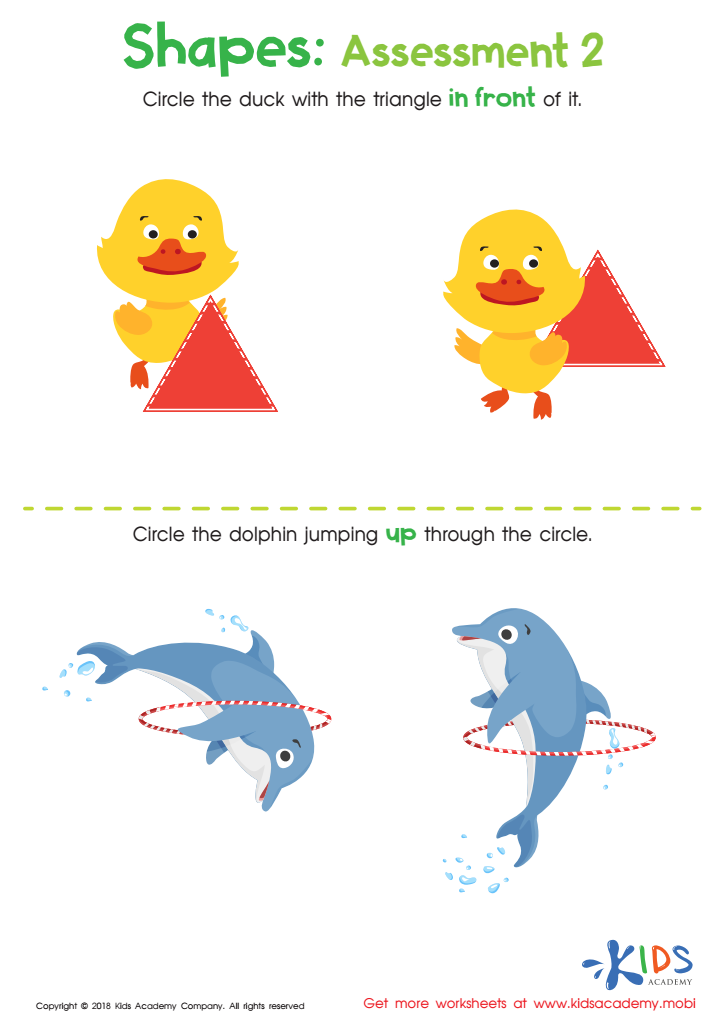
Geometry – Assessment 2 Worksheet







Shape comparison math for ages 5-6 plays a vital role in early childhood education, laying the groundwork for essential math and cognitive skills. During this developmental stage, children are naturally curious, eager to explore their surroundings, and begin to develop an understanding of the world through shapes and patterns. Comparisons help them differentiate between sizes, orientation, and properties of various shapes, fostering critical thinking abilities.
Engaging in shape comparison activities enables children to practice vocabulary related to geometry (e.g., circles, squares, long, short), enhancing their language skills alongside mathematical understanding. Additionally, such exercises promote spatial awareness, which is crucial for future mathematical concepts, such as measuring and navigating space.
By recognizing and understanding shapes and their differences, children develop problem-solving skills that are transferable to various subjects, including science and art. Furthermore, these foundational experiences build confidence and a sense of achievement, encouraging a positive attitude towards learning.
Parents and teachers have a pivotal role in facilitating engaging shape comparison activities, promoting hands-on experiences such as sorting, stacking, or building with shapes. Supporting this learning not only strengthens early math skills but also boosts overall cognitive development, setting the stage for a lifelong love of learning.








