
Time recognition Math Worksheets for Ages 5-6
3 filtered results
Difficulty Level
Grade
Age
-
From - To
Subject
Activity
Standards
Enhance your child’s understanding of time with our engaging Time Recognition Math Worksheets for ages 5-6. Designed specifically for young learners, these interactive worksheets introduce essential concepts such as reading clocks, understanding time intervals, and differentiating between AM and PM. Each activity encourages hands-on learning and reinforces fundamental math skills in a fun way. Our worksheets use colorful illustrations and relatable scenarios to captivate students’ attention while building their confidence in telling time. Perfect for preschool and kindergarten settings, these resources support early math development and ensure your little ones are set up for success. Start your time-telling journey today!
Favorites
With answer key
Interactive
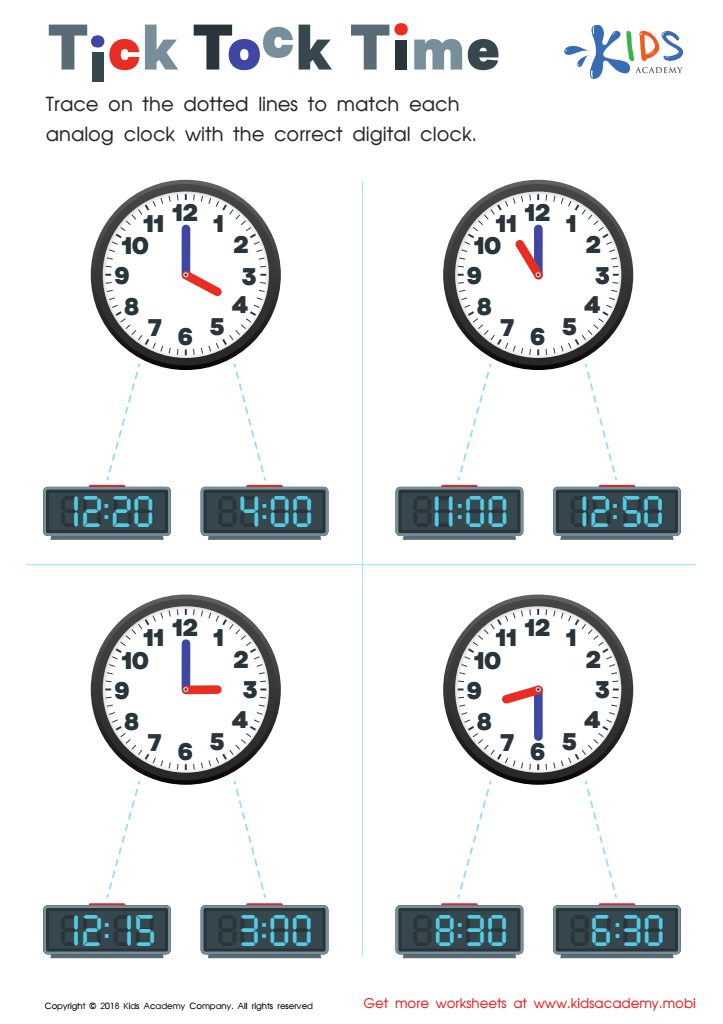
Tick Tock Time Worksheet
Trace the dotted lines on this worksheet to match analog and digital clocks! It's a great way to help your kids learn time-telling. They'll get better at converting analog to digital, and vice versa. Get your children to try it - it's a fun way to practice!
 Assign to My Students
Tick Tock Time Worksheet
Worksheet
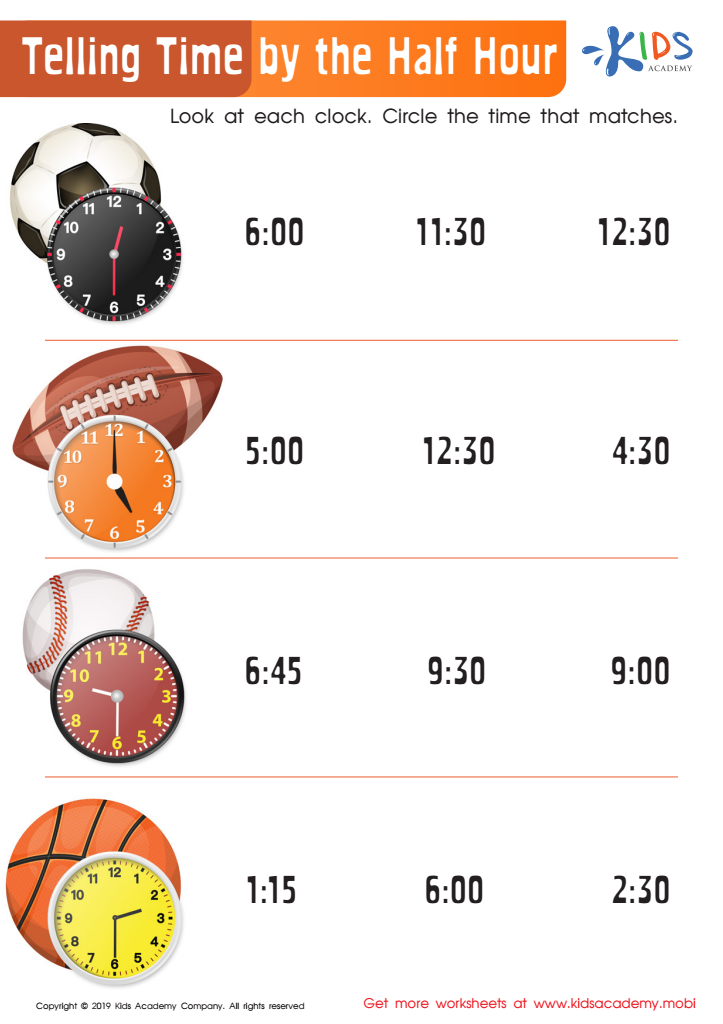
Telling Time by the Half Hour Worksheet
Teach kids to tell time with this worksheet! Four clocks are labeled with different times; help your child circle the right one. It's a great way to teach them to read analog and digital clocks, watches, and written times. Easy and fun learning!
Telling Time by the Half Hour Worksheet
Worksheet
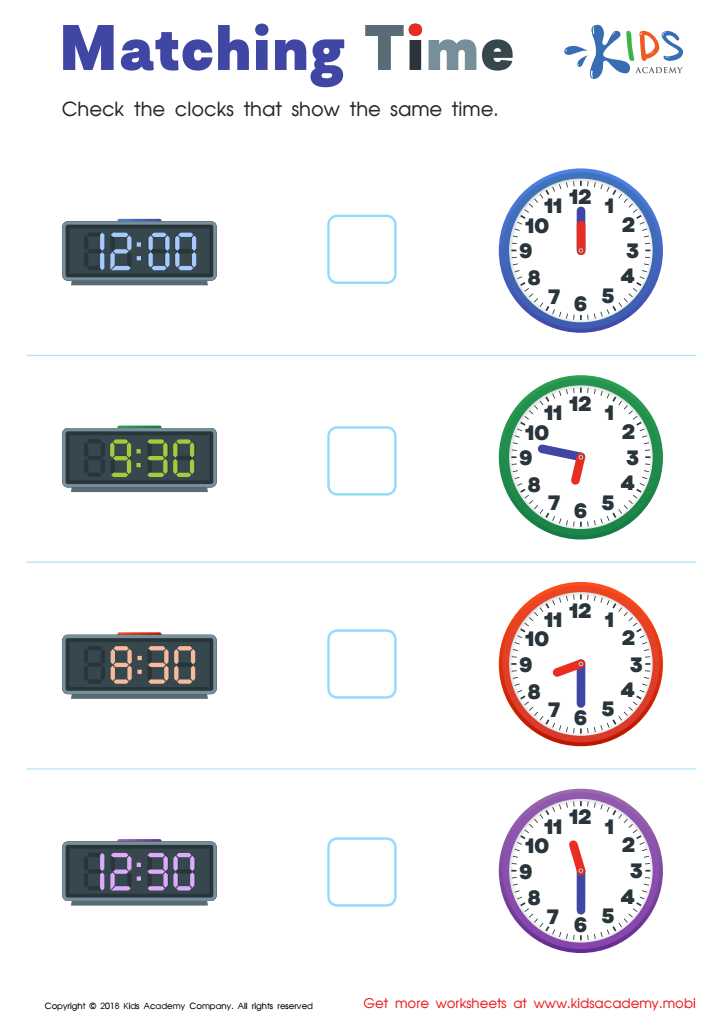
Matching Time Worksheet
Teach your child to read time in both digital and analog formats with this helpful printout. They'll identify clocks that match in both formats and check them off. Colorful and engaging, it's a great way to help your child understand the concept of time-telling.
Matching Time Worksheet
Worksheet
Join Kids Academy for Free
Who is primarily going to use this learning content?








Time recognition is a fundamental skill for children aged 5-6, impacting their overall cognitive development and daily functioning. Parents and teachers should prioritize this learning because it lays the groundwork for essential life skills. Understanding time helps children develop a sense of routine and structure, fostering independence and responsibility as they navigate their daily activities.
At this age, children begin to grasp concepts of sequencing and duration, critical for math and literacy development. Time recognition enhances their ability to use calendars and schedules, essential skills as they progress through school. By learning to read clocks and understand time, children can manage transitions more effectively, such as moving from playtime to homework, reinforcing concepts of punctuality and organization.
Moreover, engaging with time—through counting down to events, setting timers, or sequencing daily activities—can make learning fun and interactive. This hands-on approach builds enthusiasm for mathematics as a whole, promoting a positive attitude toward math-related subjects. Involving parents in this learning enriches the experience, allowing for creative discussions about time—sharing personal stories or planning future events—which further cements the concept in a relatable context. Ultimately, mastering time recognition molds responsible, skilled learners who can navigate both academic and everyday challenges with confidence.








