
Understanding numbers Math Worksheets for Ages 5-6
4 filtered results
Difficulty Level
Grade
Age
-
From - To
Subject
Activity
Standards
Discover our engaging "Understanding Numbers" Math Worksheets designed specifically for children ages 5-6. These worksheets provide a fun and interactive way to help young learners develop essential number recognition, counting, and basic arithmetic skills. With colorful illustrations and age-appropriate activities, kids will enjoy exploring numbers through hands-on practice, enhancing their math comprehension. Our resources are perfect for both classroom settings and home learning environments. Empower your child’s mathematical journey by fostering confidence and curiosity in numbers. Start today and watch your little mathematician thrive as they grasp foundational math concepts in an exciting way!
Favorites
With answer key
Interactive
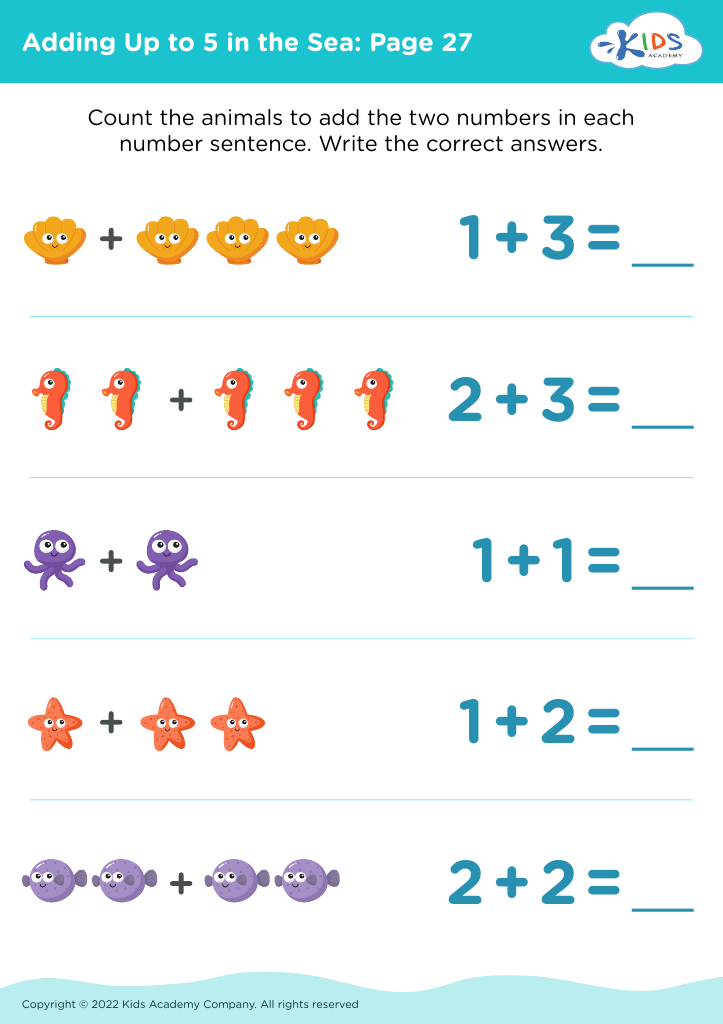
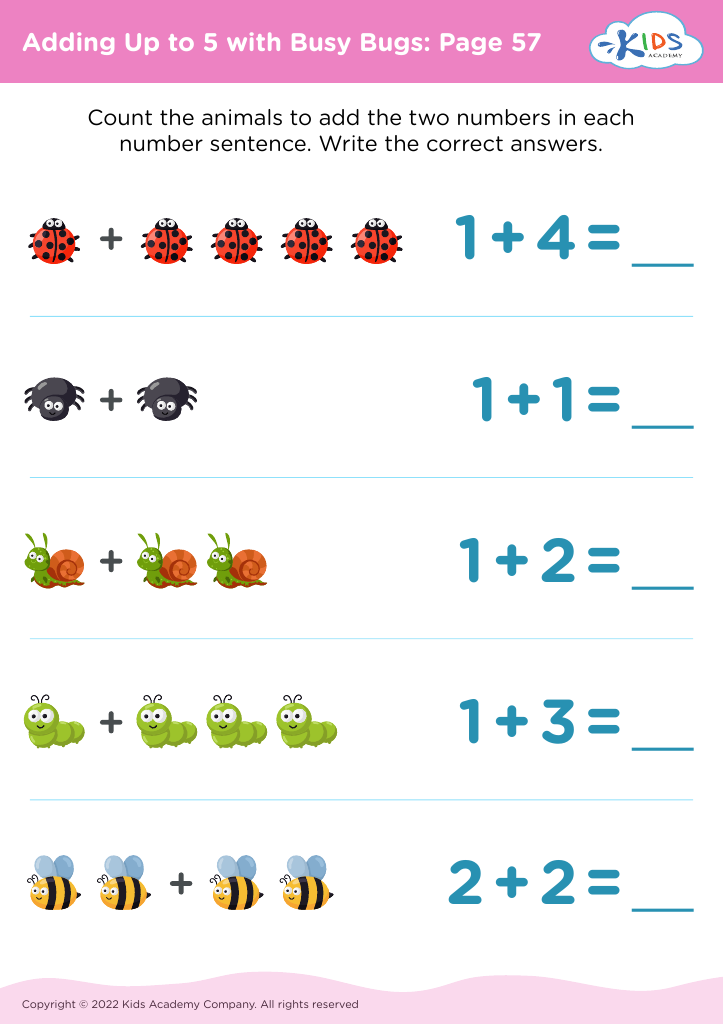
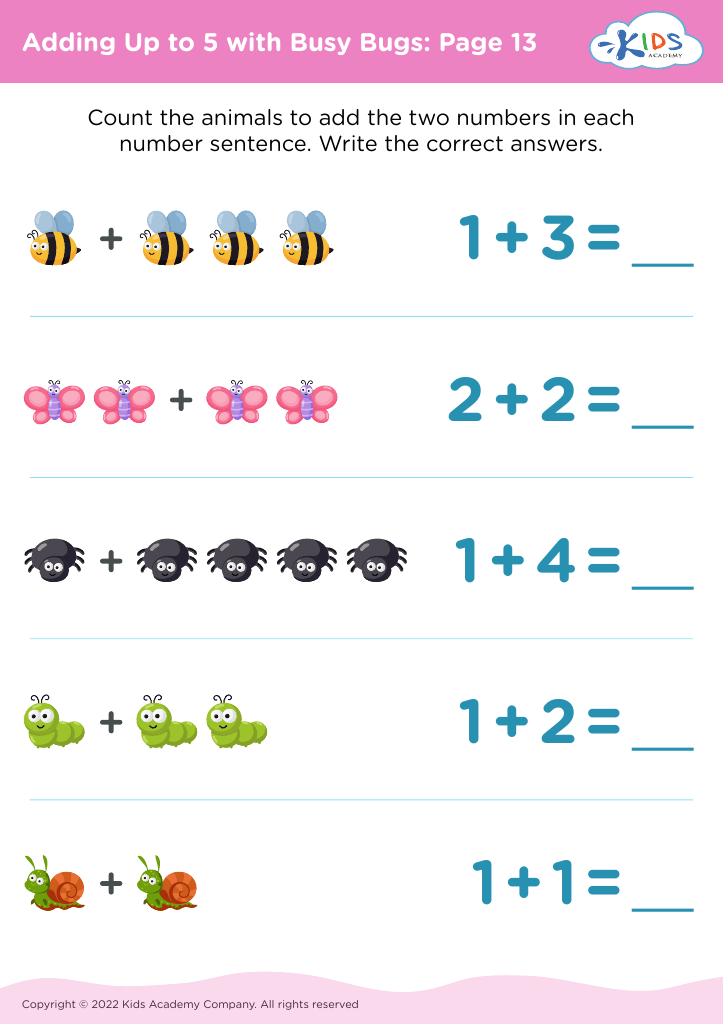
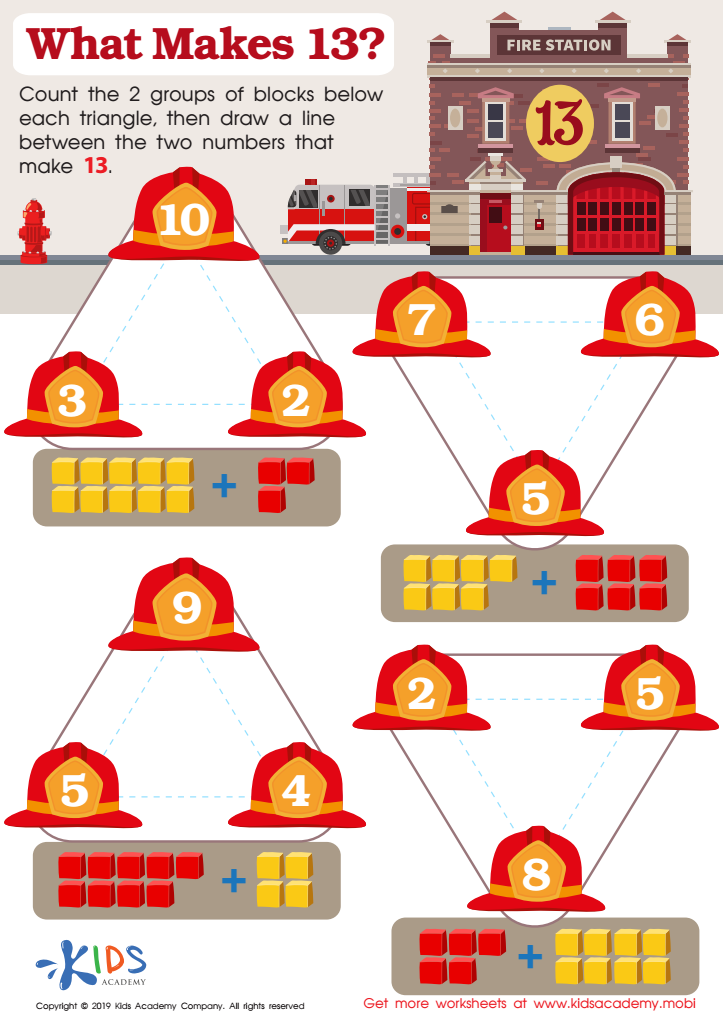
What Makes 13 Worksheet
Help your kids practice maths with this worksheet! With colourful images and simple equations, your kids will be more engaged in learning. Go through the four equations and help them add up the numbers. Then, draw a line between the numbers that make 13. Doing this will aid their learning and understanding.
 Assign to My Students
What Makes 13 Worksheet
Worksheet
Join Kids Academy for Free
Who is primarily going to use this learning content?




.jpg)



Understanding numbers and basic math concepts is foundational for children aged 5-6, making it crucial for parents and teachers to prioritize this area of learning. At this age, children are naturally curious and eager to explore their environment. Engaging them in number-related activities not only enhances their mathematical skills but also boosts cognitive development. Mastering numbers lays the groundwork for future learning in mathematics, establishing the necessary skills for addition, subtraction, and problem-solving that will be built upon in later grades.
Incorporating understanding of numbers into daily activities can promote mathematical thinking in a relatable context. For example, counting objects during playtime or measuring ingredients while cooking makes learning interactive and meaningful. Additionally, building number sense fosters critical thinking and can significantly improve a child's confidence in their abilities.
Moreover, early mathematical competency has been linked to better academic performance in later grades. A solid grasp of numbers also nurtures essential life skills, such as budgeting and time management. By focusing on understanding numbers, parents and teachers can ensure that children are not only prepared for academic success but also equipped with the skills needed for everyday life. Thus, investing time in early number sense is a crucial step for holistic child development.








