Visual discrimination Matching Worksheets for Ages 5-6
3 filtered results
-
From - To
Unlock your child's potential with our Visual Discrimination Matching Worksheets, tailor-made for ages 5-6. These engaging worksheets are designed to enhance early learning, focusing on developing crucial visual discrimination skills. Children will delight in matching shapes, colors, and patterns, all while boosting their attention to detail and cognitive abilities. Perfect for both classroom use and at-home learning, these printable activities ensure a fun, interactive experience that keeps young minds challenged and entertained. Set the foundation for future success in reading, writing, and mathematics with our expertly crafted visual discrimination resources.
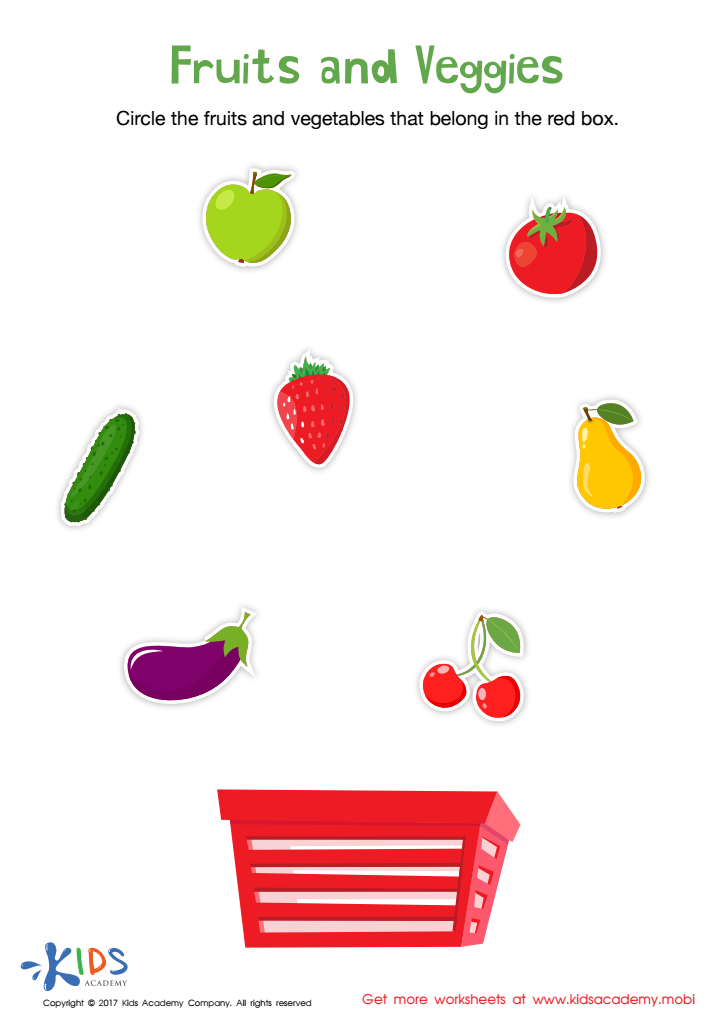
 Assign to My Students
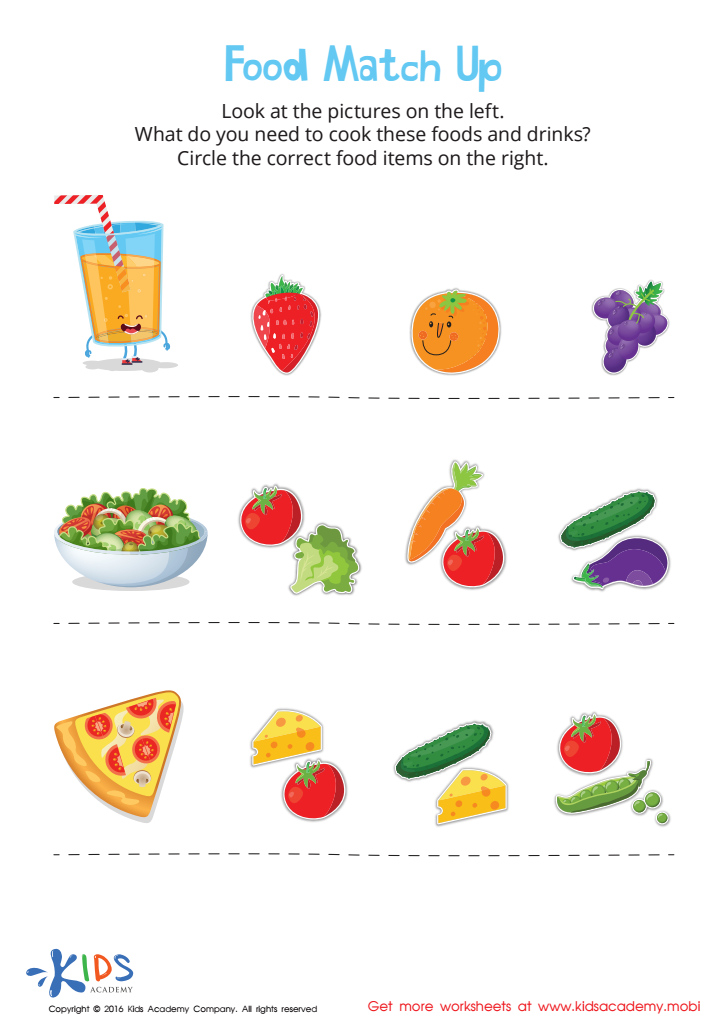
Food Match Up Worksheet
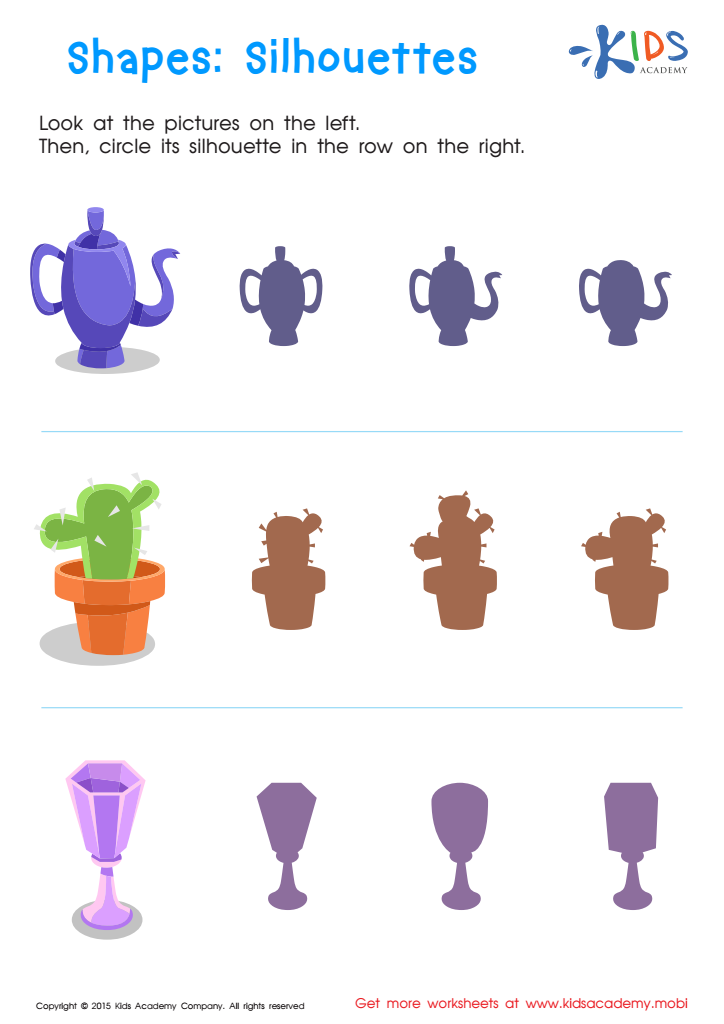
Silhouettes – Shapes Worksheet








Visual discrimination matching is a foundational skill for young children that parents and teachers should prioritize for a multitude of reasons. At ages 5-6, children are in a critical period of cognitive development where they enhance their ability to notice differences and similarities in shapes, letters, numbers, and objects. This skill forms the basis for more complex learning.
First and foremost, accurate visual discrimination is essential for reading development. When children can distinguish between similar letters like 'b' and 'd' or 'p' and 'q', they are better able to decode words correctly. This competency directly impacts their reading fluency and comprehension. Moreover, recognizing patterns and differences facilitates better mathematical understanding, such as distinguishing between different number symbols and quantities.
Additionally, visual discrimination skills contribute to overall academic readiness and success. These skills help in copying accurate information from the board, in organizing their work, and in ensuring they efficiently process visual information in a learning environment.
Teachers and parents also benefit as they observe fewer mistakes driven by substitution errors in reading and lesser reversals in writing. By supporting the development of visual discrimination through activities like matching games and puzzles, adults help young children build a strong foundation for academic skills, reduce frustrations, and foster self-confidence in their budding abilities.








