Comparing numbers Measurement Worksheets for Ages 5-6
3 filtered results
-
From - To
Explore our engaging "Comparing Numbers Measurement Worksheets" designed for young learners aged 5-6! These worksheets provide a fun and interactive way to develop essential math skills as children compare numbers and enhance their understanding of measurements. Featuring colorful illustrations and age-appropriate activities, our worksheets encourage children to practice concepts like greater than, less than, and equal to, fostering critical thinking. Perfect for both classroom enrichment and at-home practice, these resources make learning enjoyable and effective. Help your child build confidence in their math abilities and lay the groundwork for future success in mathematics with our specially designed activities.
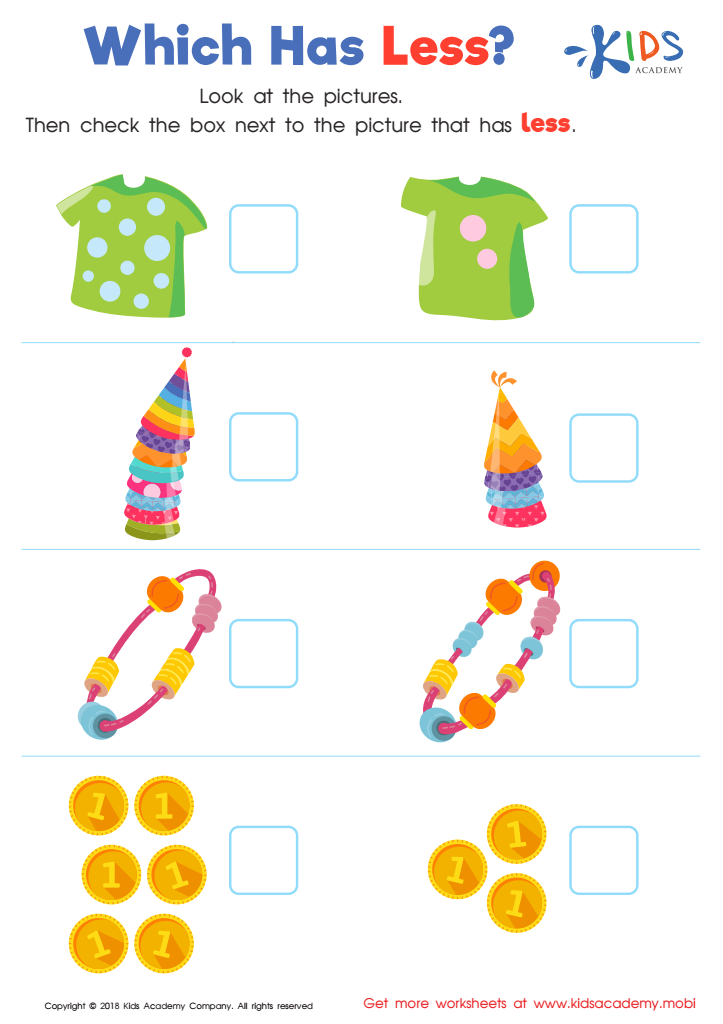
Which Has Less? Worksheet
 Assign to My Students
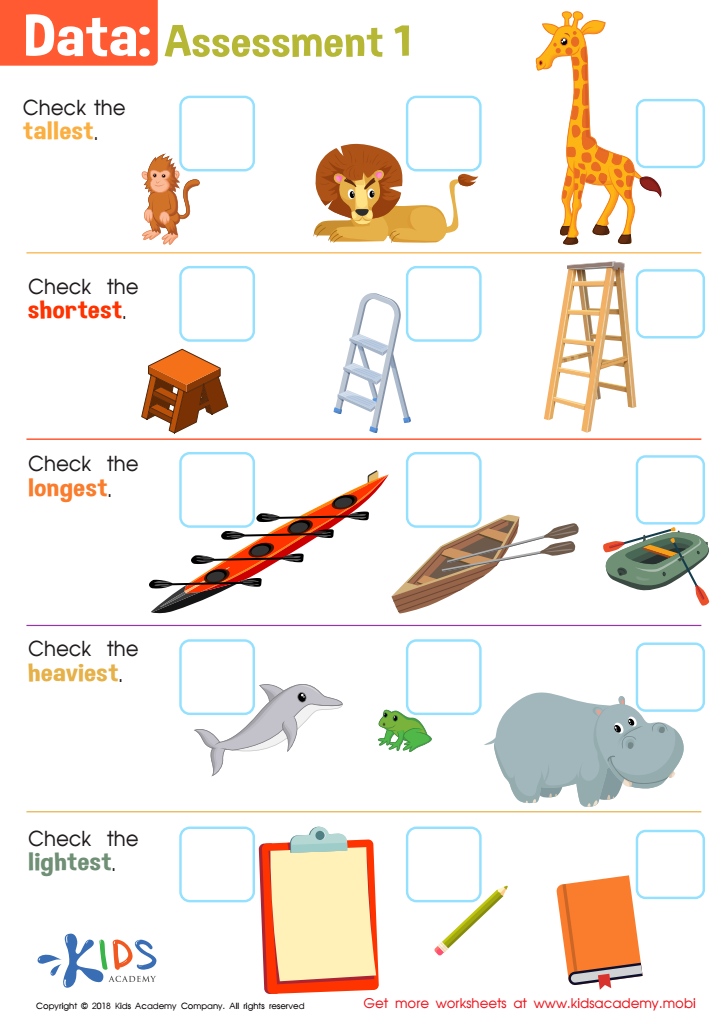
Data: Assessment 1 Worksheet
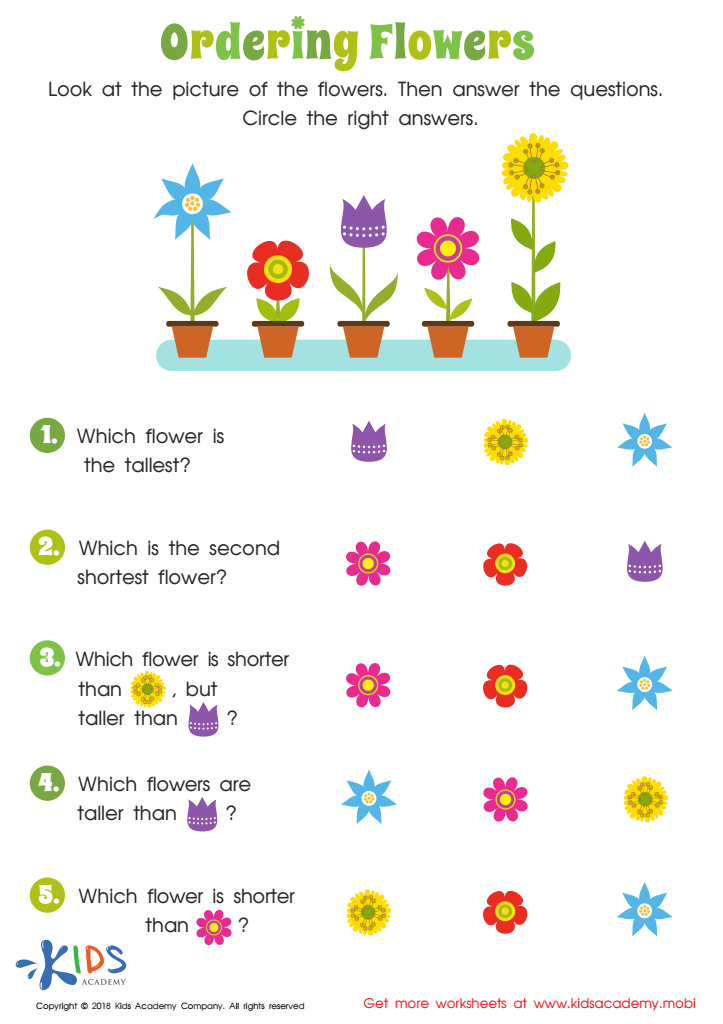
Ordering Flowers Worksheet







Comparing numbers and understanding measurement are foundational skills that significantly impact children's cognitive development and everyday experiences. For parents and teachers of ages 5-6, fostering these skills is essential as they lay the groundwork for more complex mathematical concepts later on.
Comparing numbers helps children develop critical thinking skills. By learning to identify greater than, less than, and equal to, they also grasp the concept of quantity, which is vital for effective problem-solving in daily situations. This understanding supports not just mathematics, but also practical life skills such as understanding age, money, and time.
Measuring introduces children to essential concepts like length, weight, and volume. It encourages hands-on exploration, reinforcing learning through play and real-world applications. This tangible interaction enhances their spatial awareness and allows them to make connections between mathematical concepts and their experiences.
Additionally, these skills promote numeracy, which is crucial for academic success. Instilling a strong number sense and measurement knowledge at this age sets a positive trajectory for future learning, promoting confidence and a positive attitude towards mathematics. Understanding these concepts benefits not just academic growth but also everyday problem-solving capabilities that will serve children throughout their lives.








