Comparing objects Measurement Worksheets for Ages 5-6
3 filtered results
-
From - To
Welcome to our Comparing Objects Measurement Worksheets for Ages 5-6! Designed to make learning engaging, these worksheets help young learners develop essential math skills by comparing size, length, and weight of various objects. Our interactive activities encourage critical thinking and hands-on exploration, supporting early mathematicians as they identify similarities and differences. Perfect for use at home or in the classroom, our resources enhance fine motor skills while fostering a love for learning. Explore our collection and watch your child gain confidence in their measurement abilities through fun and educational exercises tailored to their developmental needs!
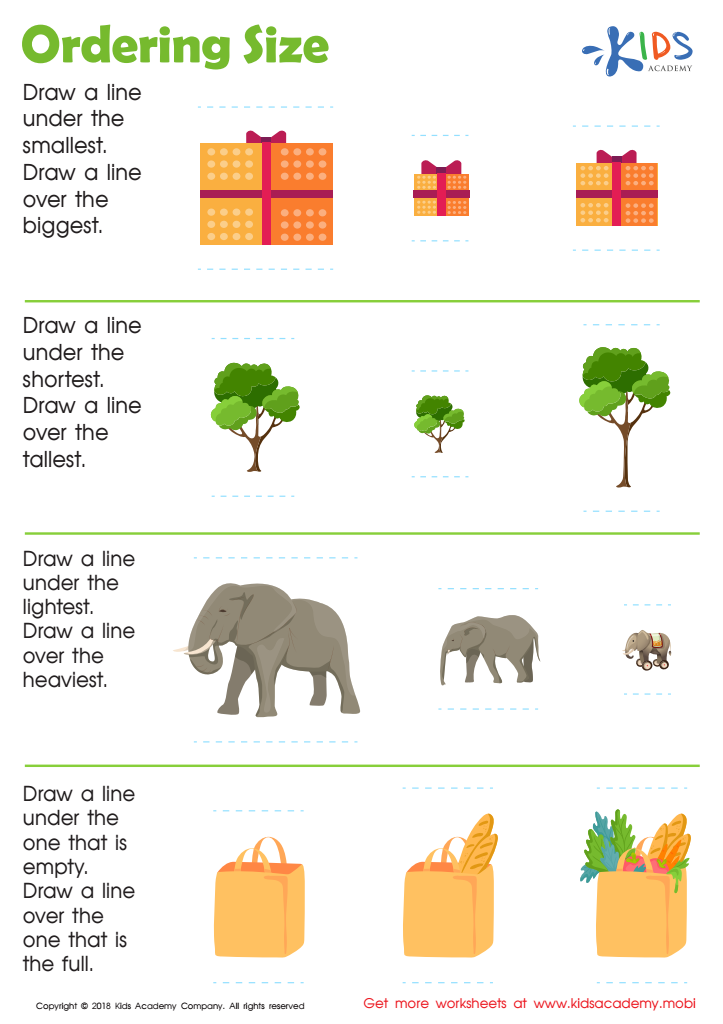
Ordering Size Worksheet
 Assign to My Students
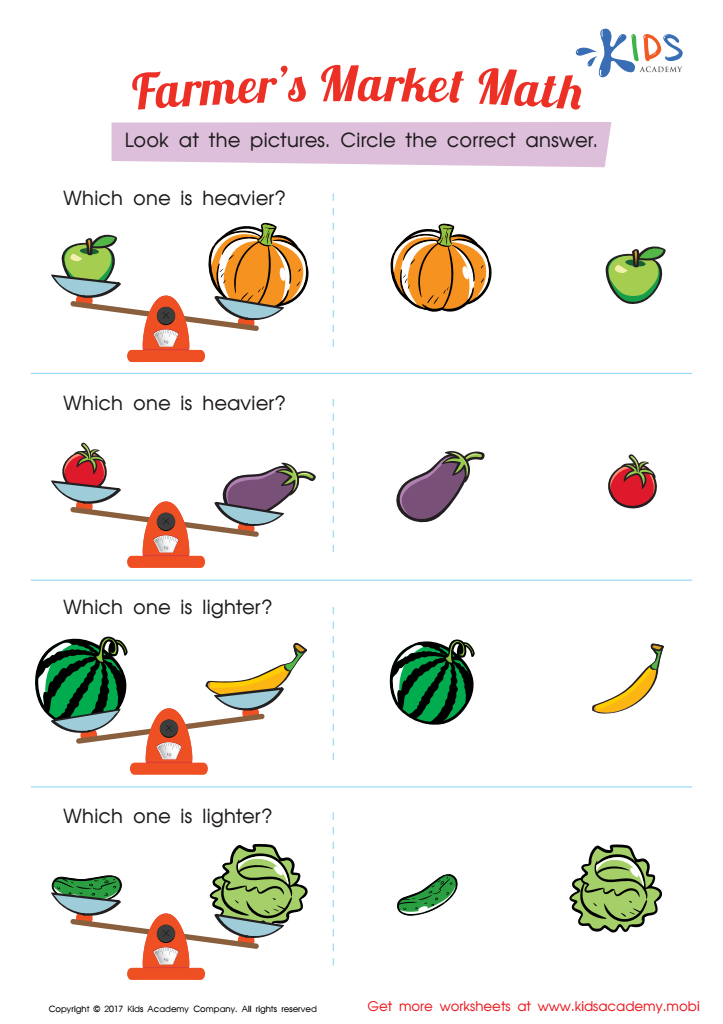
Which One Is Heavier Worksheet
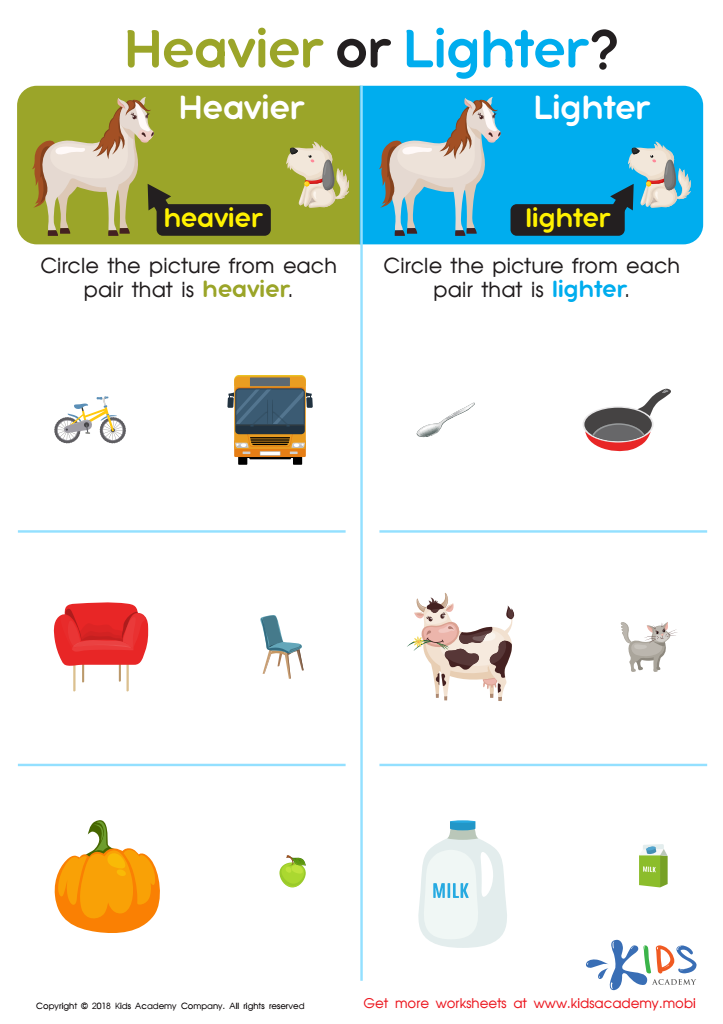
Heavier or Lighter? Worksheet








Comparing objects and measurement is foundational for children aged 5-6 and plays a crucial role in their early development. Understanding these concepts fosters critical thinking and problem-solving skills. At this age, children are naturally curious and love exploring their environment; engaging with measurement helps them learn by observing the world around them.
When parents and teachers emphasize comparing objects by attributes such as length, weight, and size, children develop essential mathematical skills. It instills a sense of order and categorization, enabling them to make connections between various objects and concepts. For instance, comparing how tall a book is to a toy or understanding that a rock is heavier than a feather introduces them to basic physics principles.
Moreover, these activities aid in language development—children learn to articulate their observations use descriptive vocabulary. By involving parents and teachers in measuring tasks, children also experience cooperation and teamwork, laying the groundwork for social skills.
In essence, comparing objects and measurement is not just about math; it's about nurturing inquisitive minds, encouraging exploration, and developing essential life skills that will benefit children in school and beyond. Investing time in these activities supports their holistic growth.








