Shape identification Tracing Shapes Worksheets for Ages 5-6
3 filtered results
-
From - To
Explore our engaging Shape Identification and Tracing Shapes Worksheets designed for children aged 5-6! These worksheets provide a fun and interactive way for young learners to develop their shape recognition skills and enhance fine motor abilities through tracing activities. Each worksheet features colorful illustrations that captivate children’s attention while reinforcing essential math concepts such as identifying and drawing various shapes. Ideal for classroom settings or at-home practice, our worksheets encourage creativity and confidence in young mathematicians. Download now to give your child the tools they need for successful early learning in geometry and shape identification!
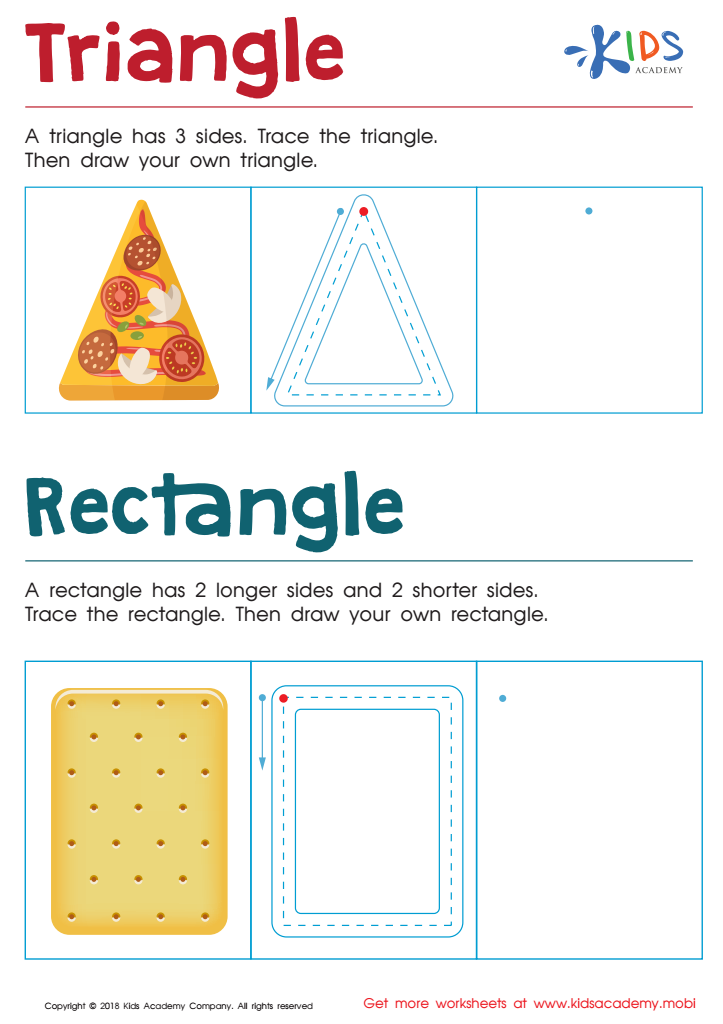
Triangle Rectangle Worksheet
 Assign to My Students
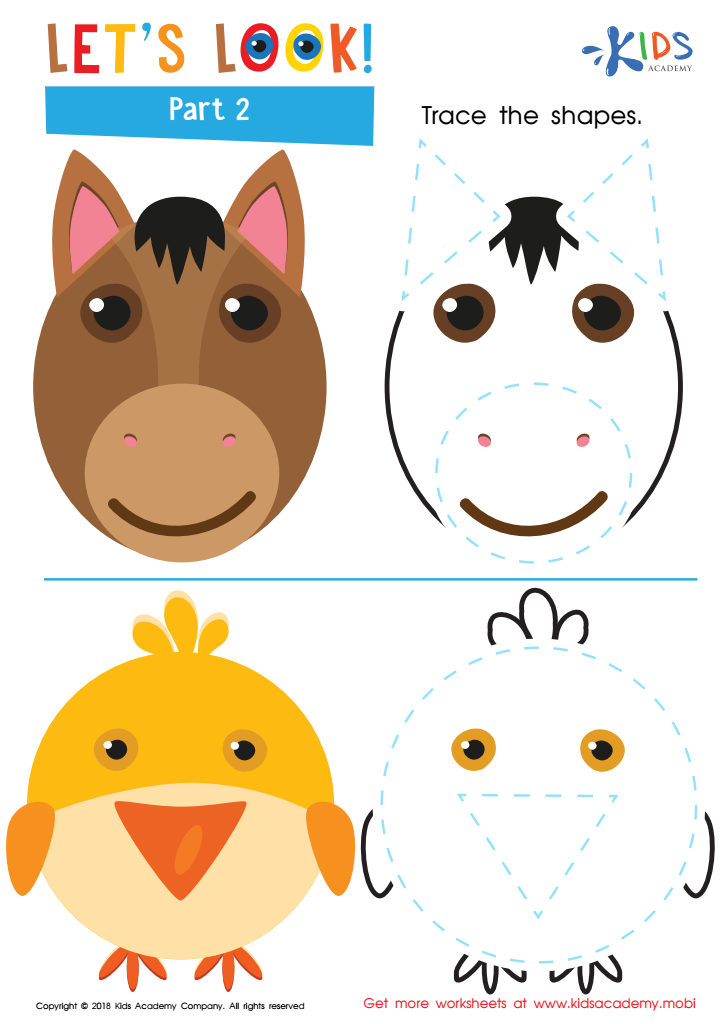
Let's Look! Part 2 Worksheet
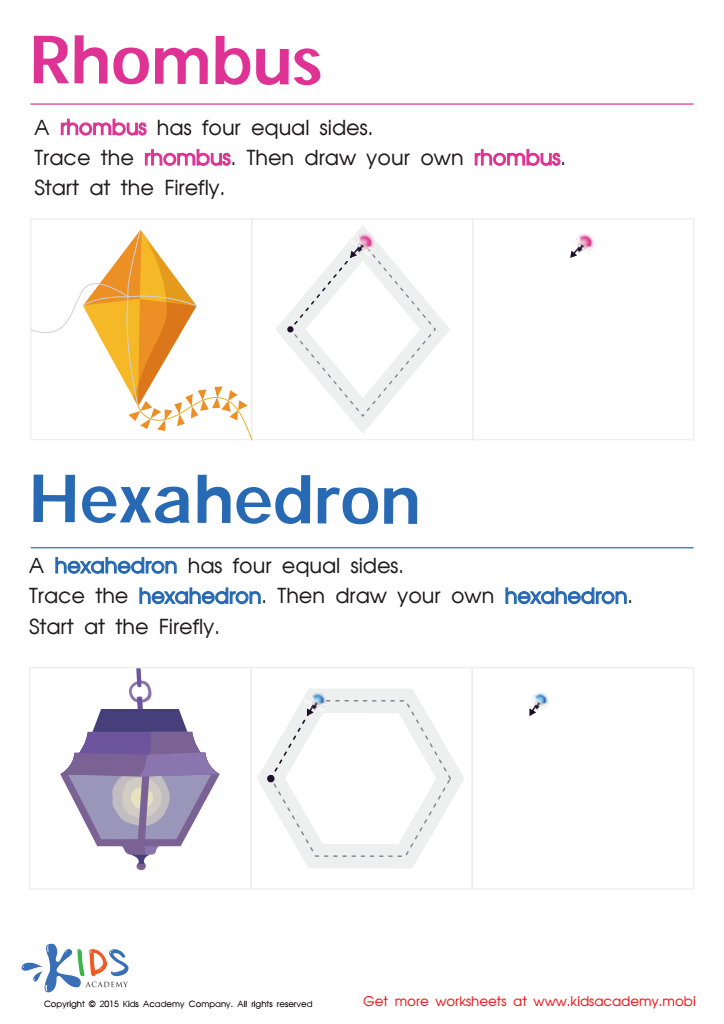
Draw a Rhombus And a Hexahedron Printable








Shape identification and tracing shapes is crucial for children aged 5-6 as it lays the foundation for many future learning experiences. At this developmental stage, children are keenly exploring their environment, and recognizing various shapes helps them make sense of the world around them. Understanding different shapes not only enhances their spatial awareness but also promotes critical thinking and problem-solving skills.
Tracing shapes aids in developing fine motor skills, essential for writing and other school-related tasks. These activities strengthen hand-eye coordination and dexterity, enabling children to control writing tools more effectively. Moreover, shape tracing engages their visual perception, helping them distinguish between different forms and reinforcing pattern recognition.
Incorporating shape identification into lessons also fosters a love for learning. It can spark curiosity and creativity as children relate shapes to everyday objects, promoting contextual learning. Engaging parents in this process can further enrich a child's understanding. By emphasizing the importance of shapes in everyday life—such as identifying shapes on road signs or in nature—teachers and parents can turn learning into fun and meaningful experiences. Ultimately, nurturing shape recognition has lasting benefits in cognitive and social development, preparing children for more complex concepts in math and science as they progress in their education.