Animal recognition Word Problems Worksheets for Ages 5-6
4 filtered results
-
From - To
Help young learners develop their critical thinking skills with our "Animal Recognition Word Problems Worksheets" designed for ages 5-6. These engaging worksheets feature fun scenarios involving various animals, encouraging children to solve simple math problems while enhancing their recognition of different species. Each word problem is thoughtfully crafted to stimulate curiosity about the animal kingdom while reinforcing basic math concepts such as addition and subtraction. Perfect for classroom use or at-home practice, these worksheets make math fun and interactive, helping young students build confidence in their problem-solving abilities. Download now to embark on a wild mathematical adventure!
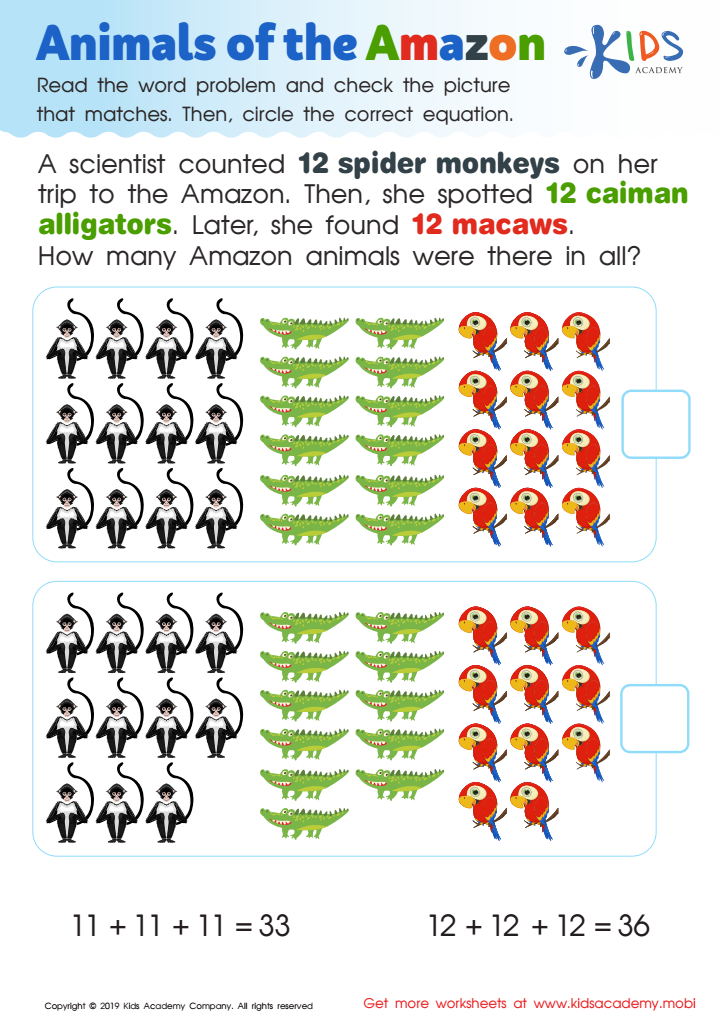
Animals of Amazon Worksheet
 Assign to My Students
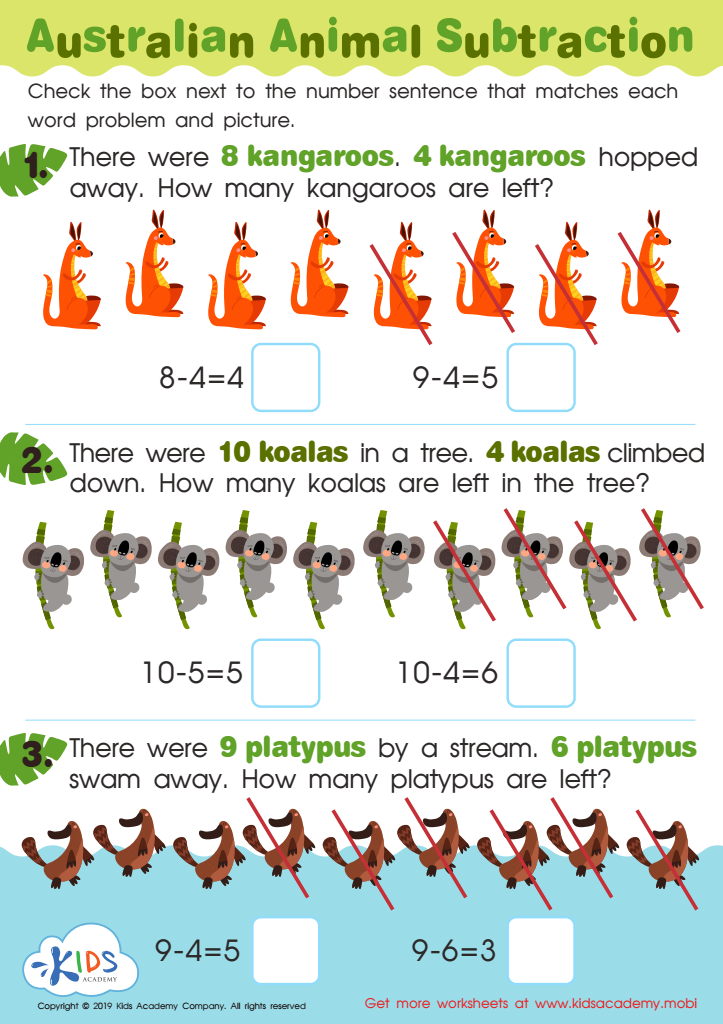
Australian Animal Subtraction Worksheet
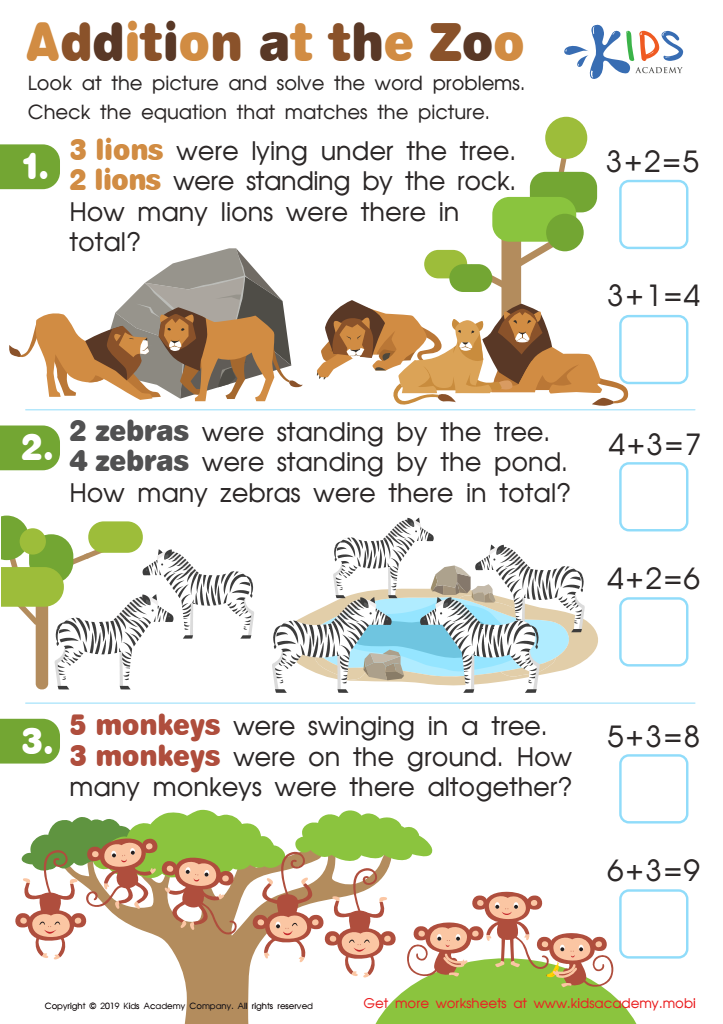
Addition at the Zoo Worksheet
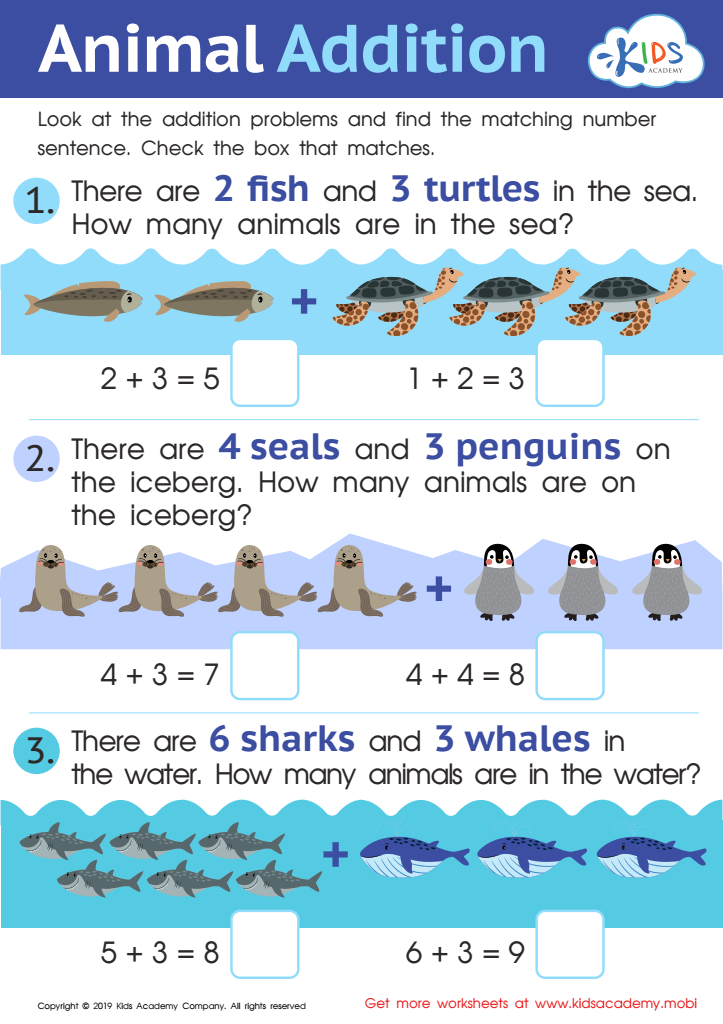
Animal Addition Worksheet






.jpg)

Animal recognition word problems for ages 5-6 offer numerous benefits for young learners, making them a valuable teaching tool for parents and educators. Firstly, these problems enhance critical thinking and comprehension skills by encouraging children to interpret and analyze information. As they engage with various animal scenarios, they learn to apply their reasoning to answer questions, fostering cognitive development.
Moreover, animal recognition will help deepen their understanding of the natural world, cultivating empathy, curiosity, and a sense of responsibility toward living beings. This connection to animals can inspire conversations about habitats, behaviors, and environmental conservation, broadening children's knowledge beyond basic math skills.
Additionally, language development is promoted through word problems, expanding children's vocabulary and improving their ability to articulate thoughts and ideas. This practice reinforces essential numeracy skills by making math relatable and enjoyable through real-world contexts, ensuring children can see the purpose and application of math in everyday life.
Lastly, engaging with animal-themed word problems can captivate children's imaginations, making learning fun and interactive. This approach not only nurtures a love for learning but also builds a positive attitude toward education as a whole, setting the foundation for lifelong academic engagement.








