Hand-eye Coordination Building Vocabulary Worksheets for Ages 5-6
4 filtered results
-
From - To
Enhance your child's learning experience with our Hand-eye Coordination Building Vocabulary Worksheets, designed specifically for ages 5-6. These engaging worksheets combine essential vocabulary-building exercises with fun coordination activities, helping young learners develop critical skills in reading and motor abilities. As children connect words with visuals, they not only enhance their vocabulary but also refine their hand-eye coordination through interactive play. Ideal for educators and parents, these worksheets encourage creativity and support early literacy development in a playful manner. Boost your child's learning journey today with our effective and enjoyable resources, perfectly tailored to nurture their growing minds!
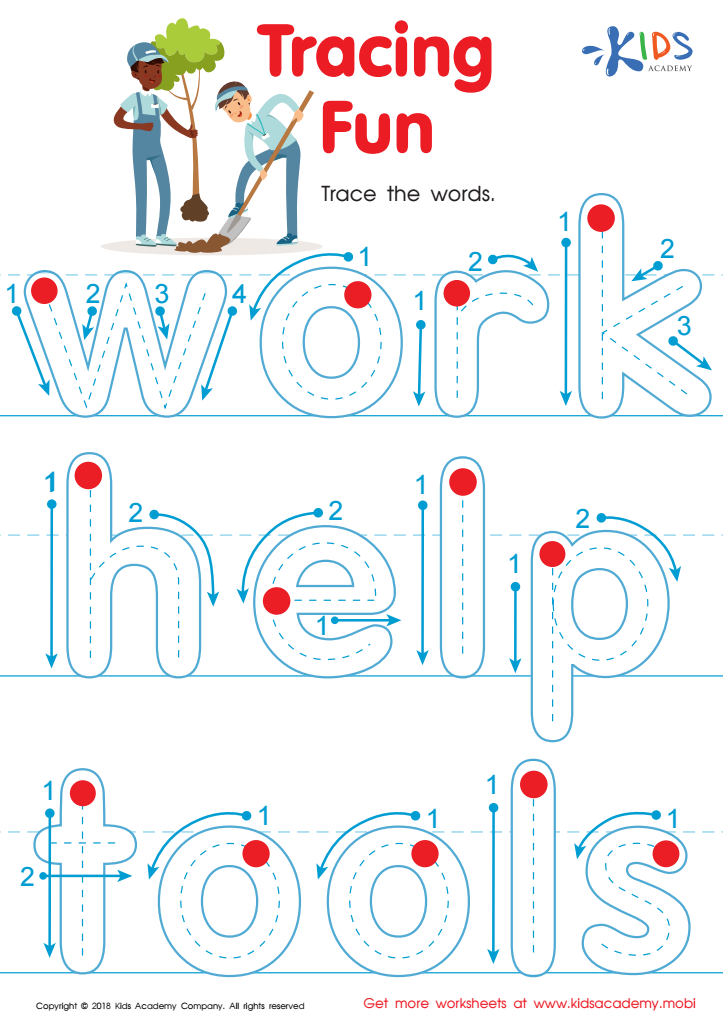
Tracing Fun Worksheet











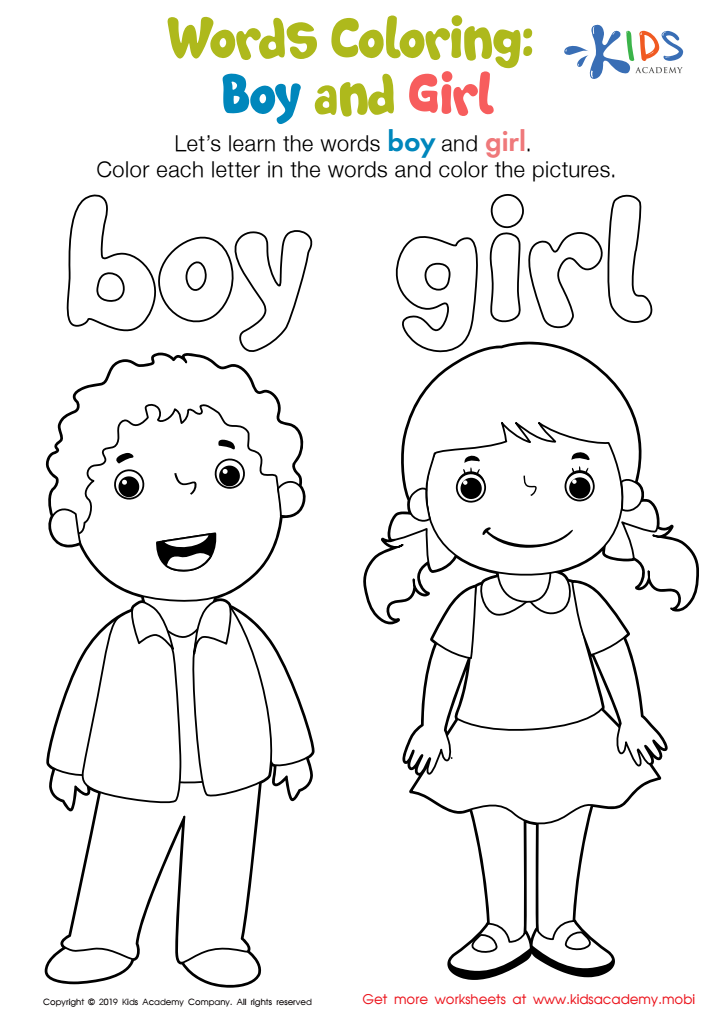
Boy and Girl Words Coloring Worksheet
 Assign to My Students
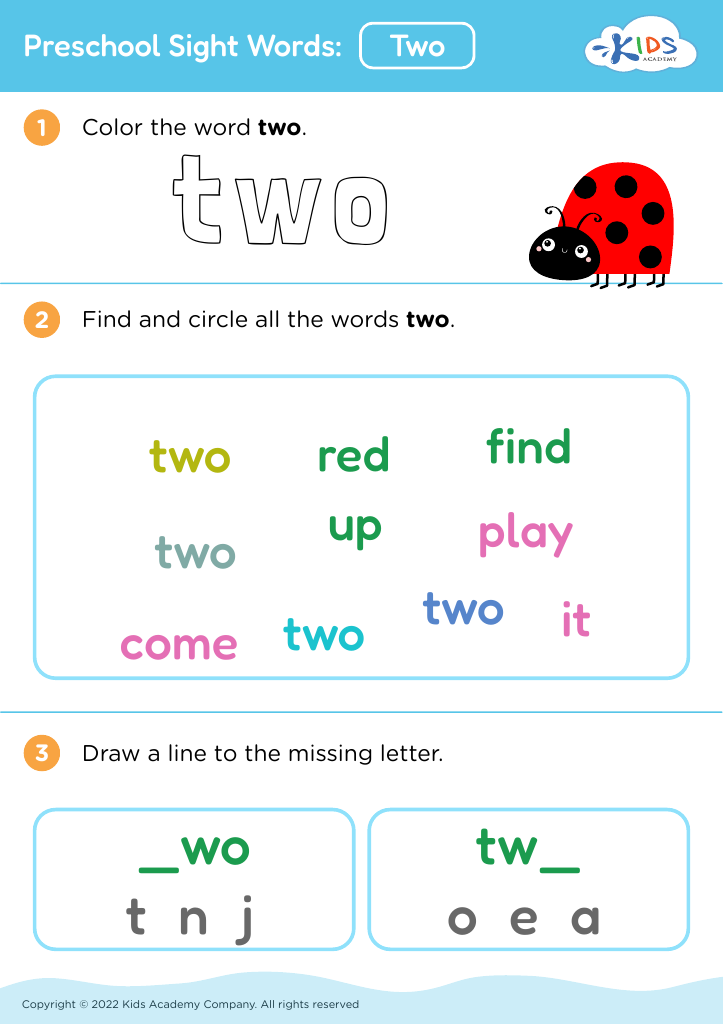
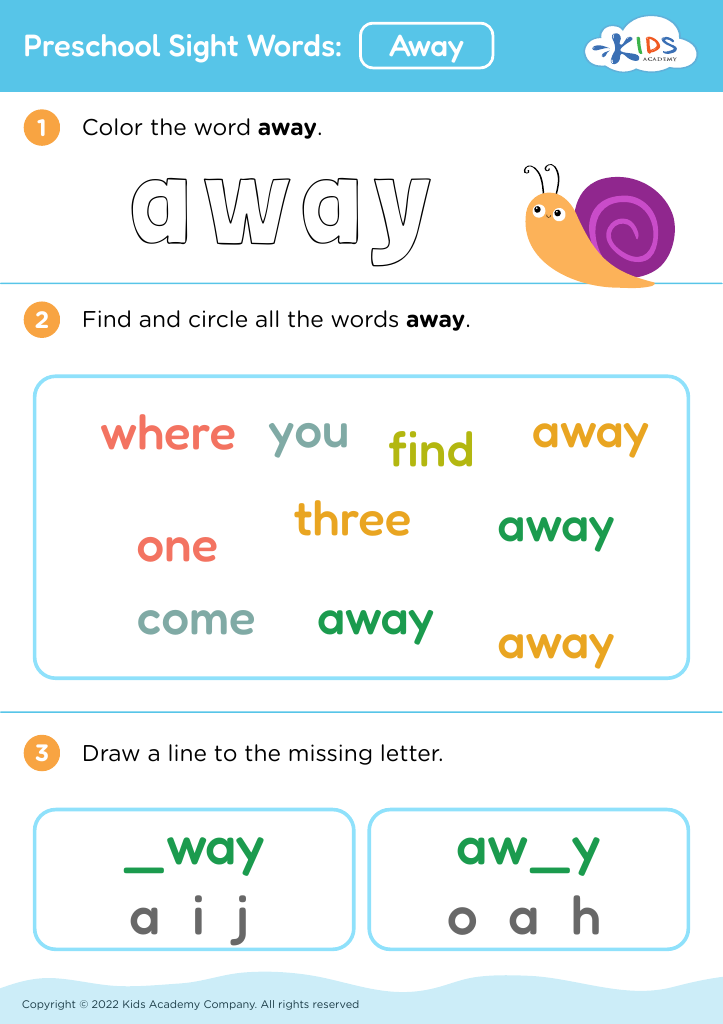



.jpg)




Parents and teachers should prioritize building vocabulary in conjunction with hand-eye coordination for children aged 5-6 because these skills are intricately linked to overall development. At this age, children are in a critical phase of growth where they make connections between what they learn and their physical capabilities.
Improving hand-eye coordination, through activities like drawing, playing sports, or engaging in crafts, fosters cognitive growth, enhancing children's ability to integrate sensory information. When children practice these motor skills while simultaneously learning new vocabulary—such as terms associated with new activities—they solidify their understanding through active participation. For example, when a child learns the word "swing" while playing on a swing, they connect the verbal expression with the physical action.
Moreover, a robust vocabulary strengthens reading and language skills, which are foundational for academic success. Engaging in vocabulary-building activities while practicing motor skills makes learning more enjoyable and meaningful, helping to sustain children's interest.
Ultimately, fostering both hand-eye coordination and language development lays the groundwork for effective learning strategies they will rely on throughout their education. Parents and teachers should integrate these experiences into daily activities, recognizing the long-lasting benefits they confer.








