
Understanding habitats Building Vocabulary Worksheets for Ages 5-6
3 filtered results
Difficulty Level
Grade
Age
-
From - To
Subject
Activity
Standards
Discover our "Understanding Habitats Building Vocabulary Worksheets" designed for ages 5-6! These engaging worksheets introduce young learners to various ecosystems and their unique characteristics, helping them expand their vocabulary while exploring the world around them. With colorful illustrations and simple language, children will identify different habitats such as forests, oceans, and deserts, enhancing their understanding of nature. Fun activities and questions will spark curiosity and foster critical thinking skills, making learning enjoyable. Perfect for parents and educators alike, these worksheets provide a solid foundation for early language development while promoting awareness of the environment. Start your child’s adventure into the wonders of habitats today!
Favorites
With answer key
Interactive
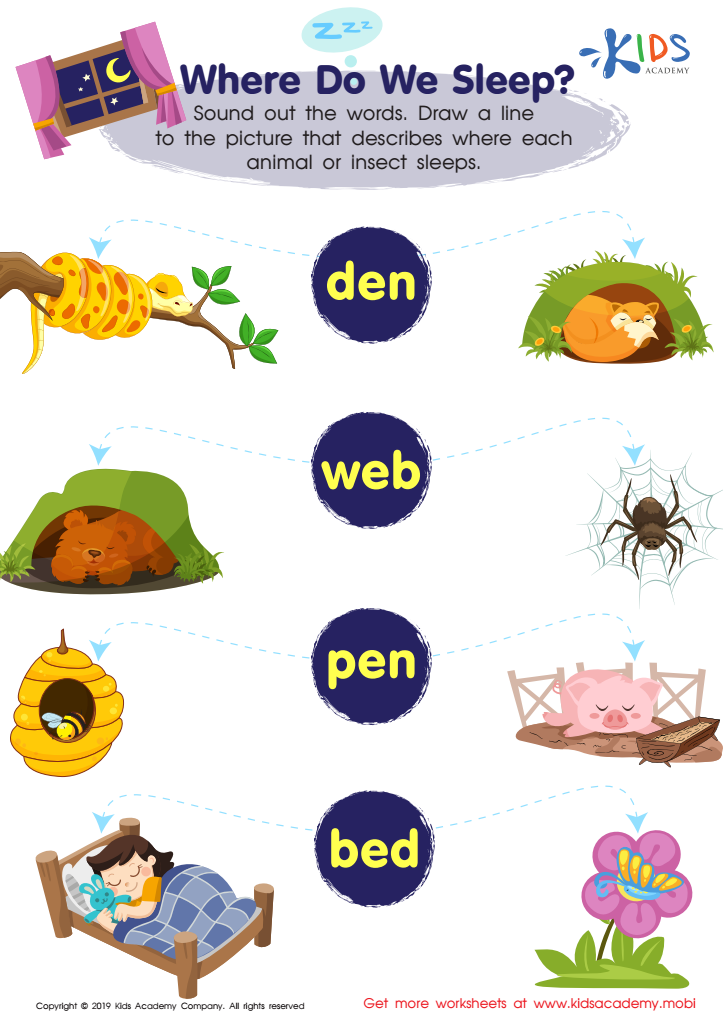
Where Do We Sleep Worksheet
Help your kids understand the importance of a safe space with this activity: Ask them to draw a line connecting the different animals and insects to the words that describe where they sleep. Remind them that everyone needs a sanctuary to rest – like the animals and insects in this printout.
 Assign to My Students
Where Do We Sleep Worksheet
Worksheet











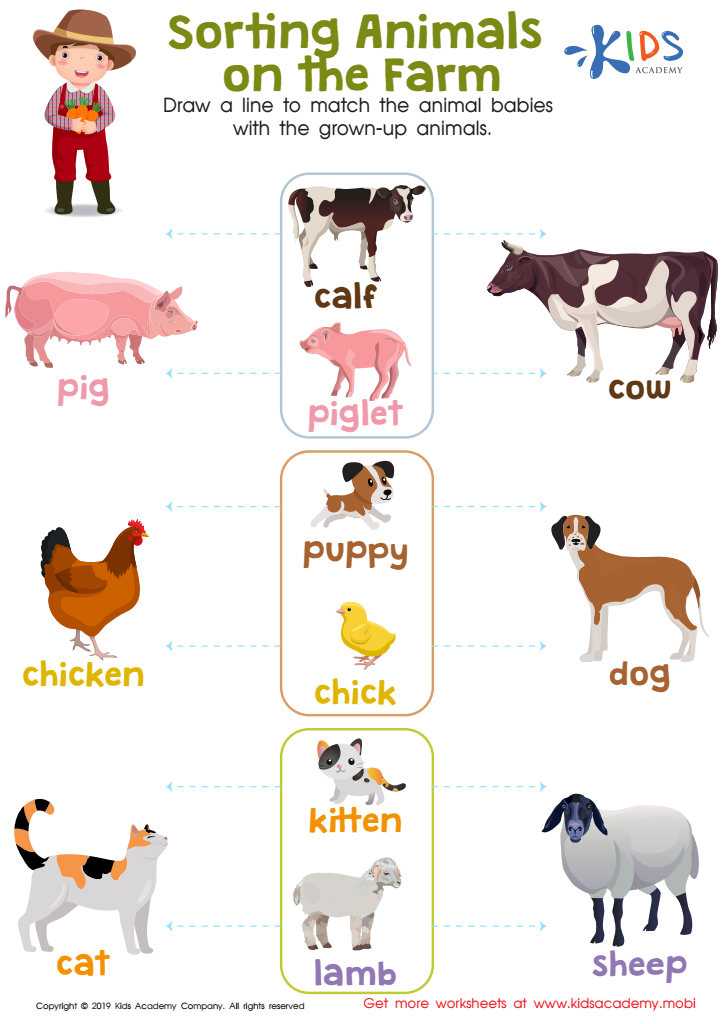
Sorting Animals on the Farm Worksheet
This PDF worksheet engages preschoolers in a fun activity to match Mama farm animals with their babies, strengthening their sorting and patterning skills. They'll learn to recognize rules and relationships, while gaining familiarity with animal-related words.
Sorting Animals on the Farm Worksheet
Worksheet
Join Kids Academy for Free
Who is primarily going to use this learning content?








Understanding habitats and building vocabulary for children aged 5-6 is crucial, as it lays the foundation for their future learning and appreciation of the natural world. Habitats are the environments where plants and animals live, and teaching children about them fosters a sense of curiosity and respect for biodiversity. When young learners explore various habitats—such as forests, oceans, or deserts—they develop observational skills, critical thinking, and an appreciation for ecological balance.
Building vocabulary connected to habitats enhances children's communication skills and their ability to express their thoughts and feelings about the world around them. As they learn new words related to animals, plants, and environmental concepts, their linguistic abilities grow, which is essential for reading comprehension and effective expression. Vocabulary enrichment at this stage also helps children understand and articulate scientific concepts, laying the groundwork for future studies in science and environmental education.
Additionally, engaging children with hands-on activities like nature walks, storytelling, and interactive games can deepen their understanding of habitats and strengthen their vocabulary in enjoyable ways. By prioritizing these concepts, parents and teachers equip children with critical thinking skills, creativity, and a lifelong love for learning.








