Logical Reasoning Reading Fiction Worksheets for Ages 5-6
5 filtered results
-
From - To
Unlock your child’s potential with our "Logical Reasoning Reading Fiction Worksheets" designed for ages 5-6. These engaging, age-appropriate worksheets combine fun stories with essential problem-solving skills, helping young readers develop their cognitive abilities while enjoying literature. Packed with captivating narratives and interactive exercises, children will enhance their comprehension, critical thinking, and logical reasoning through a variety of activities. Ideal for both classroom and at-home learning, these worksheets promote creativity and curiosity, ensuring an enriching experience for budding readers. Foster a love for reading and reasoning skills with our exceptional resources that make learning an exciting adventure!
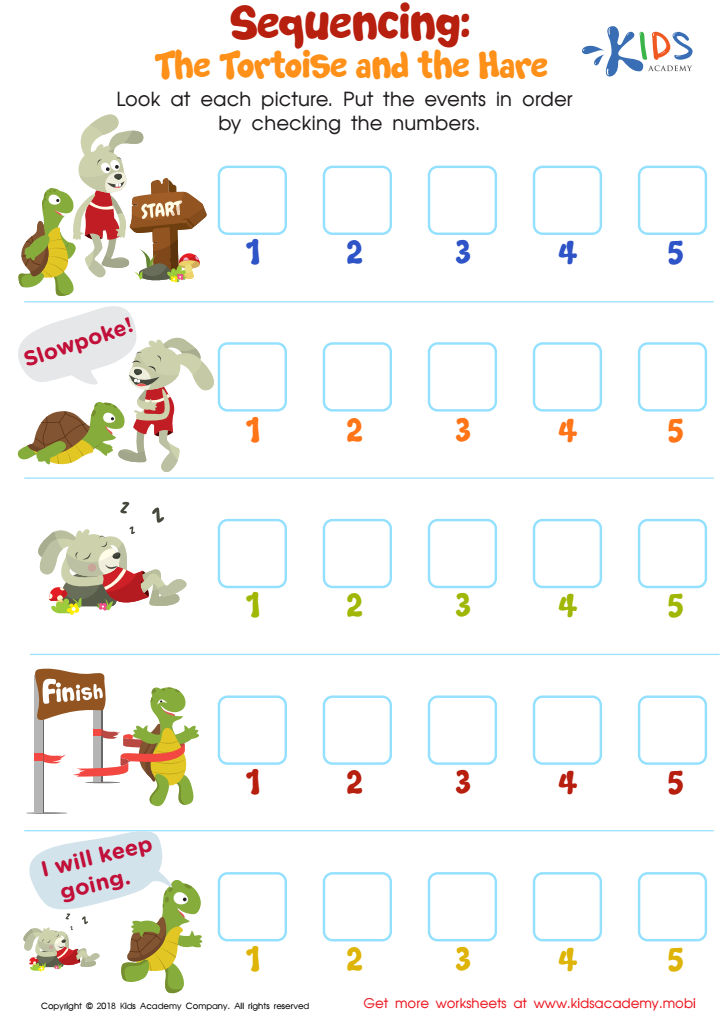
Sequencing: The Tortoise and the Hare Worksheet
 Assign to My Students
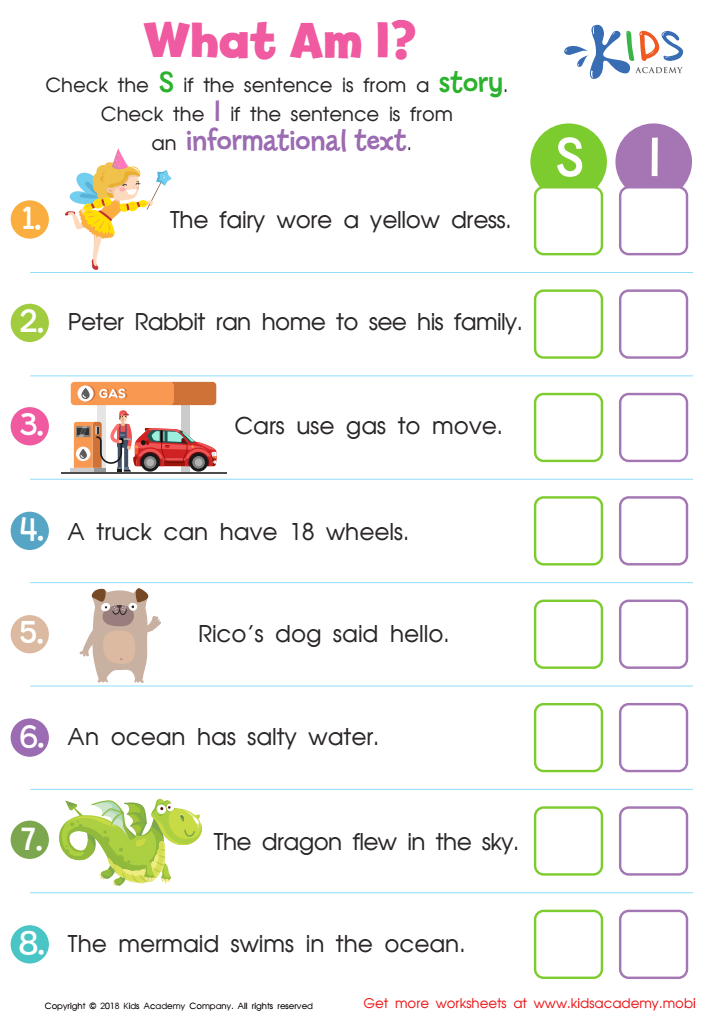
What Am I? Worksheet
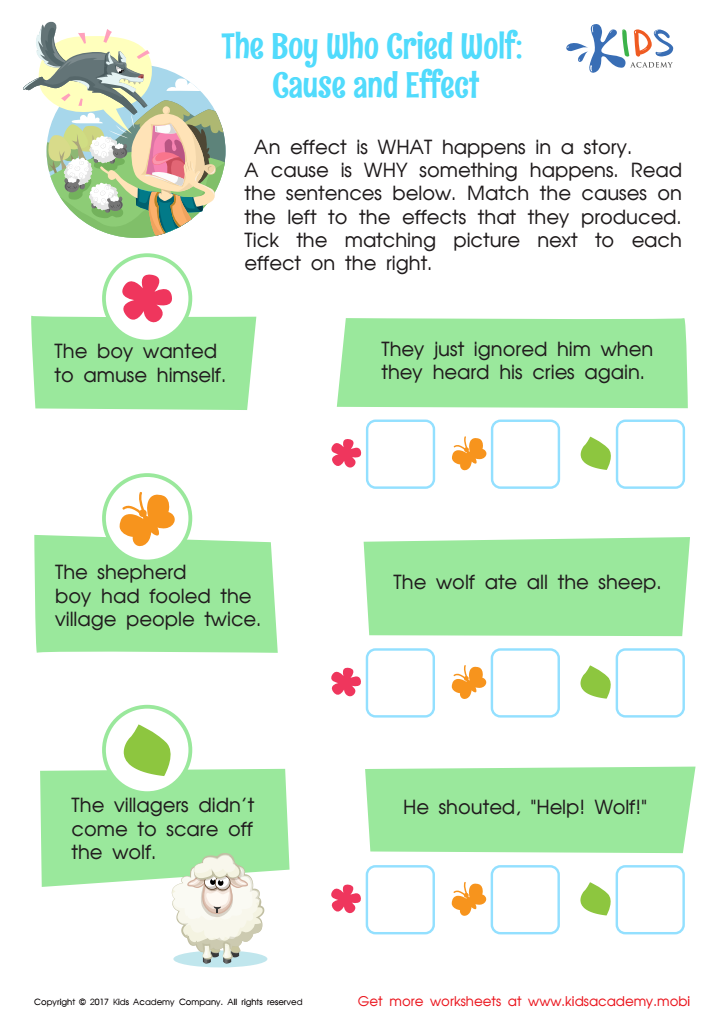
The Boy Who Cried Wolf: Cause and Effect Worksheet
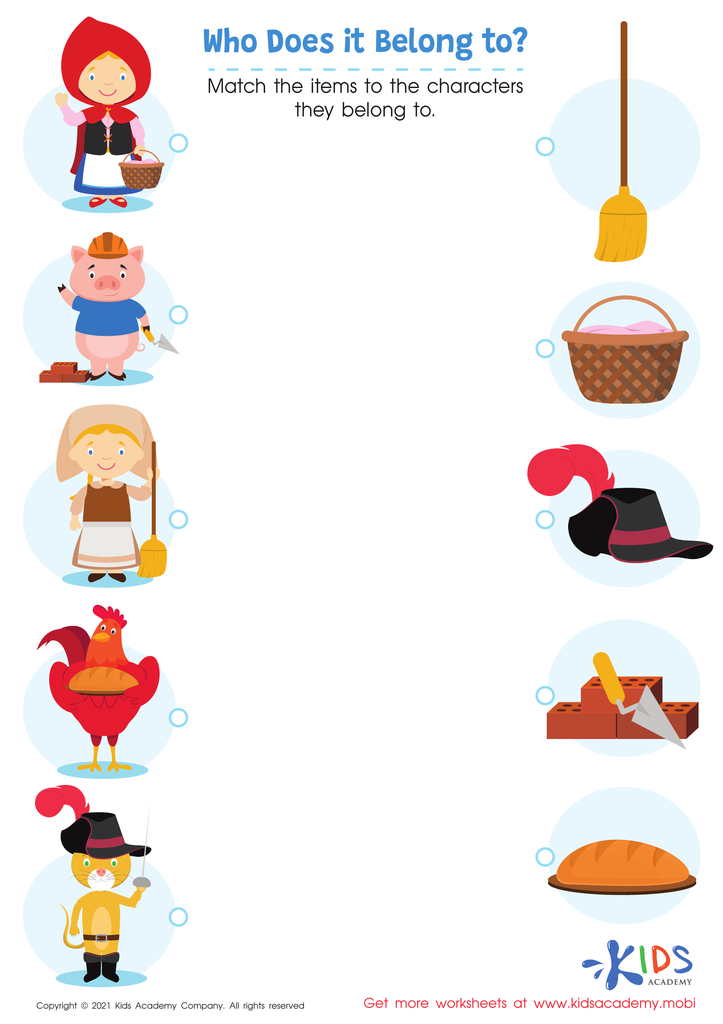
Who Does It Belong To? Worksheet
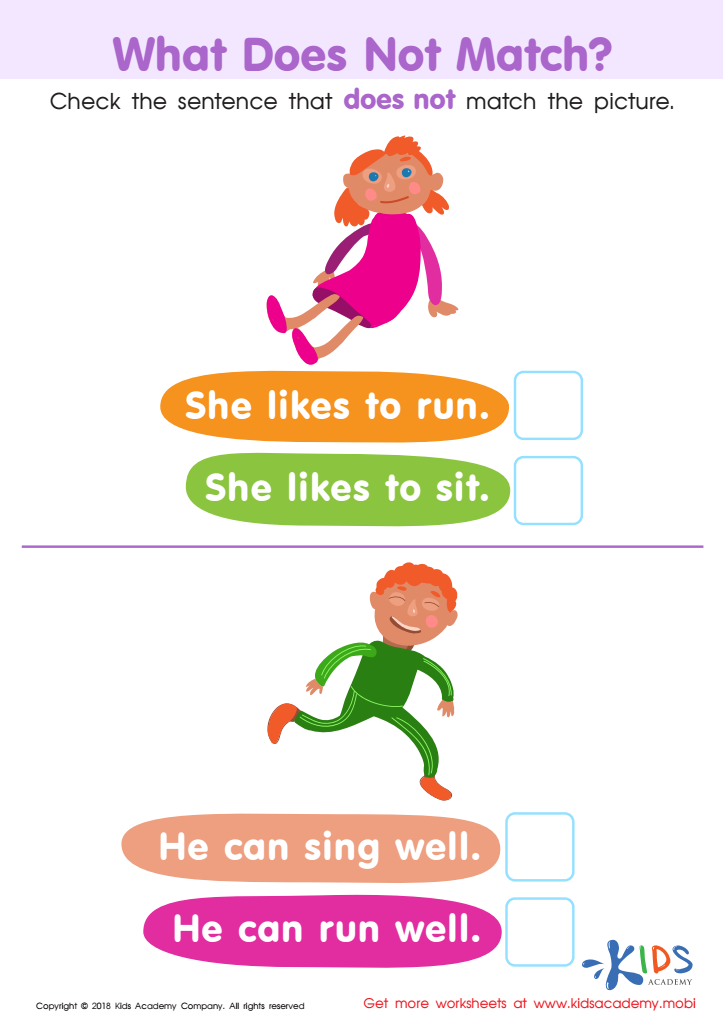
What Does Not Match? Worksheet


.jpg)




.jpg)
Logical reasoning is a crucial cognitive skill that can significantly enhance a child's understanding and engagement with literature, especially at a young age. When children, aged 5-6, read fiction, they're not merely absorbing stories; they are actively making connections, predictions, and inferences about characters and plots. This interactive process fosters critical thinking, which is vital for problem-solving in everyday life. Parents and teachers should advocate for fostering logical reasoning because it lays a strong foundation for literacy development and enhances comprehension skills.
Engaging with fiction teaches children to recognize cause-and-effect relationships within the stories. When they analyze characters' motivations and consequences, it deepens their understanding and boosts imaginative capabilities. Moreover, fostering logical reasoning in literature cultivates an appreciation for storytelling and encourages a love of reading.
As early grade educators and caregivers encourage discussions about texts, evaluating plot twists or character decisions can help children articulate their thoughts and strengthen their verbal skills. Ultimately, prioritizing logical reasoning in novels and stories equips children with the analytical tools they need, not just in academics, but also in social interactions and emotional understanding, aspects paramount for holistic development.








