Color recognition Reading Non-Fiction Worksheets for Ages 5-6
3 filtered results
-
From - To
Discover our engaging "Color Recognition Reading Non-Fiction Worksheets" designed specifically for children aged 5 to 6. These worksheets combine colorful visuals with interesting non-fiction texts to captivate young learners while enhancing their reading and comprehension skills. Each activity focuses on identifying and naming colors, effectively integrating literacy with essential color recognition. Perfect for preschool and kindergarten classrooms or at-home learning, these worksheets encourage critical thinking and creativity. Promote a love for learning and support your child's educational journey with our fun and interactive resources that make mastering color recognition an enjoyable experience. Dive into the world of colors today!
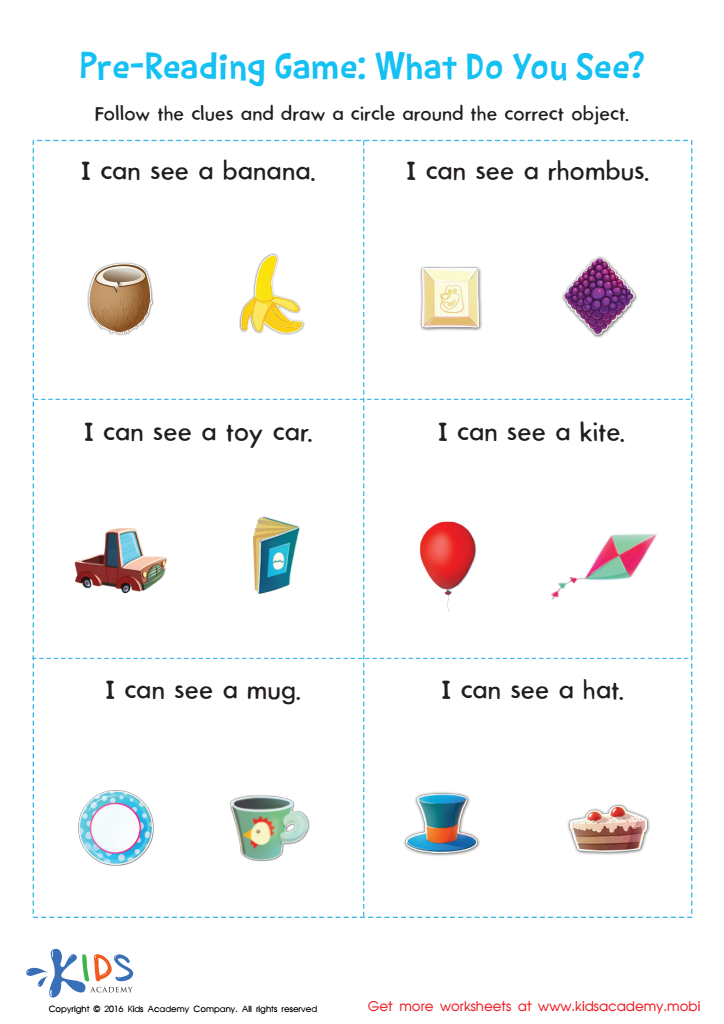
Pre–reading Worksheet: What Do You See?
 Assign to My Students
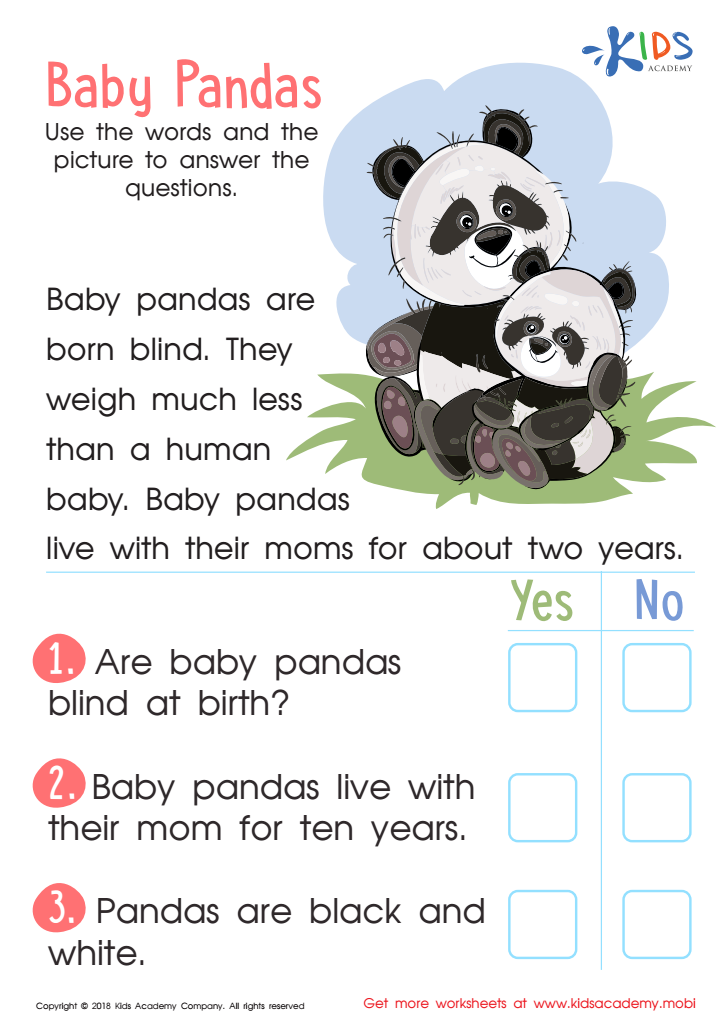
Baby Pandas Worksheet
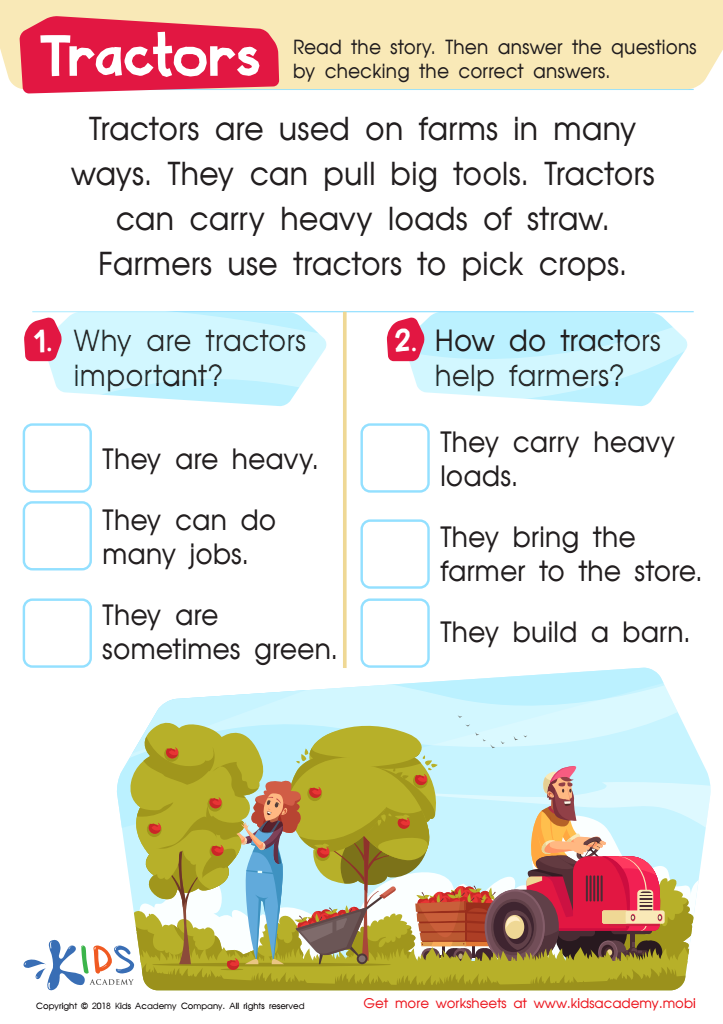
Tractors Worksheet








Color recognition is an essential skill for children aged 5-6 that lays the foundation for their cognitive and language development. Understanding colors helps young learners categorize objects, enhance their observational skills, and improve their ability to express themselves. When parents and teachers incorporate color recognition into reading non-fiction texts, it enriches the learning experience by making the information more engaging and relatable.
At this age, children are naturally curious. Non-fiction books that focus on colors not only capture their attention but also introduce them to real-world concepts, such as plants, animals, and environments, through vibrant illustrations. Recognizing colors helps them connect these concepts to their surroundings, fostering deeper understanding and interest in diverse topics.
Furthermore, color acknowledgment in reading supports literacy skills, as children learn to visualize and differentiate between words and meanings associated with colors. It can help in building vocabulary by introducing new descriptive terms tied to what they see, ultimately improving their overall reading comprehension.
In essence, emphasizing color recognition in non-fiction reading activities prepares young learners for future academic challenges, enhances their creativity, and cultivates a lifelong love for reading and learning. Thus, parents and teachers should prioritize this integrated approach in early education.








