Sound Association ABC Coloring Pages Worksheets for Ages 5-9
3 filtered results
Difficulty Level
Grade
Age
-
From - To
Subject
Activity
Standards
Discover our "Sound Association ABC Coloring Pages Worksheets" designed specifically for children aged 5-9. These engaging activities combine the fun of coloring with essential early literacy skills. Each worksheet encourages kids to match letters with corresponding sounds, fostering phonemic awareness, an important step in learning to read. With a focus on creative expression and interactive learning, our worksheets support cognitive development and fine motor skills. Perfect for parents and educators, these printables make learning enjoyable and effective. Foster a love for reading with our playful, educational resources today! Visit now and start your child's literacy journey.
Favorites
With answer key
Interactive
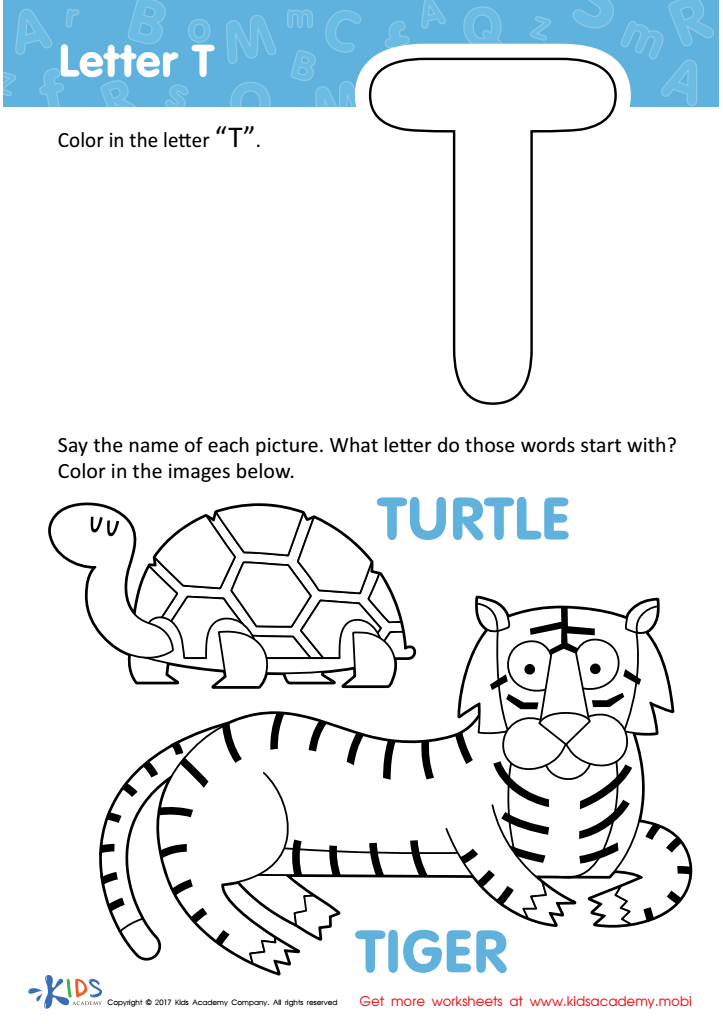
Letter T Coloring Sheet
Introduce your child to the letter "T" and its animals – turtles and tigers! With this coloring page, you can stimulate your child's imagination and creativity, while helping them recognize the letter "T". Have fun with your child and get coloring!
Download (PDF)
 Assign to My Students
Assign to My Students
Letter T Coloring Sheet
Worksheet
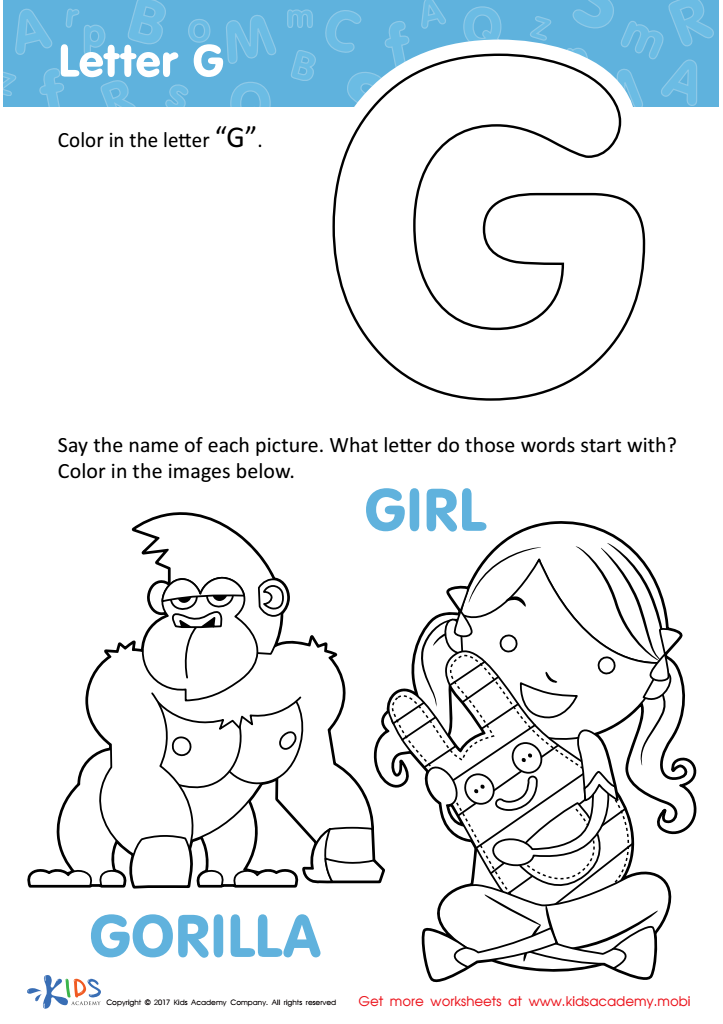
Letter G Coloring Sheet
This "G" coloring page encourages creativity and teaches kids the letter "G" sound. With its fun visuals and familiar words, it's sure to excite your child. Plus, you can talk about the letter’s sound with the pictures given.
Download (PDF)
Assign to My Students
Assign to My Students
Letter G Coloring Sheet
Worksheet
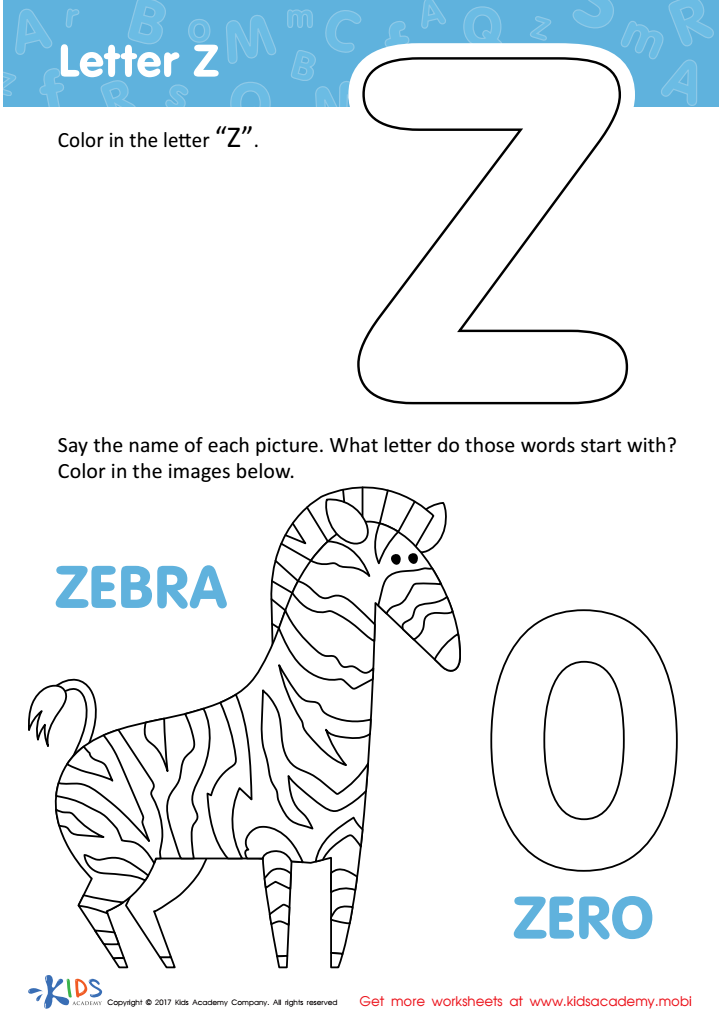
Letter Z Coloring Sheet
This coloring page featuring the letter "Z" is perfect for your child to practice letter recognition! Help them learn the unique sound it makes as they color. It'll be a fun and easy activity they won't have trouble with!
Download (PDF)
Assign to My Students
Assign to My Students
Letter Z Coloring Sheet
Worksheet
Join Kids Academy for Free
Who is primarily going to use this learning content?



Sound Association ABC Coloring Pages are a valuable educational tool for children ages 5-9. These resources marry the developmental benefits of coloring with foundational literacy skills, providing a multifaceted learning experience. Through coloring, children refine their fine motor skills, hand-eye coordination, and concentration, all of which are crucial for writing and other academic tasks.
More importantly, Sound Association ABC Coloring Pages introduce young learners to phonics, helping them connect letters with their corresponding sounds. This linkage is vital as it builds the foundation for effective reading and spelling. Early exposure to phonics through engaging and enjoyable activities like coloring ensures that children can decode words more easily, paving the way for fluent reading.
Additionally, these pages often pair letters with images representing words that begin with, or prominently feature, each letter’s sound. This visual aid reinforces the sound association and enhances vocabulary. When parents and teachers use these coloring pages as an instructional aid, they provide a balanced mix of creativity and education, making learning to read a fun and interactive process.
In summary, Sound Association ABC Coloring Pages support critical aspects of early childhood development and literacy. Parents and teachers who incorporate them into learning routines invest in a child's future academic success while catering to their natural inclination for creativity and play.