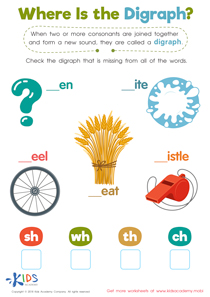
Sound recognition Beginning Consonants Worksheets for Ages 5-9
3 filtered results
-
From - To
Discover our engaging Sound Recognition Beginning Consonants Worksheets designed for children ages 5-9! These resources help young learners develop essential phonemic awareness by focusing on the sounds that begin words. Each worksheet features fun activities, including tracing, identifying, and matching beginning consonants to images. Ideal for home or classroom use, these worksheets promote early literacy skills, boost confidence, and make learning enjoyable. With a variety of exercises that cater to different learning styles, kids will enhance their recognition skills while having a blast. Perfect for supporting reading readiness, our worksheets are a must-have for fostering a love of learning in your child!
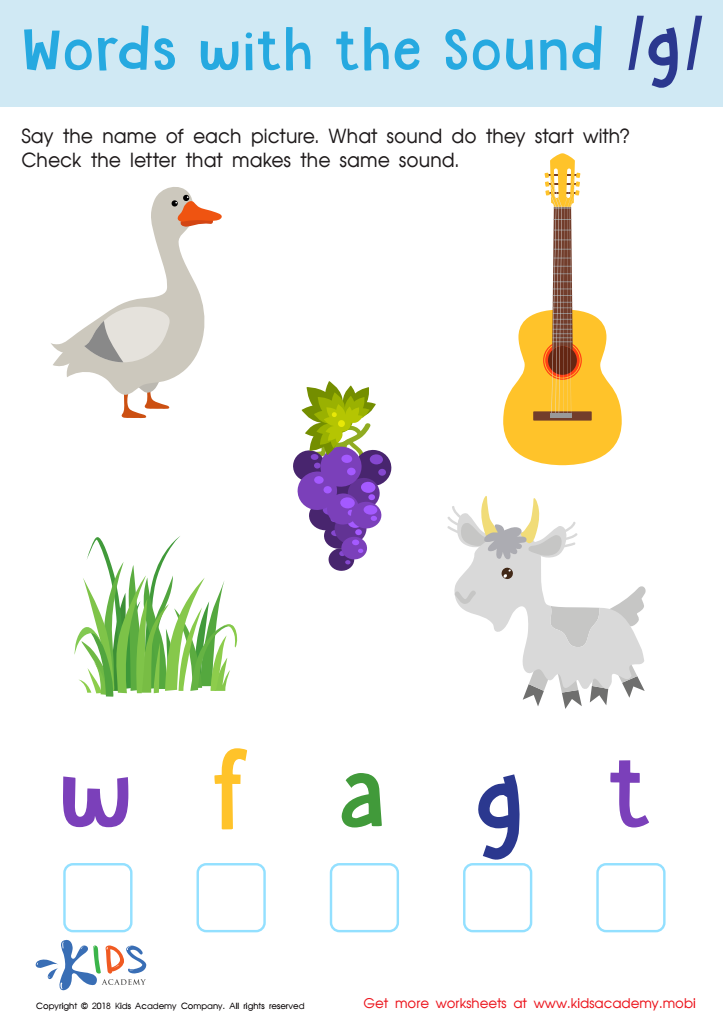
Words with sound g Reading Worksheet
 Assign to My Students
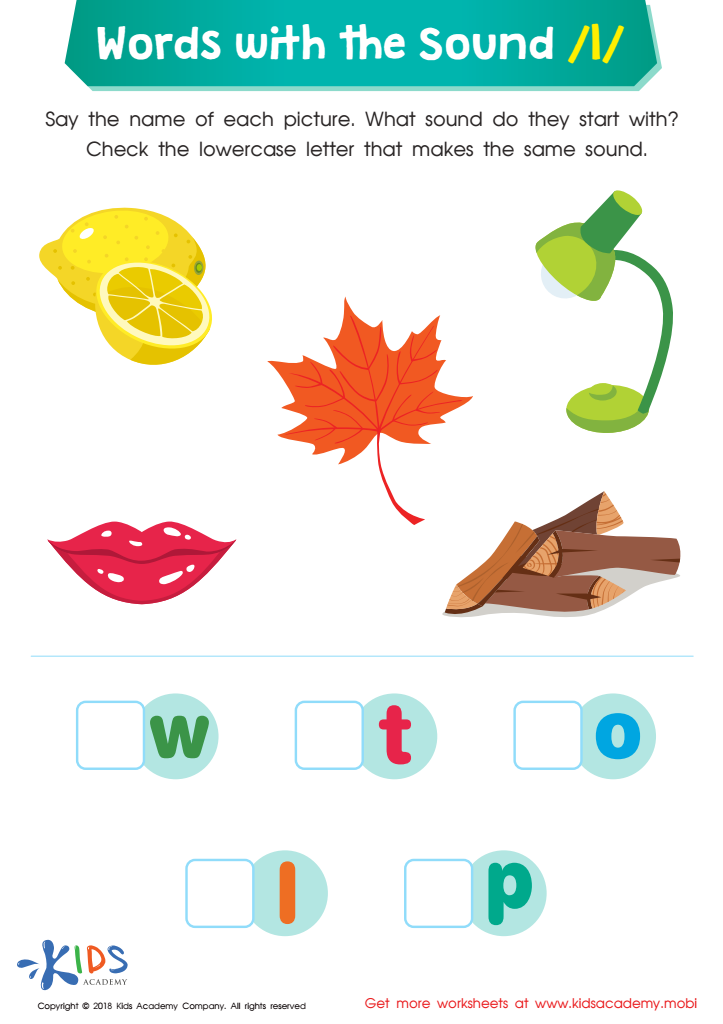
Words with Sound L Reading Worksheet
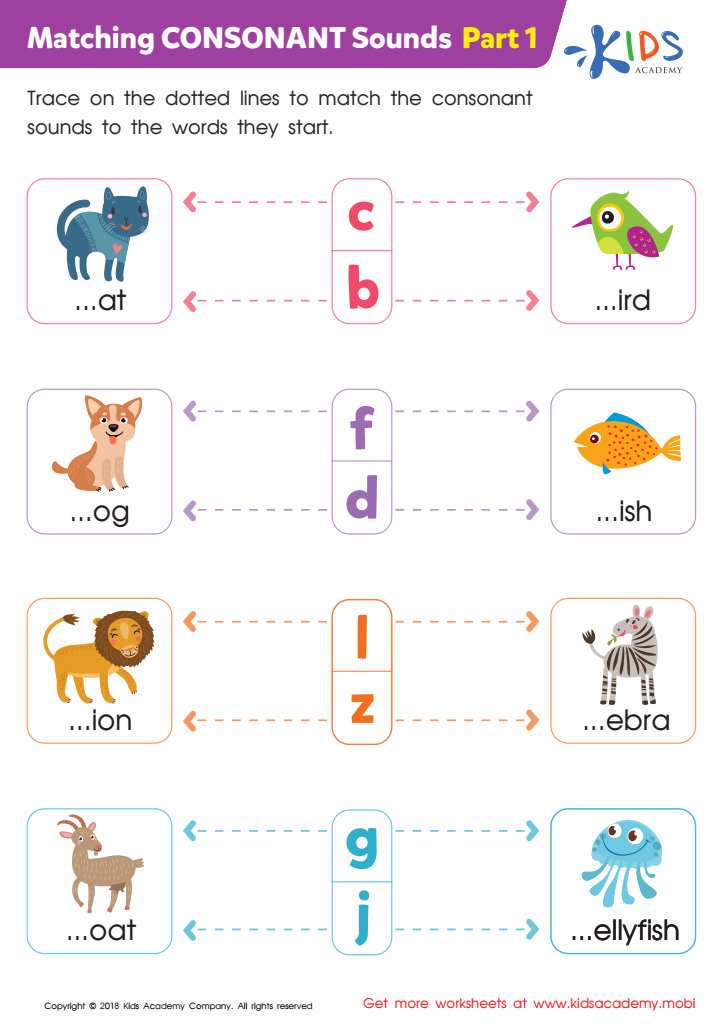
Matching Consonant Sounds: Part 1 Worksheet


Sound recognition, particularly beginning consonants, is crucial for children aged 5-9 as it lays the foundation for their reading and writing skills. At this age, children are developing phonemic awareness, which involves recognizing and manipulating sounds in spoken words. By focusing on beginning consonants, parents and teachers help children connect sounds with letters, which is essential for decoding words.
Understanding beginning consonants aids in vocabulary development and spelling. When children can identify initial sounds, they can more easily guess words, enhancing their reading fluency. This skill also supports the development of literacy, allowing children to transition from letter recognition to word formation and ultimately to reading sentences.
Moreover, sound recognition is linked to overall academic success. It fosters confidence in children’s abilities to express themselves in writing and verbally, promoting better communication skills. For parents and teachers, emphasizing beginning consonants can create engaging activities, like phonics games or rhyming exercises, making learning enjoyable.
In summary, focusing on sound recognition and beginning consonants is pivotal for young learners as it equips them with foundational skills crucial for literacy and future academic achievement. Engaging in these practices provides children with the tools needed to thrive in their educational journey.