
Letter-sound correlation Letter Sounds Worksheets for Ages 5-9
4 filtered results
Difficulty Level
Grade
Age
-
From - To
Subject
Activity
Standards
Enhance your child's reading skills with our engaging Letter Sounds Worksheets designed for ages 5-9. These easy-to-use resources emphasize letter-sound correlation, laying a strong foundation for early literacy. With a variety of fun activities, including matching letters to sounds and identifying initial sound pictures, children will develop essential phonemic awareness as they gain confidence in reading. Ideal for home or classroom use, our worksheets cater to diverse learning styles, ensuring that every child can thrive. Start nurturing a love for reading early on with our thoughtfully crafted worksheets that make learning letter sounds enjoyable and effective!
Favorites
With answer key
Interactive
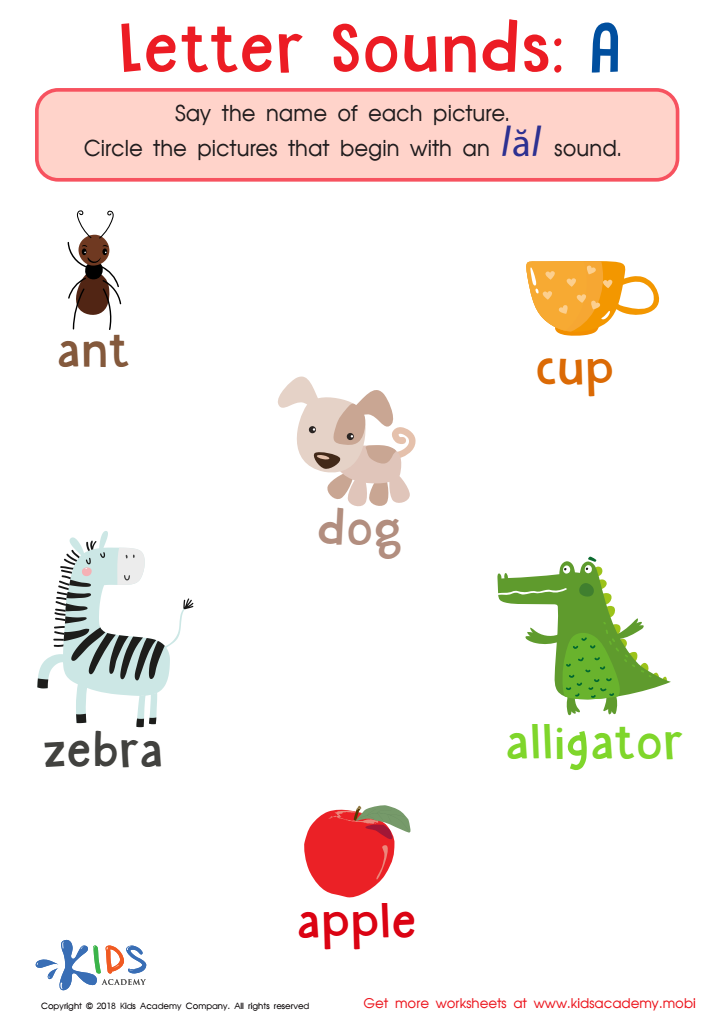
Letter A Sounds Worksheet
Encourage your new reader to practice the «ă» sound with this fun, free PDF worksheet. With the help of picture clues, they'll say the name of each word and trace circles around the items that start with «ă». This worksheet is an effective way to boost beginning sound skills while having fun!
 Assign to My Students
Letter A Sounds Worksheet
Worksheet
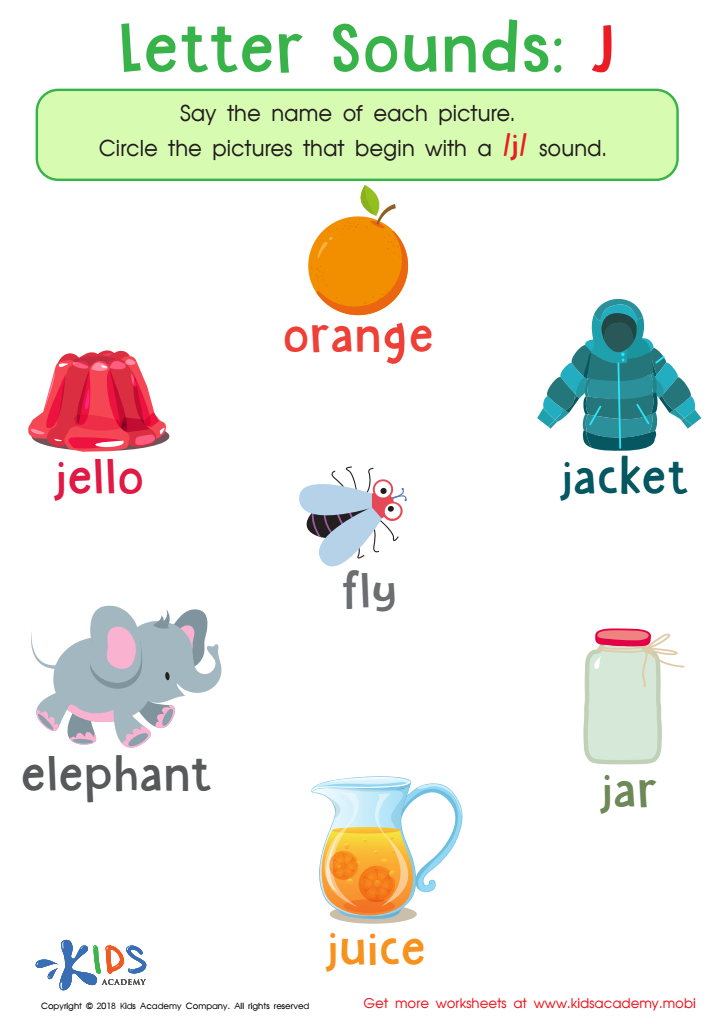
Letter Sounds: J Printable Worksheet
Preschoolers can learn to identify letter sounds by focusing on beginning sounds. This cute and colorful worksheet reviews the hard “j” sound. Kids can point it out by naming the words and circling only those starting with the “j” sound. Read the text out loud and listen closely!
Letter Sounds: J Printable Worksheet
Worksheet
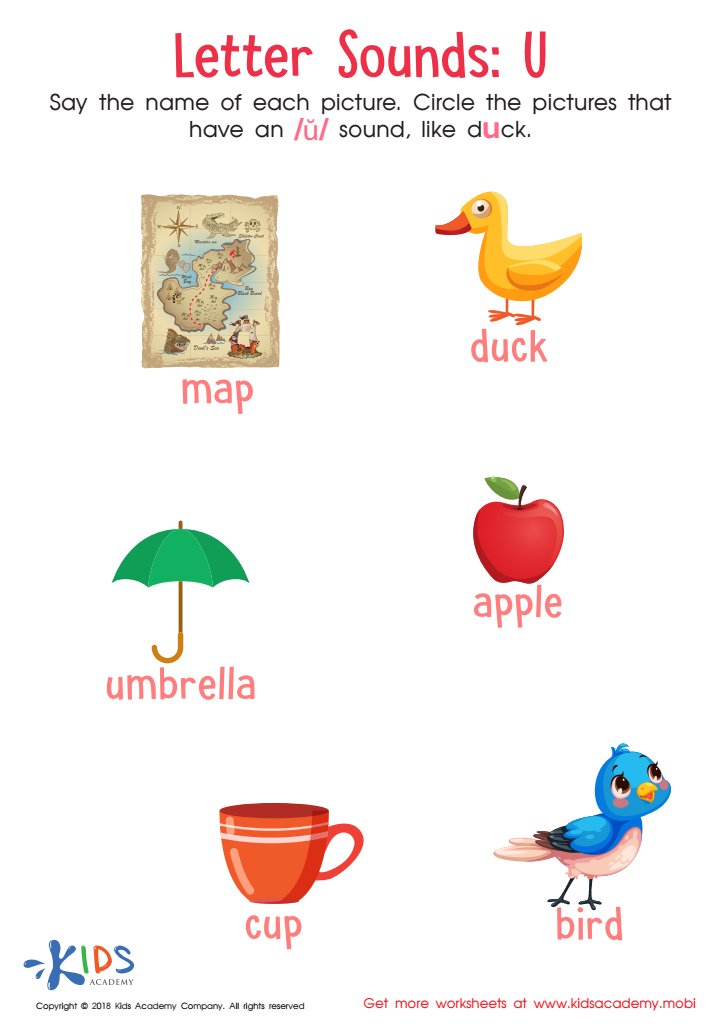
Letter U Sounds Worksheet
The letter U is special with multiple pronunciations. This worksheet helps kids identify the short «u» in words like duck and cup. Read the words aloud and listen closely to the sounds. Circle only words with the correct sound to complete the sheet. Kids will quickly know that words like "map" don't contain a U.
Letter U Sounds Worksheet
Worksheet
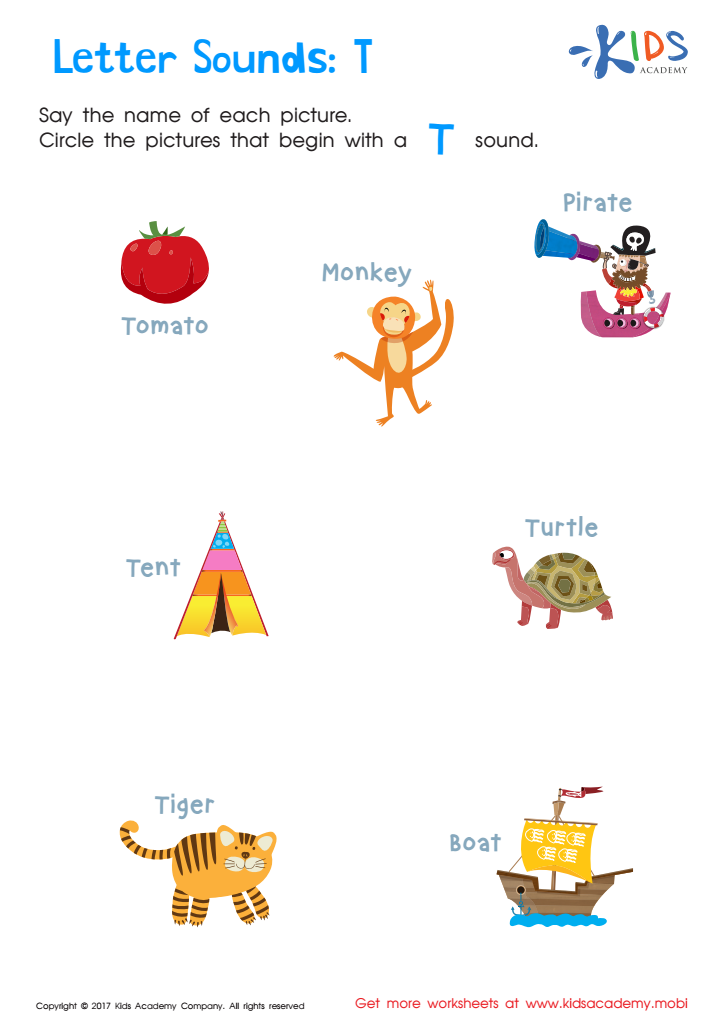
Letter T Sounds Worksheet
This worksheet is a fun way to help kids learn the t sound. It has familiar pictures and an easy-to-follow format, so kids can quickly recognize and learn the letter t.
Letter T Sounds Worksheet
Worksheet
Join Kids Academy for Free
Who is primarily going to use this learning content?








Letter-sound correlation is foundational in helping young learners, ages 5-9, develop essential reading and writing skills. Understanding the relationship between letters and their corresponding sounds is critical for phonemic awareness, enabling children to decode words and improve their literacy skills. As students gain proficiency in recognizing these associations, they become more confident readers and writers, which positively impacts their academic performance and overall love for learning.
Teachers and parents should prioritize this aspect of literacy because strong letter-sound knowledge fosters analytical thinking, allowing children to sound out unfamiliar words independently. Furthermore, it serves as a building block for spelling skills, as children begin to connect sounds with written symbols, enhancing their ability to write fluently.
Moreover, high-quality instruction and practice in letter-sound recognition engaged in the early years can minimize the risk of reading difficulties later on. By encouraging letter-sound correlation through fun games, songs, and classroom activities, educators and parents can create supportive environments that maximize school readiness and reading success.
In essence, the focus on letter-sound relationships helps develop not only competent readers but also enthusiastic learners, setting the stage for lifelong literacy and learning engagement.







