
Reading comprehension Letter Sounds Worksheets for Ages 5-9
3 filtered results
Difficulty Level
Grade
Age
-
From - To
Subject
Activity
Standards
Unlock the joy of reading with our engaging Reading Comprehension Letter Sounds Worksheets, designed specifically for children ages 5-9. These worksheets help young learners develop essential literacy skills by linking letter sounds to comprehension strategies. Each activity is crafted to enhance phonemic awareness, encourage critical thinking, and build confidence in reading. With fun illustrations and age-appropriate exercises, students will improve their understanding of sound-letter relationships while increasing their ability to interpret texts. Perfect for classroom or home use, our worksheets provide a valuable resource for educators and parents aiming to foster a love for reading in early learners. Dive into the world of reading today!
Favorites
With answer key
Interactive
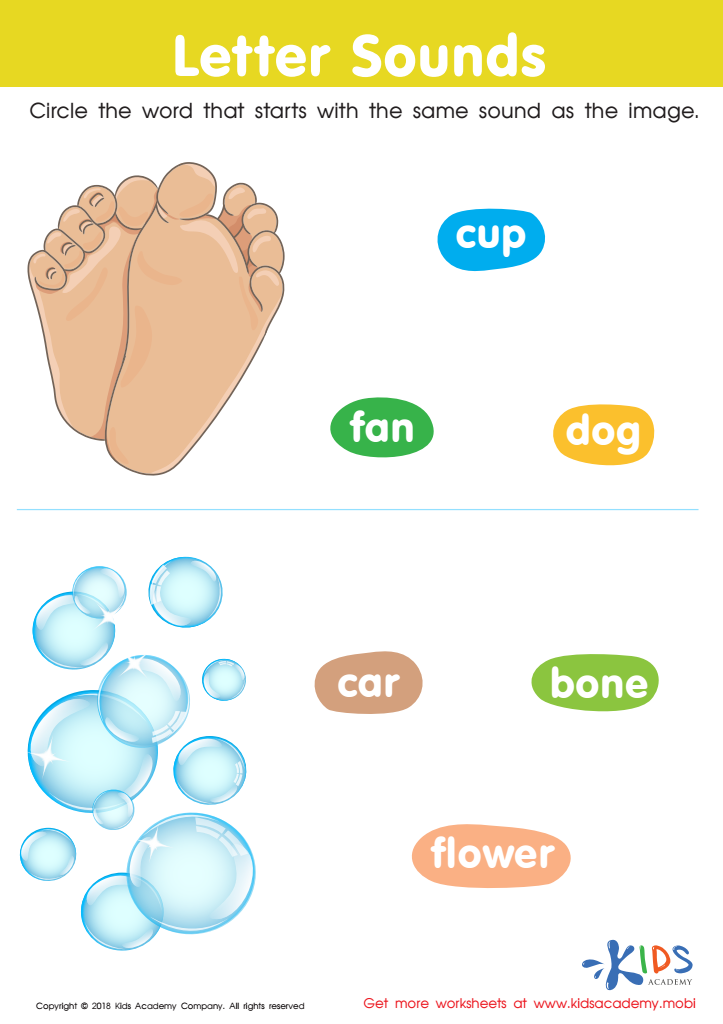
letter sounds Worksheet
Test your child's letter recognition skills with this worksheet. Match words to pictures and challenge them to say each image out loud and sound out the words beside it. Ask: Which word starts with the same letter as the picture? Then let them circle the right answer. Quick and easy!
 Assign to My Students
letter sounds Worksheet
Worksheet
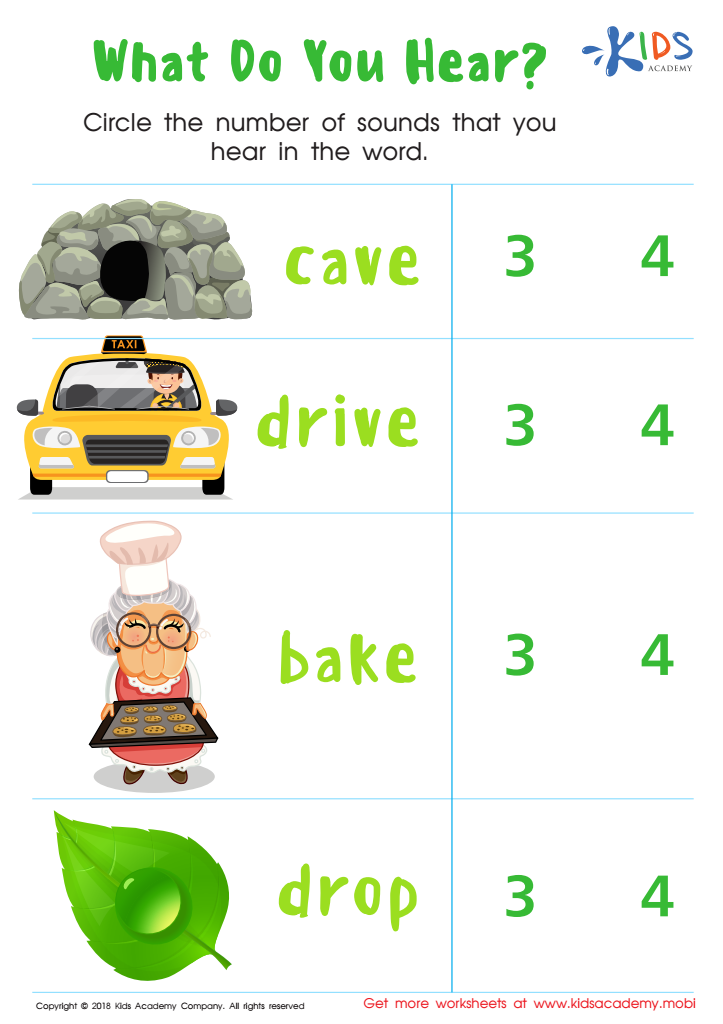
What Do You Hear? Worksheet
New readers can develop phonological awareness with this fun worksheet. They'll isolate sounds in words and count them, then circle the number of sounds heard. It'll help build their auditory discrimination and decoding skills, leading to more fluent reading. Without even knowing it, their reading skills are improving!
What Do You Hear? Worksheet
Worksheet
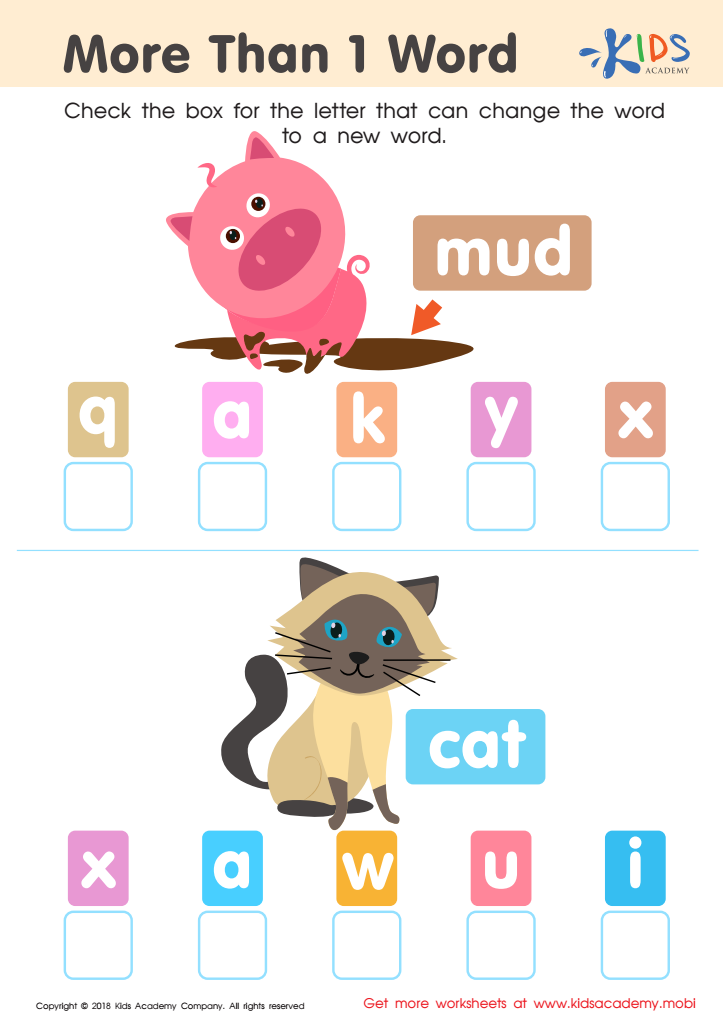
More than 1 word Worksheet
Test your child's reading skills with this fun worksheet! Point out the word in each picture, then switch the middle letter of each word with one from the list and check the box when you find a new word. It's a great way to develop your child's reading skills!
More than 1 word Worksheet
Worksheet
Join Kids Academy for Free
Who is primarily going to use this learning content?








Parents and teachers should prioritize reading comprehension and letter sounds for children ages 5-9 because these foundational skills are crucial for literacy development and overall academic success. By mastering letter sounds, children learn to decode words, which is essential for reading fluency. This enables them to engage with text more confidently, fostering a love for reading.
Reading comprehension involves understanding, interpreting, and analyzing what is read. At this age, children begin to transition from learning to read to reading to learn. Strong comprehension skills aid in grasping content across subjects, essential for future learning. Additionally, proficient reading reduces frustration and enhances self-esteem, which can result in a more positive attitude toward school.
Language development is also intertwined with reading. Exposure to diverse vocabulary and sentence structures through reading can strengthen children's verbal skills, communications, and critical thinking abilities. Encouraging these skills in early learners lays the groundwork for their ability to succeed in upper grades and in life.
In summary, focusing on reading comprehension and letter sounds nurtures essential literacy skills, promotes love for reading, and prepares children for a successful educational trajectory. Given the profound influence that early literacy has on a child’s future, it’s imperative that parents and teachers prioritize these areas.







