
Rhyme recognition Rhyming Worksheets for Ages 5-9
4 filtered results
Difficulty Level
Grade
Age
-
From - To
Subject
Activity
Standards
Unlock the magic of rhyme for children ages 5-9 with our delightful Rhyming Worksheets! Crafted to enhance phonemic awareness and early literacy skills, these engaging activities help young learners identify and enjoy the rhythm and patterns of language. Each worksheet provides fun exercises that encourage kids to match, sort, and create rhyming words. Perfect for classroom and home use, our worksheets are designed to boost vocabulary, spelling, and reading fluency. Download now to give your child a playful, educational experience in mastering the art of rhyming! Enjoy watching your little ones become budding poets and confident readers.
Favorites
With answer key
Interactive
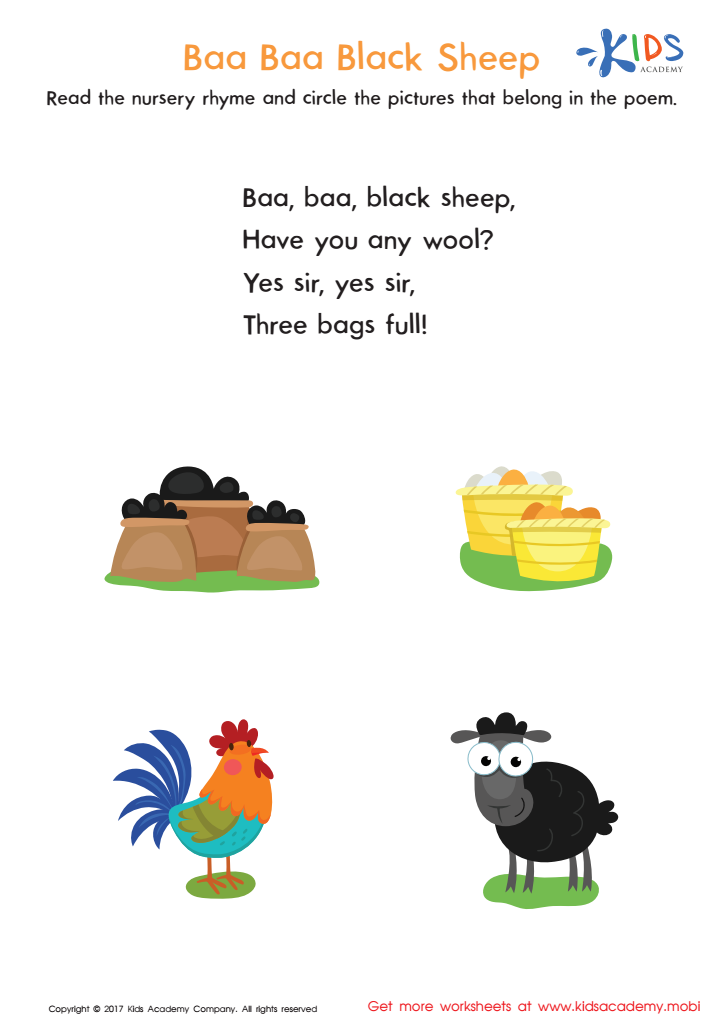
Baa Baa Black Sheep Printable
Jumpstart your child's reading skills with this printable Baa Baa Black Sheep worksheet! Recite the lines with them, then have them select the pictures associated with the poem to test comprehension. Fun and educational!
 Assign to My Students
Baa Baa Black Sheep Printable
Worksheet
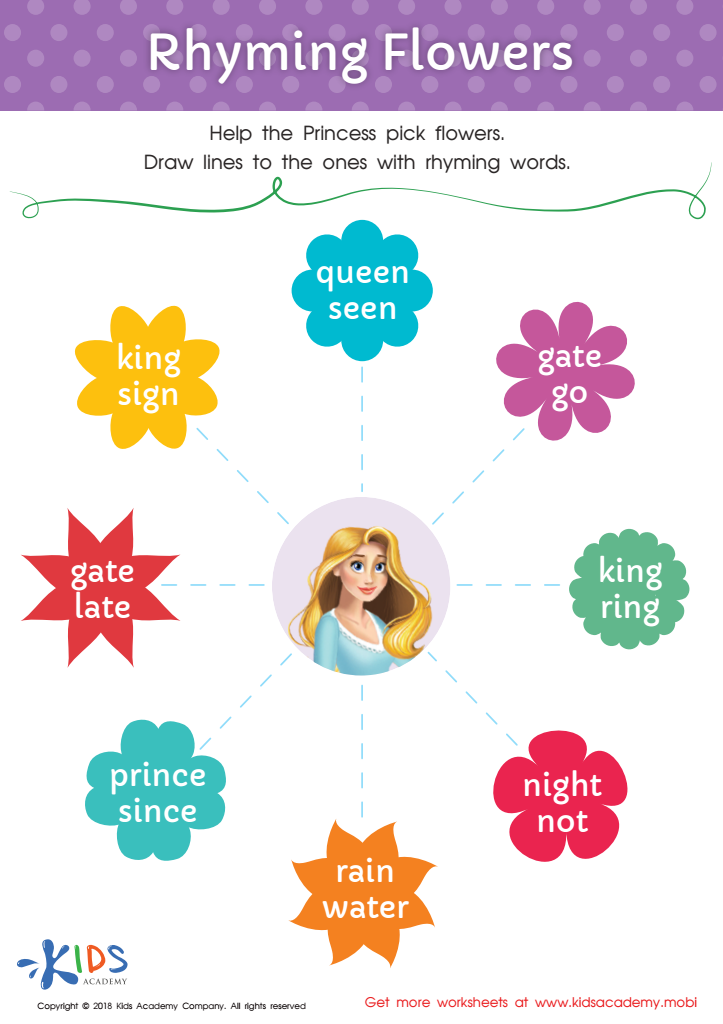
Rhyming Flowers Worksheet
Recognizing rhyming words boosts phonological awareness. With this skill, students can identify similar sounds in words and predict new words more accurately. This worksheet provides practice and is ideal for the reading classroom. Download and find the rhyming words! (80 words)
Rhyming Flowers Worksheet
Worksheet
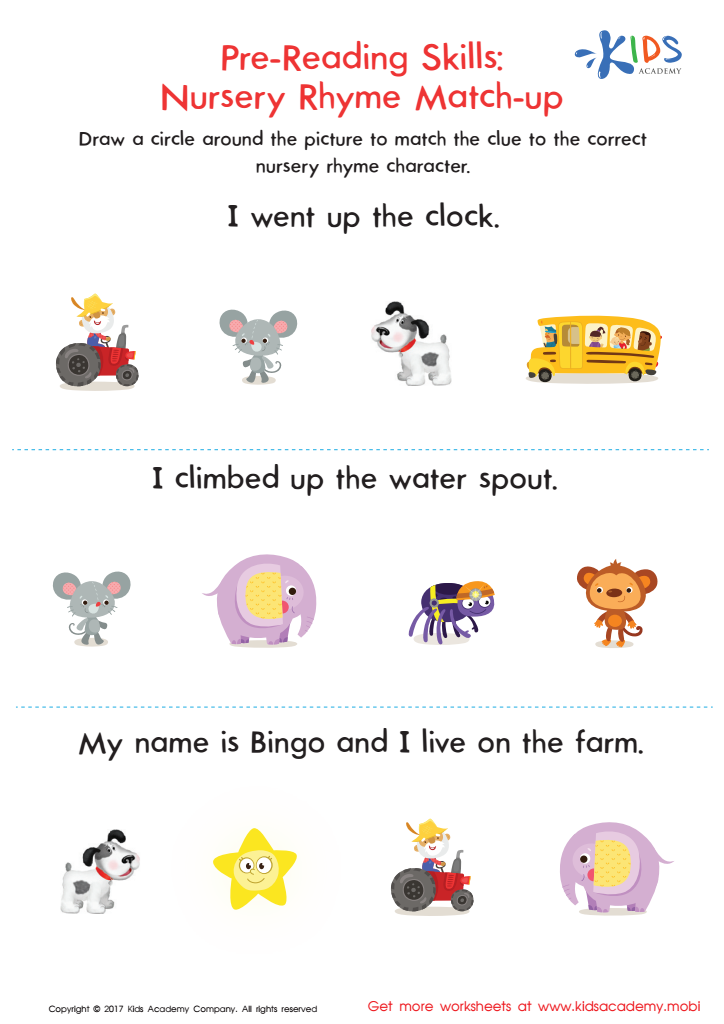
Nursery Rhyme Match–Up Worksheet
This worksheet helps kids build pre-reading skills using stories they know and love! By connecting with prior knowledge, kids can develop ideas about characters and set the stage for reading strategies.
Nursery Rhyme Match–Up Worksheet
Worksheet
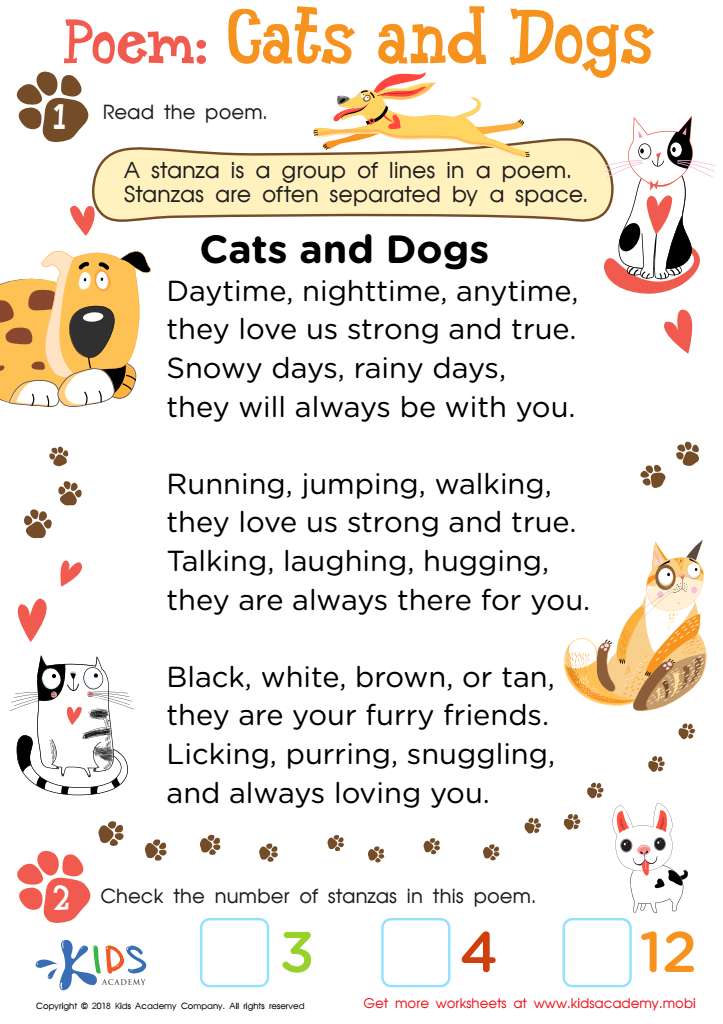
Poem: Cats and Dogs Worksheet
Read the poem to your child and point out where each stanza ends. Ask if they know what a stanza is (if not, explain it's a group of lines in a poem). Help them answer the question at the bottom of the printout. This simple, sweet poem about cats is easy for your child to relate to.
Poem: Cats and Dogs Worksheet
Worksheet
Join Kids Academy for Free
Who is primarily going to use this learning content?







Rhyme recognition is crucial for children ages 5-9 for several foundational reasons. First and foremost, rhyming enhances phonological awareness, an essential skill for reading development. Recognizing rhyming patterns helps children understand that words are made up of sounds (phonemes) and teaches them to manipulate these sounds visually and orally. This serves as a stepping stone for decoding new words, improving both reading fluency and comprehension.
Rhymes also engage children’s memory and cognitive skills. Rhyming stories or songs are easy to remember and recite, promoting memorization and recall, which are key cognitive skills. When children play with rhymes, they strengthen their abilities to segment sounds and blend them together, laying the infrastructural groundwork for more complex language skills.
Furthermore, rhyming fosters a love for language and literature. Rhyming texts naturally draw children in with their rhythmic and often playful nature, making learning enjoyable. This intrinsic enjoyment can cultivate a lifelong interest in reading and developing literary skills.
Lastly, exposure to rhymes enhances vocabulary. Through poems, songs, and rhyming books, children are frequently introduced to new words and concepts in a fun, memorable way. Thus, parents and teachers should value rhyme recognition, understanding its vital role in linguistic, cognitive, and social-emotional development.







