Rhyming skills Rhyming Worksheets for Ages 5-9
3 filtered results
-
From - To
Enhance your child's phonemic awareness with our engaging Rhyming Skills Rhyming Worksheets, designed for ages 5-9. These worksheets offer a fun and interactive way for young learners to master the art of rhyming, crucial for early reading development. Packed with colorful images and captivating exercises, our resources make learning enjoyable and effective. Children will identify, match, and create rhyming words, strengthening their auditory discrimination and vocabulary. Perfect for homeschooling or classroom activities, these worksheets cater to different learning styles, ensuring every child can build a strong linguistic foundation. Unlock the joy of language with our expertly crafted rhyming worksheets!
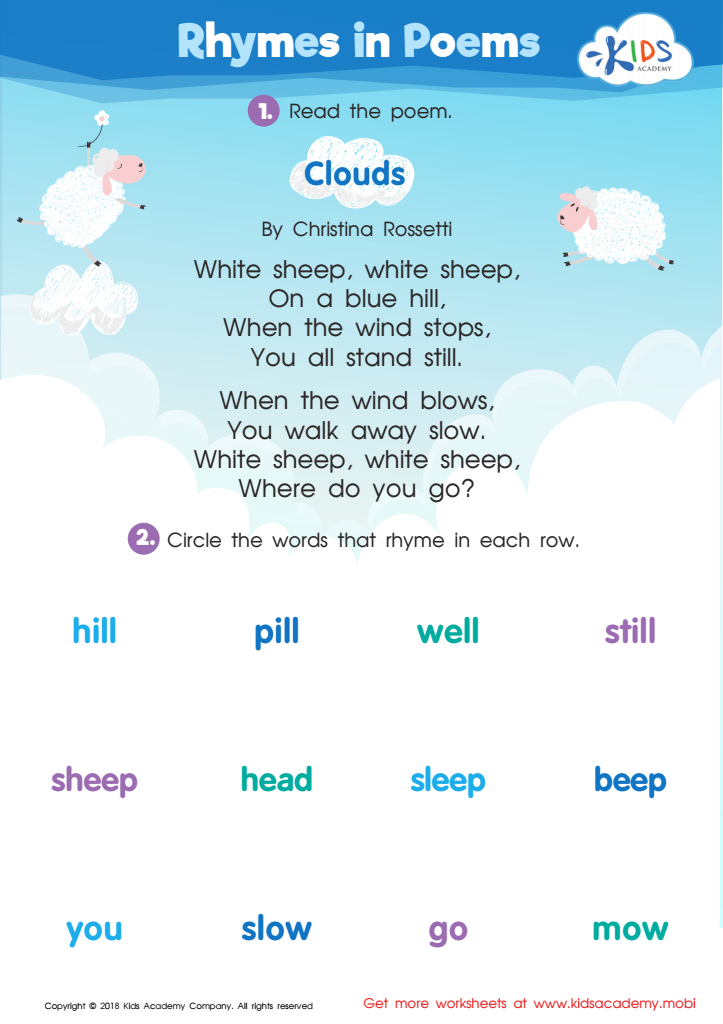
Rhymes in Poems Worksheet
 Assign to My Students
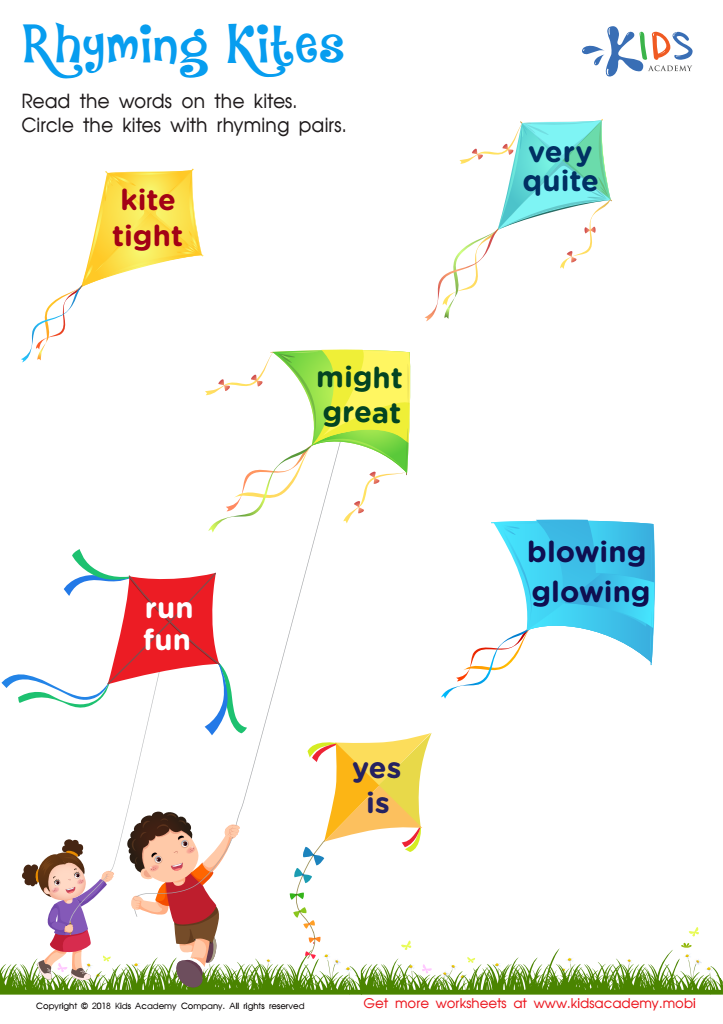
Rhyming Kites Worksheet
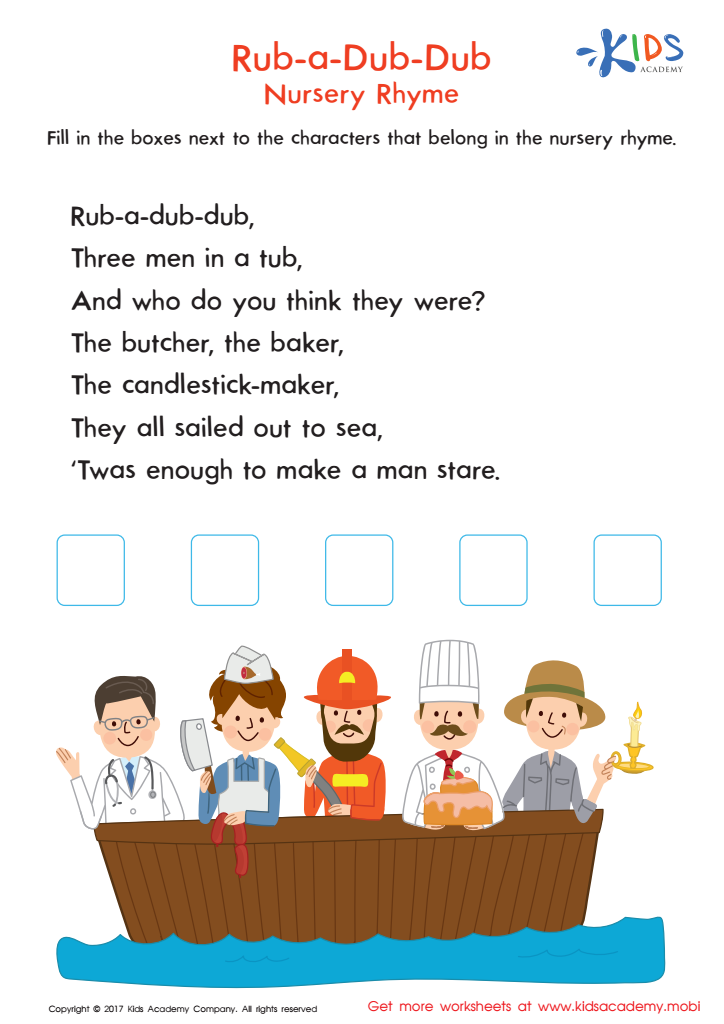
Rub a Dub Dub Printable








Rhyming skills are an essential component of early childhood development and literacy, making it crucial for parents and teachers to focus on this area for children aged 5-9. Rhyming helps to develop a child's phonological awareness, which is the ability to recognize and manipulate sounds in spoken language. This foundational skill is critical for successful reading and spelling. When children can identify and produce rhyming words, they are better able to predict and decode new words, aiding their overall reading fluency and comprehension.
Moreover, rhyming games and activities are inherently fun and engaging for young children. They foster a love for language and reading by making learning interactive and enjoyable. Rhyming also enhances memory and recall, as the rhythmic and repetitive nature of rhymes helps children remember vocabulary and concepts more effectively.
In addition to academic benefits, rhyming activities support social and emotional development. They encourage group participation, turn-taking, and cooperative learning experiences in both classroom and home environments. By understanding the importance of rhyming skills, parents and teachers can create a robust and supportive literacy foundation that facilitates long-term academic success for children.







