Vocabulary expansion Rhyming Worksheets for Ages 5-9
5 filtered results
-
From - To
Enhance your child's vocabulary with our engaging rhyming worksheets designed for ages 5-9! These interactive resources focus on expanding language skills through fun and imaginative activities. Each worksheet invites young learners to explore sounds, associations, and word pairs, fostering creativity and comprehension. Perfect for at-home learning or classroom settings, our rhyming exercises help children recognize patterns in language while developing essential literacy skills. With colorful illustrations and age-appropriate content, kids will enjoy every moment of their vocabulary journey. Discover how rhyming can transform language learning and spark a love for words. Download your worksheets today and watch your child's skills bloom!
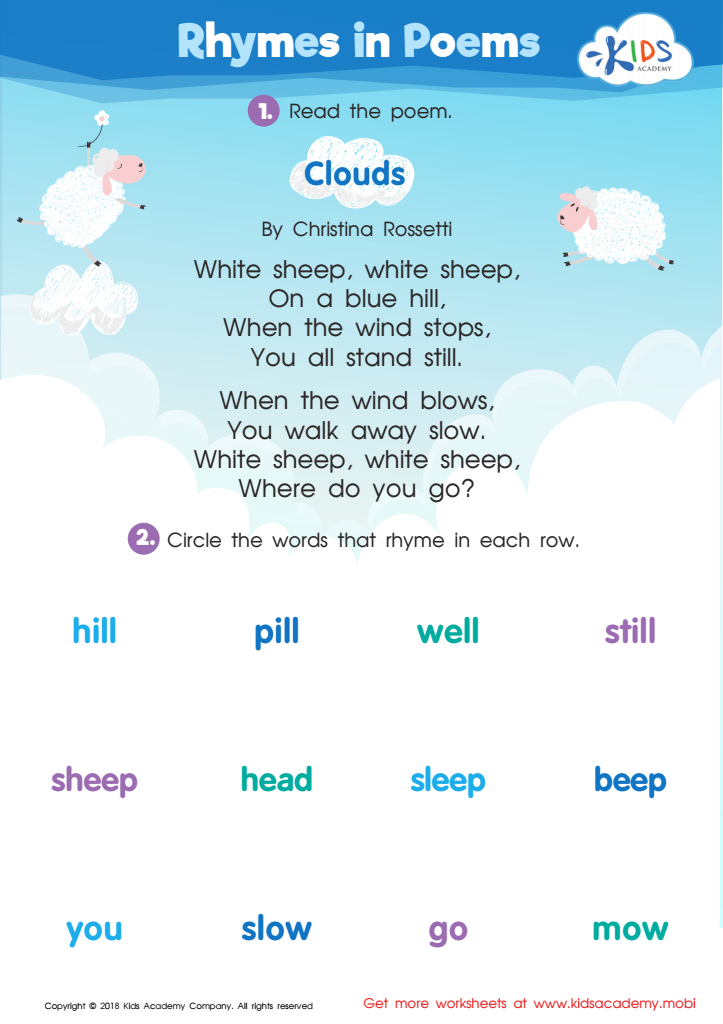
Rhymes in Poems Worksheet
 Assign to My Students
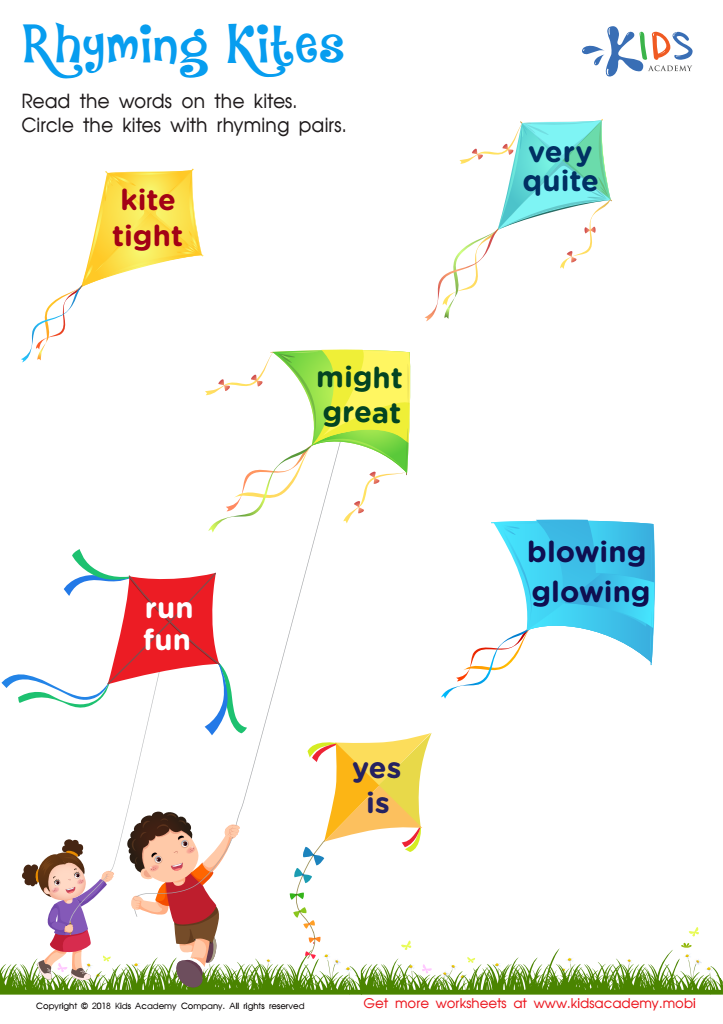
Rhyming Kites Worksheet
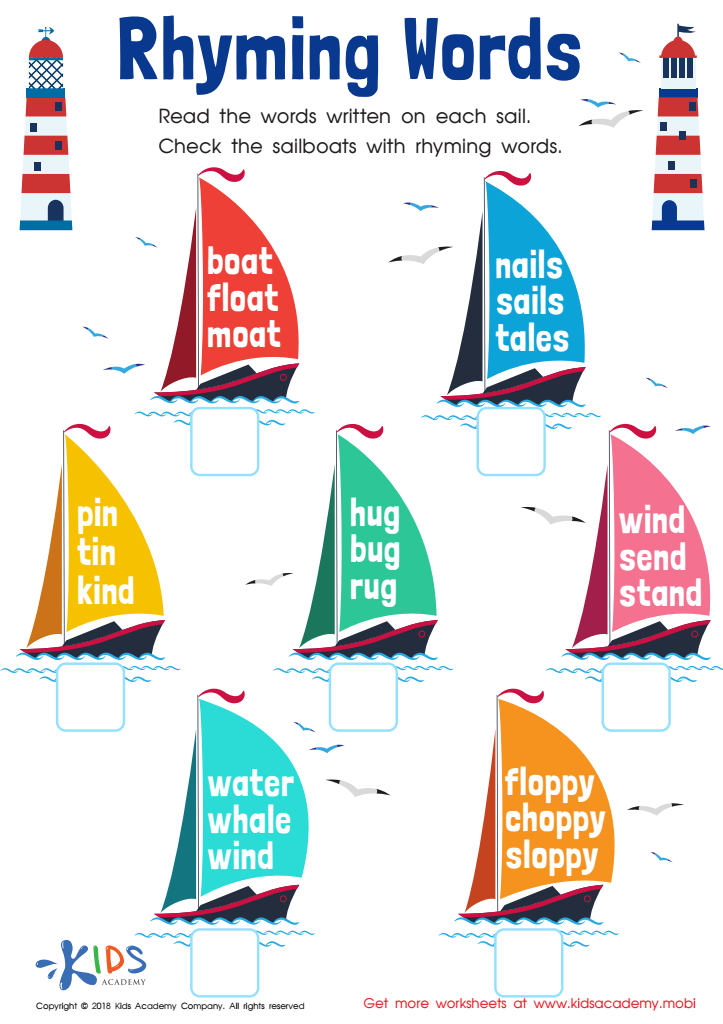
Rhyming Words Worksheet
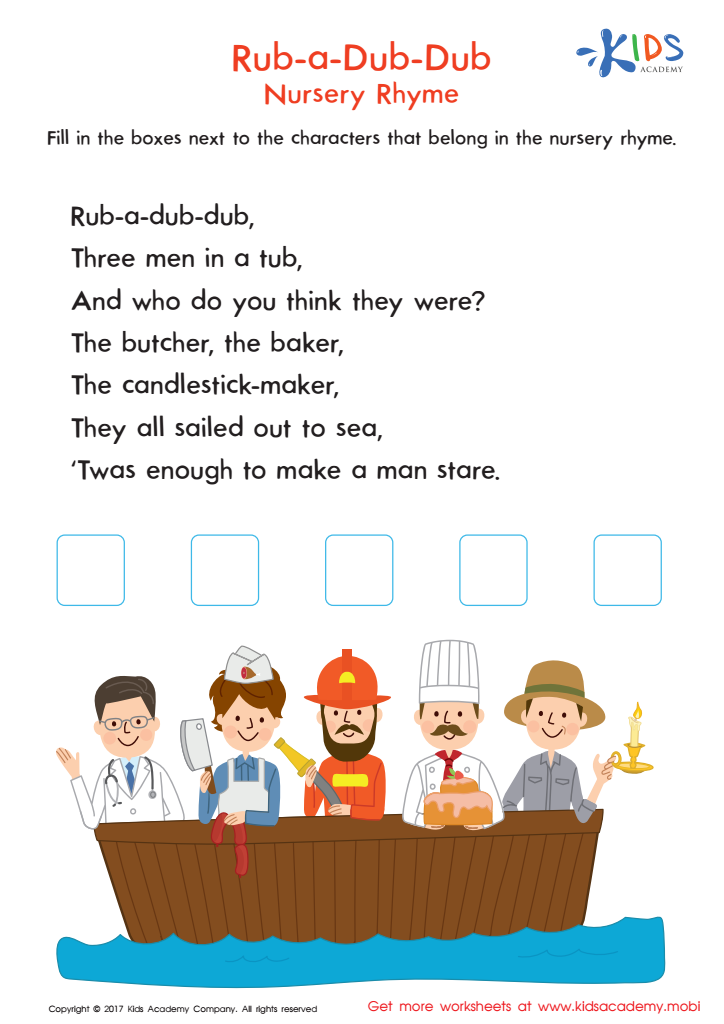
Rub a Dub Dub Printable
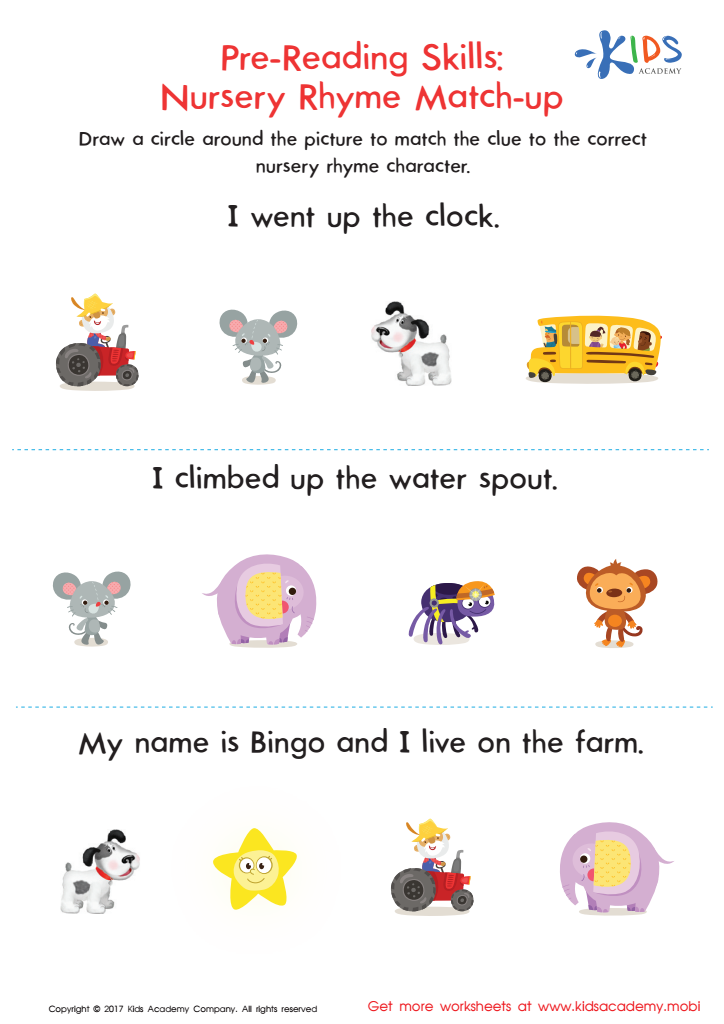
Nursery Rhyme Match–Up Worksheet








Vocabulary expansion through rhyming is crucial for children's language development, particularly for ages 5-9. During these formative years, children are increasingly able to play with language, and adopting rhyming activities can significantly boost their vocabulary and literacy skills. Engaging with rhymes helps improve phonemic awareness by developing the ability to identify and manipulate the individual sounds in words, which is foundational to reading.
Additionally, rhyming enriches children's phonological processing skills, making word recognition more intuitive, thereby enhancing their overall reading fluency. When children are introduced to a variety of rhyming words, they expand their vocabulary through association, as rhymes often introduce words in unique and memorable contexts.
Moreover, lively rhyming activities can foster a love of language and reading, making learning enjoyable and interactive. This playful engagement with words can also encourage better speaking skills as children experiment with pronunciation and word constructions.
For parents and teachers, incorporating rhyming into educational activities not only supports cognitive development but also builds confidence in children as they learn to express themselves. Ultimately, a robust vocabulary leads to improved academic performance and reading comprehension, positioning children for long-term educational success.







