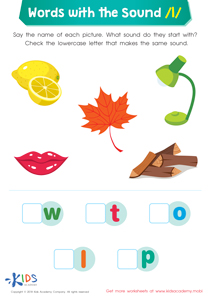
Alphabet familiarity Uppercase Letters Worksheets for Ages 5-9
4 filtered results
-
From - To
Enhance your child's alphabet familiarity with our engaging Uppercase Letters Worksheets, specially designed for ages 5-9. These printable resources offer a fun and interactive way for young learners to recognize, trace, and master uppercase letters. Each worksheet is crafted to boost confidence and ensure a solid foundation in literacy skills. With a variety of activities, including tracing, matching, and identifying letters, children will enjoy structured learning that aligns with their developmental needs. Teachers and parents can easily incorporate these worksheets into daily routines, making letters exciting to learn. Start your child's journey into the world of writing with our captivating materials!
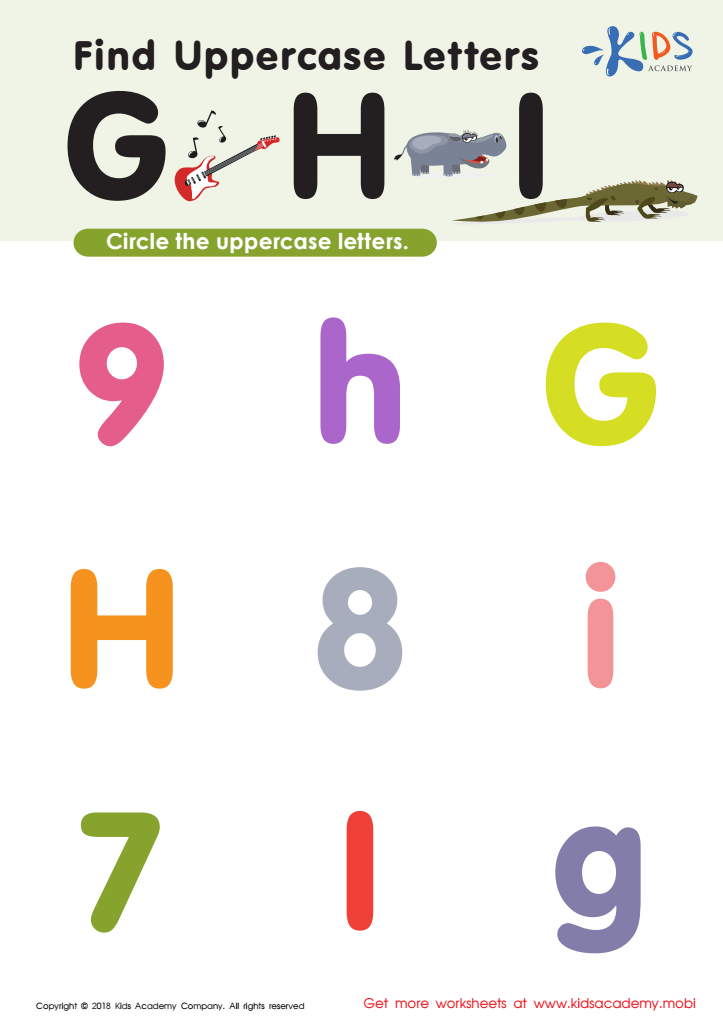
Find Uppercase Letters G, H, and I Worksheet
 Assign to My Students
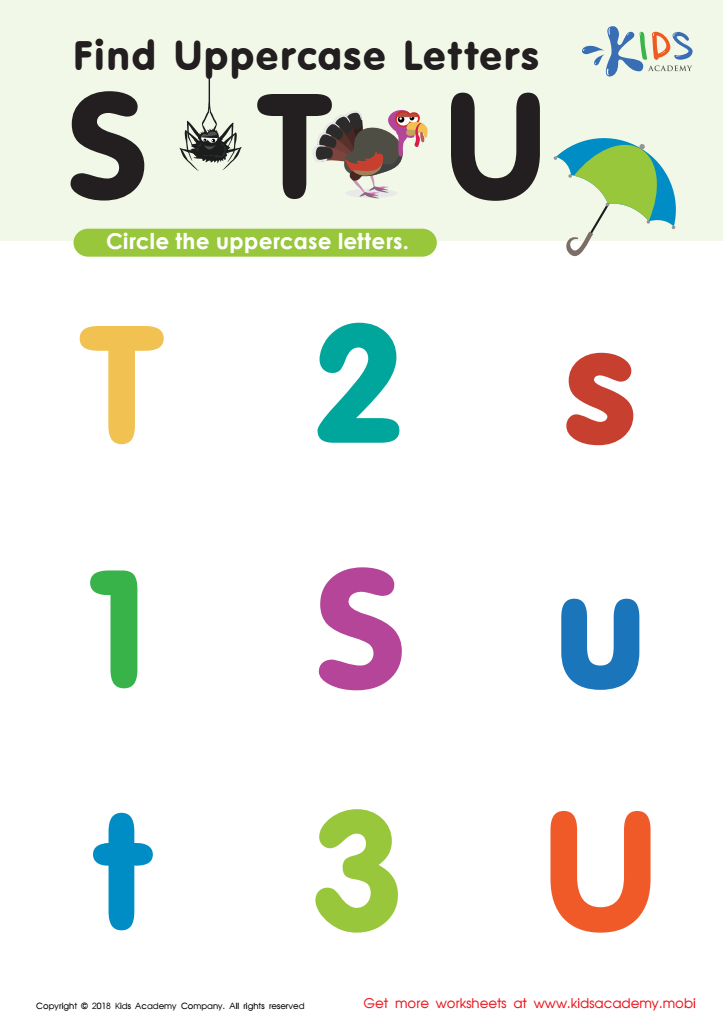
Find Uppercase Letters Worksheet
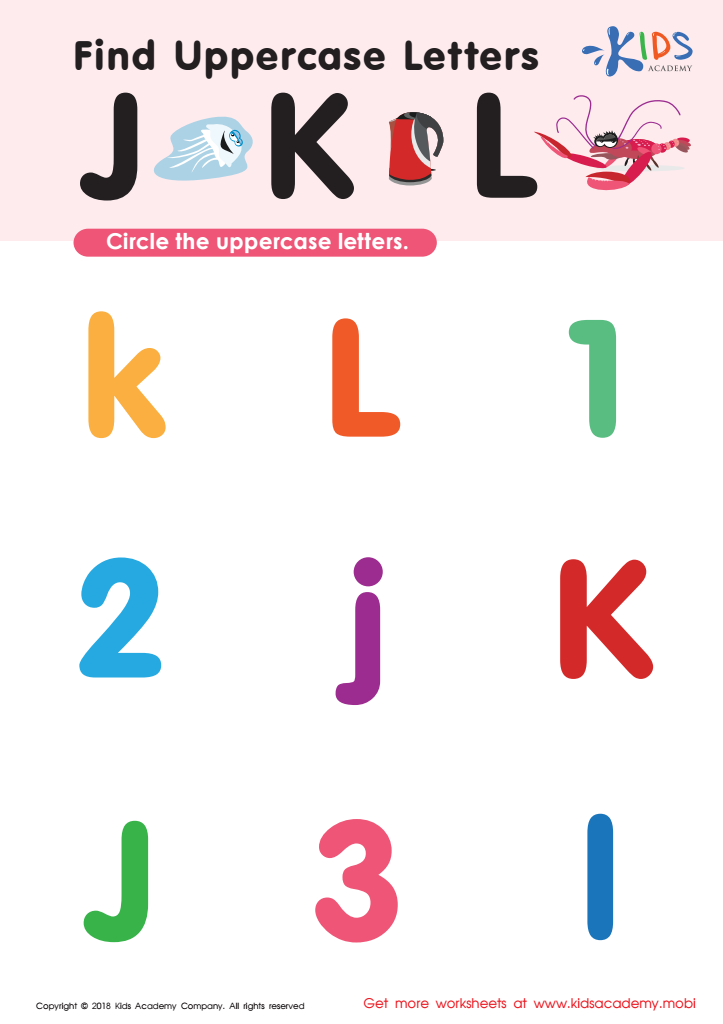
Find Uppercase Letters J, K, and L Worksheet
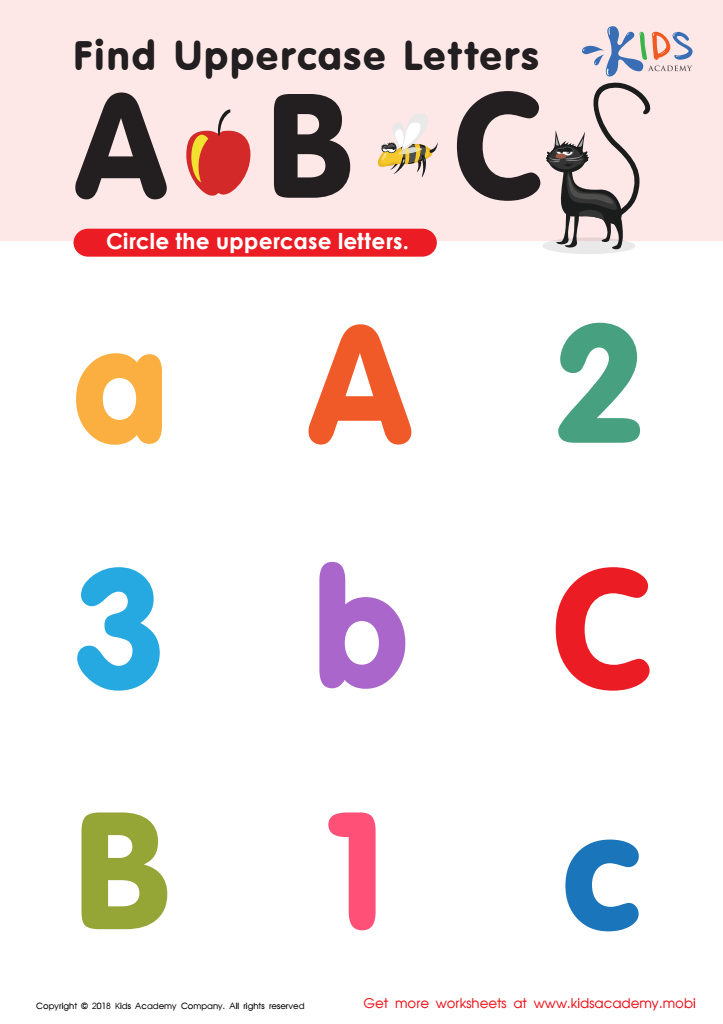
Find Uppercase Letters A, B, and C Worksheet








Fostering alphabet familiarity with uppercase letters is essential for children aged 5-9 as it serves as the foundation for their literacy development. Recognizing and being able to identify uppercase letters is crucial for several reasons. First, these letters are often the starting point for reading and writing, as many texts and printed materials, including children's books, utilize them prominently.
Teachers and parents should emphasize uppercase letters as they help children better understand the formation of words and sentences, enhancing their reading skills. Additionally, societal context plays a role; uppercase letters are widely used in signs, labels, and digital media, making competence in this area important for children's navigation of their environments.
Furthermore, distinguishing between uppercase and lowercase letters is an essential component of developing phonemic awareness and spelling skills. Engaging children in games, interactive activities, and storytelling that incorporate these letters can spark their interest and strengthen their letter recognition. Ultimately, familiarity with uppercase letters not only enhances a child's communication abilities but also builds confidence in their overall literacy skills, which are vital for academic success and lifelong learning. By prioritizing this aspect of literacy, parents and teachers can significantly influence a child's educational journey.