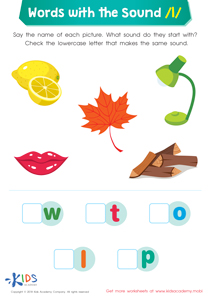
Uppercase identification Uppercase Letters Worksheets for Ages 5-9
5 filtered results
-
From - To
Enhance your child's literacy skills with our Uppercase Letters Identification Worksheets, designed for ages 5-9. These engaging activities make learning fun while helping young learners recognize and differentiate uppercase letters. Our thoughtfully crafted worksheets feature vibrant illustrations and interactive exercises that promote identification skills, memory retention, and letter recognition. Perfect for both home and classroom settings, these printables support your child's developmental journey in literacy. Foster a love for reading and writing while building a strong foundation in the alphabet. Explore our collection today and watch your child gain confidence in their uppercase letter knowledge!
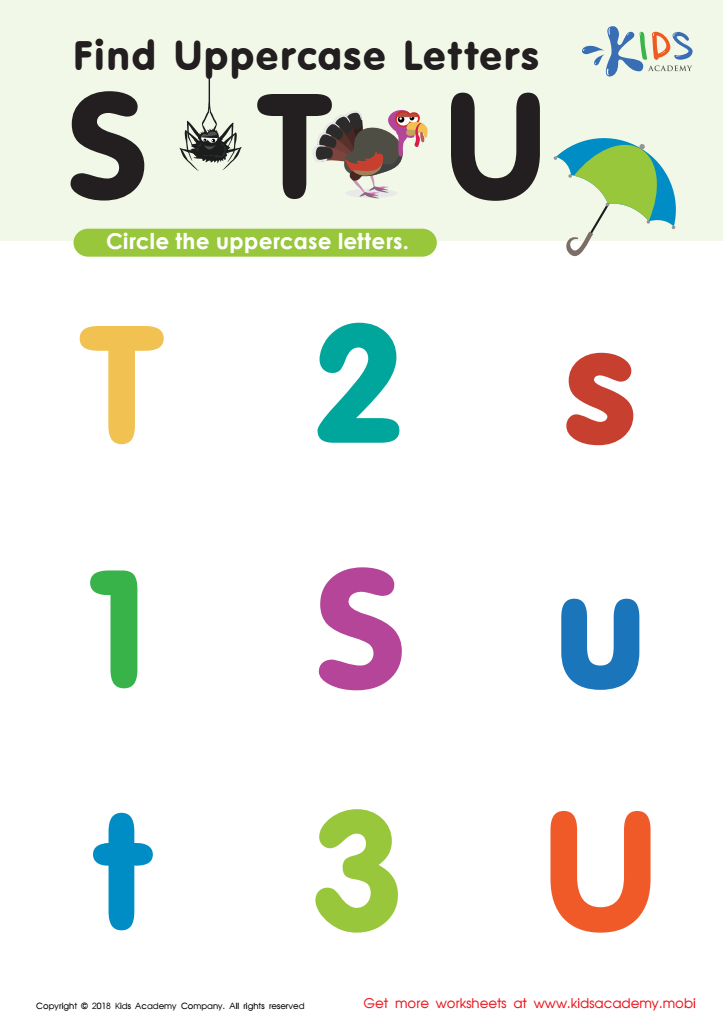
Find Uppercase Letters Worksheet
 Assign to My Students
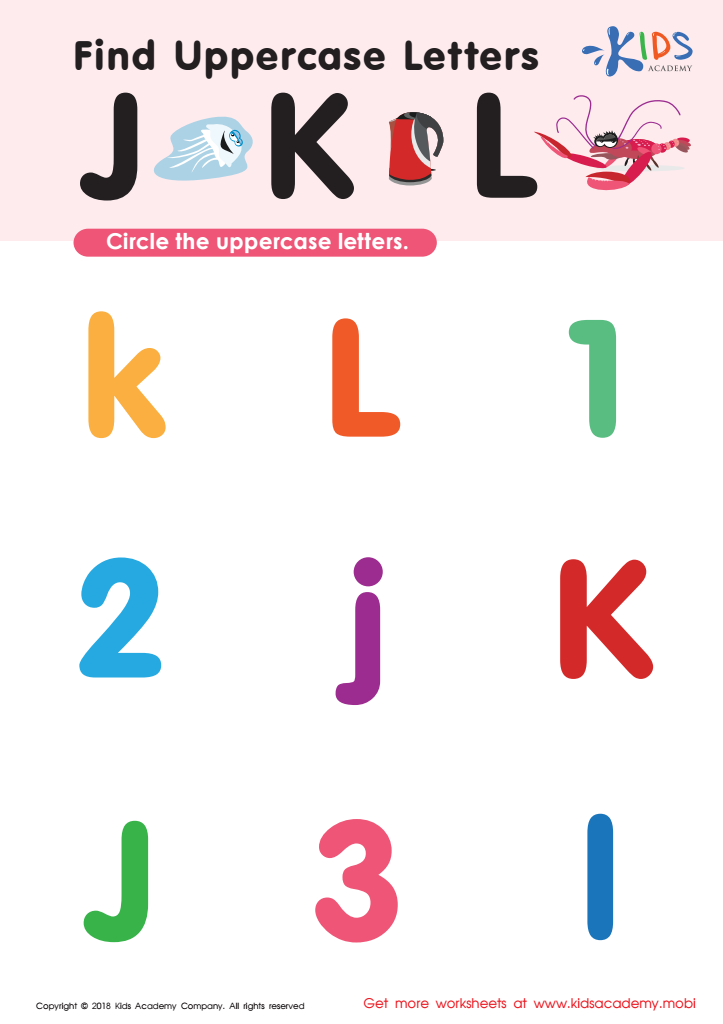
Find Uppercase Letters J, K, and L Worksheet
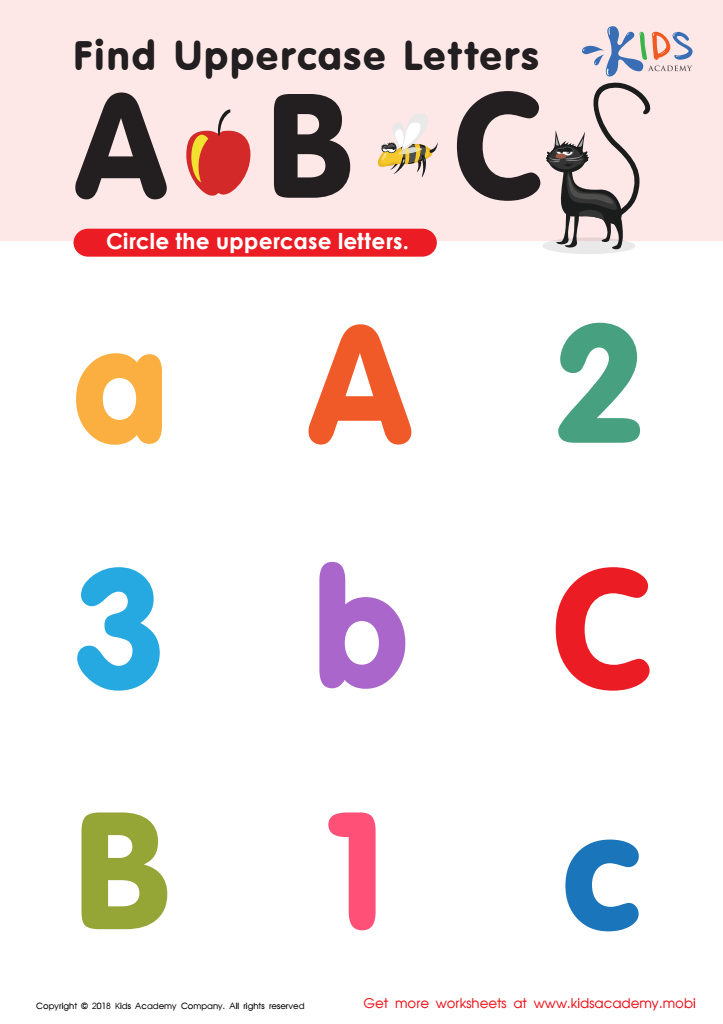
Find Uppercase Letters A, B, and C Worksheet
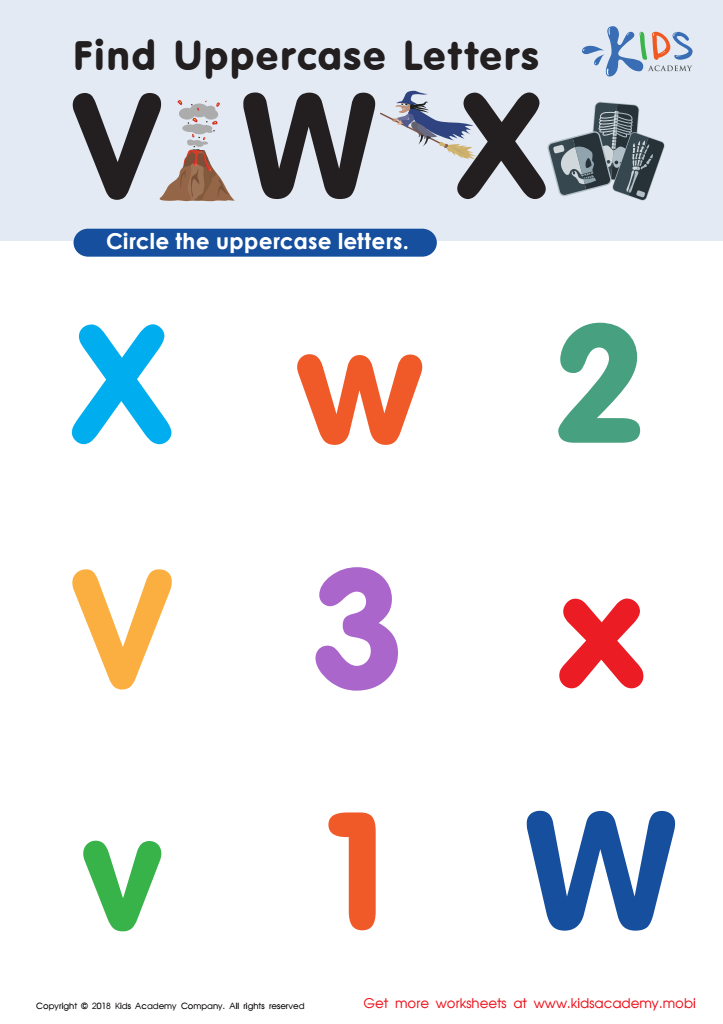
Find Uppercase Letters V, W, X Worksheet
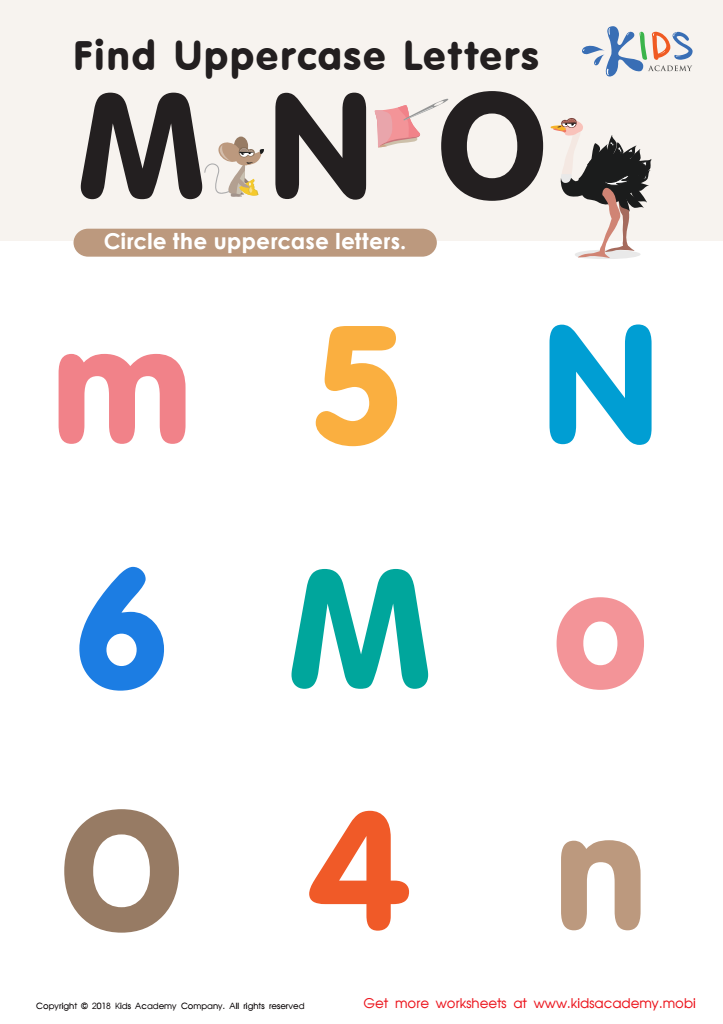
Find Uppercase Letters M, N, and O Worksheet








Parents and teachers should prioritize uppercase letter identification for children ages 5-9 due to the foundational role it plays in literacy development. Recognizing uppercase letters is crucial as they appear prominently in texts, titles, and names. This skill fosters early reading and writing confidence, as children learn to decode words and understand that letters represent distinct sounds.
Additionally, uppercase letters have specific functions in writing; they signal the beginning of sentences and proper nouns. Knowledge of these conventions helps children comprehend text structure and improves their writing clarity. Furthermore, mastering uppercase letter identification aids in enhancing children's overall phonemic awareness, paving the way for the successful application of phonics in reading.
Encouraging uppercase letter recognition also supports cognitive development. Children engage in matching, memory, and visual discrimination activities that only strengthen their overall learning skills.
Moreover, as they develop communication skills during this age, knowing uppercase letters ensures children can create meaningful written expressions. Ultimately, an early focus on identifying uppercase letters sets the stage for greater literacy competence and a love for reading and writing, all vital components for academic success moving forward.