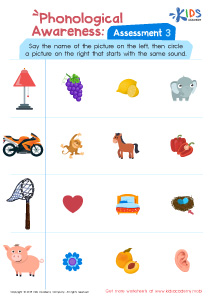
Long vowel recognition Vowels and Consonants Worksheets for Ages 5-9
3 filtered results
-
From - To
Discover our engaging "Long Vowel Recognition: Vowels and Consonants Worksheets" designed for children ages 5 to 9. These interactive worksheets help young learners identify and understand long vowels, enhancing their reading and phonics skills. Featuring colorful visuals and fun activities, these resources make learning enjoyable and effective. Students will practice recognizing long vowel sounds through various exercises, including sorting, matching, and fill-in-the-blank scenarios. Our worksheets not only promote phonetic awareness but also build vocabulary and boost confidence in young readers. Equip your child with essential literacy skills today and foster a love for reading with our comprehensive worksheets!
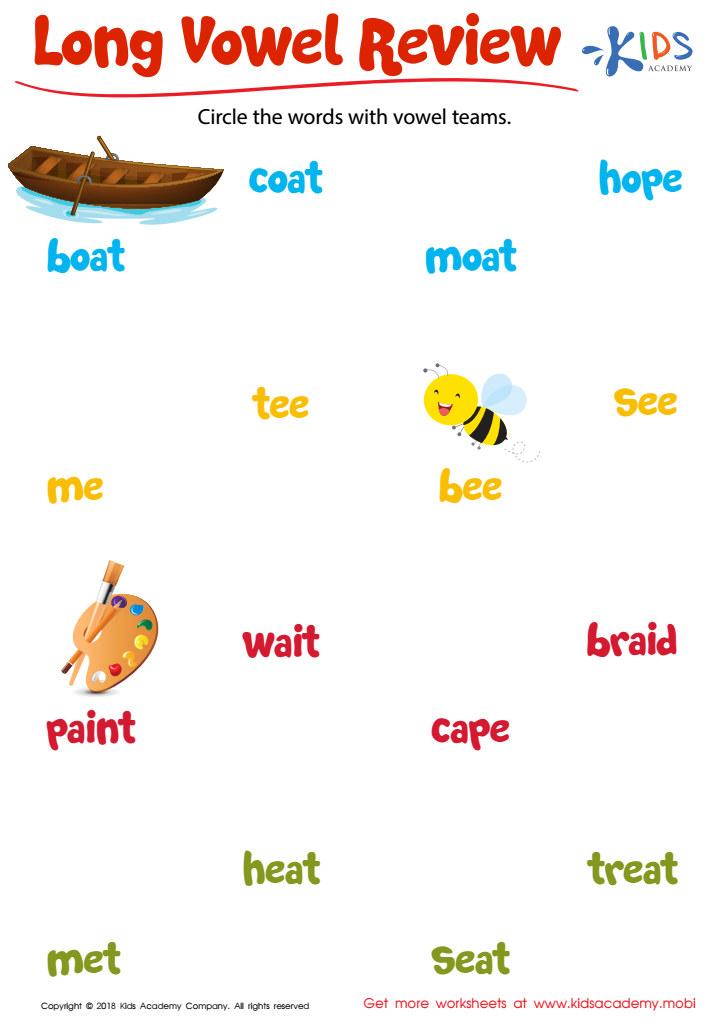
Long Vowel Review Worksheet
 Assign to My Students
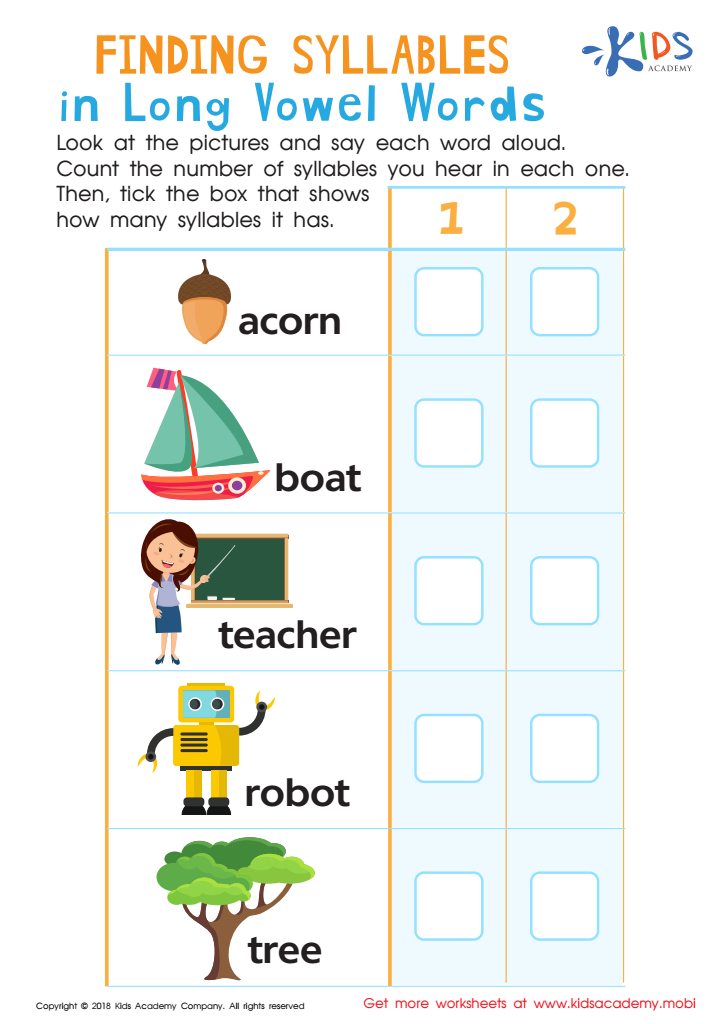
Finding Syllables in Long Vowel Words Worksheet
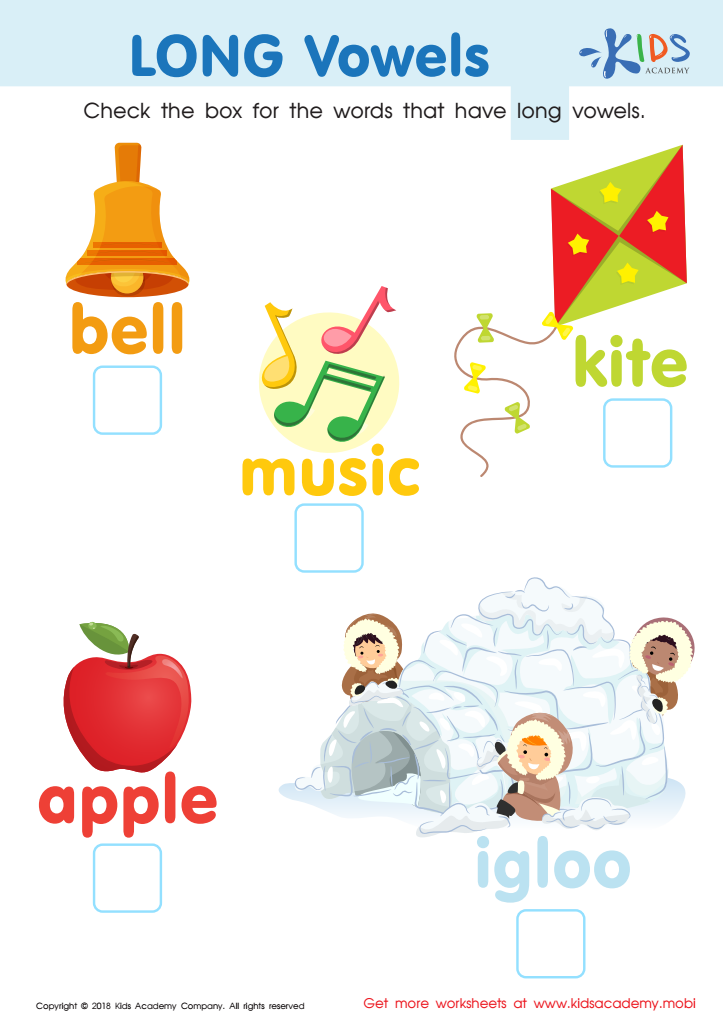
long vowels Worksheet



Long vowel recognition is crucial for young learners (ages 5-9) as it forms the foundation for reading and writing skills. Understanding long vowels helps children distinguish between different vowel sounds and their corresponding spellings, enabling them to decode words more effectively. This insight is essential in fostering strong phonemic awareness, which is a key predictor of later reading success.
Parents and teachers should prioritize long vowel recognition because it enhances vocabulary and comprehension. Children who grasp the concept of long vowels are better equipped to read books independently, which boosts their confidence and encourages a love for reading—a critical element in academic achievement.
Moreover, recognizing the difference between long vowels and consonants helps children develop spelling skills. As they learn to identify and manipulate sounds, they become more capable of sounding out unfamiliar words rather than relying solely on rote memorization.
Finally, nurturing these skills early on sets the stage for more complex literacy concepts in the future. A strong foundation in vowel sounds allows children to tackle advanced phonics, spelling patterns, and reading fluency, leading to lifelong literacy and learning success. This foundational knowledge has lasting impacts on their educational journey and overall development.