
Basic geometry Worksheets for Ages 5-9
4 filtered results
Difficulty Level
Grade
Age
-
From - To
Subject
Activity
Standards
Discover our engaging Basic Geometry Worksheets designed specifically for children ages 5 to 9! These worksheets introduce young learners to fundamental geometric concepts through fun and interactive activities. Tailored to enhance spatial awareness, children will explore shapes, symmetry, and patterns while developing their critical thinking skills. Our resources foster creativity and boost confidence as kids enjoy practicing their geometry knowledge. Perfect for classroom use or at-home learning, these worksheets cater to different learning styles, ensuring every child can enjoy and succeed in their geometry journey. Dive into the world of shapes and measurements with our comprehensive and user-friendly worksheets!
Favorites
With answer key
Interactive
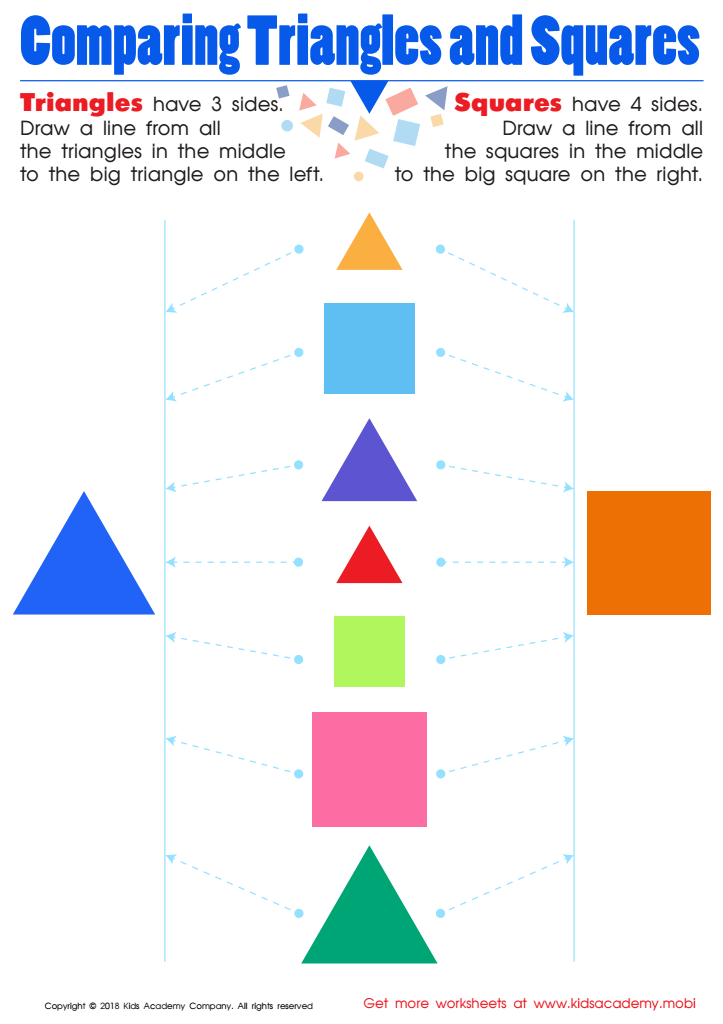
Comparing Triangles Squares Worksheet
Squares and triangles are different in the number of sides they have. Challenge kids to compare them with this fun worksheet! Read the descriptions at the top, then use the left and right shapes to match up the middle ones. Go down the page, joining the middle shapes to the side using the dotted lines!
 Assign to My Students
Comparing Triangles Squares Worksheet
Worksheet
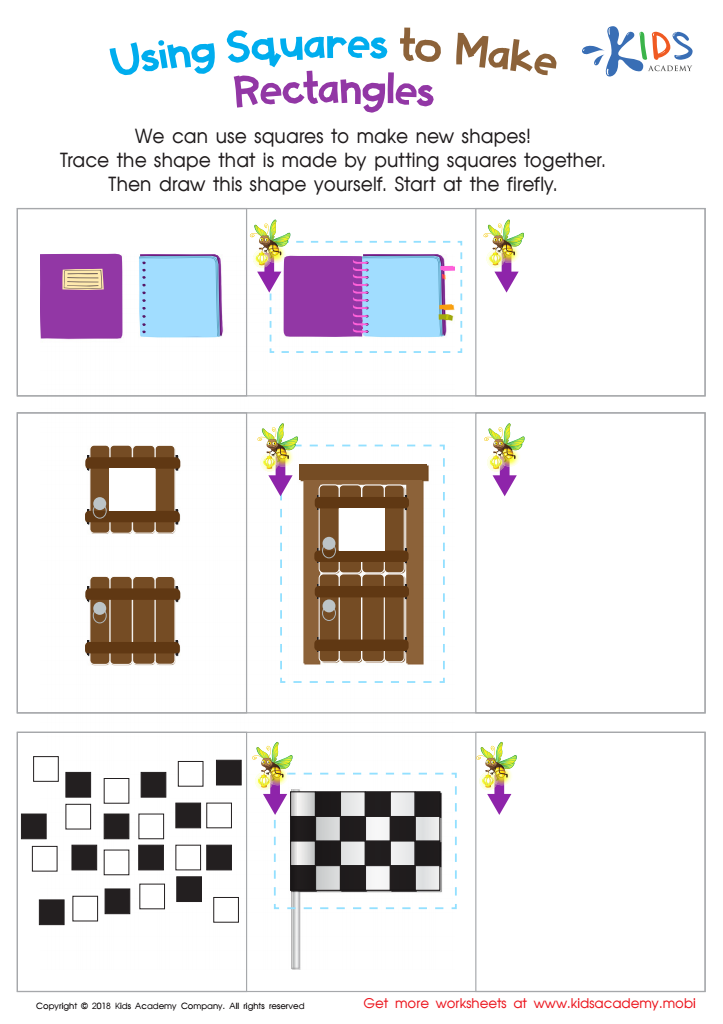
Using Squares to Make Rectangles Worksheet
Creating shapes from other shapes (composing shapes) develops spatial skills, an essential geometry standard for young students. This worksheet introduces familiar square objects, then demonstrates how they create rectangles. Students practice tracing and then drawing the shape independently. Download this free math resource for the classroom today! (80 words)
Using Squares to Make Rectangles Worksheet
Worksheet
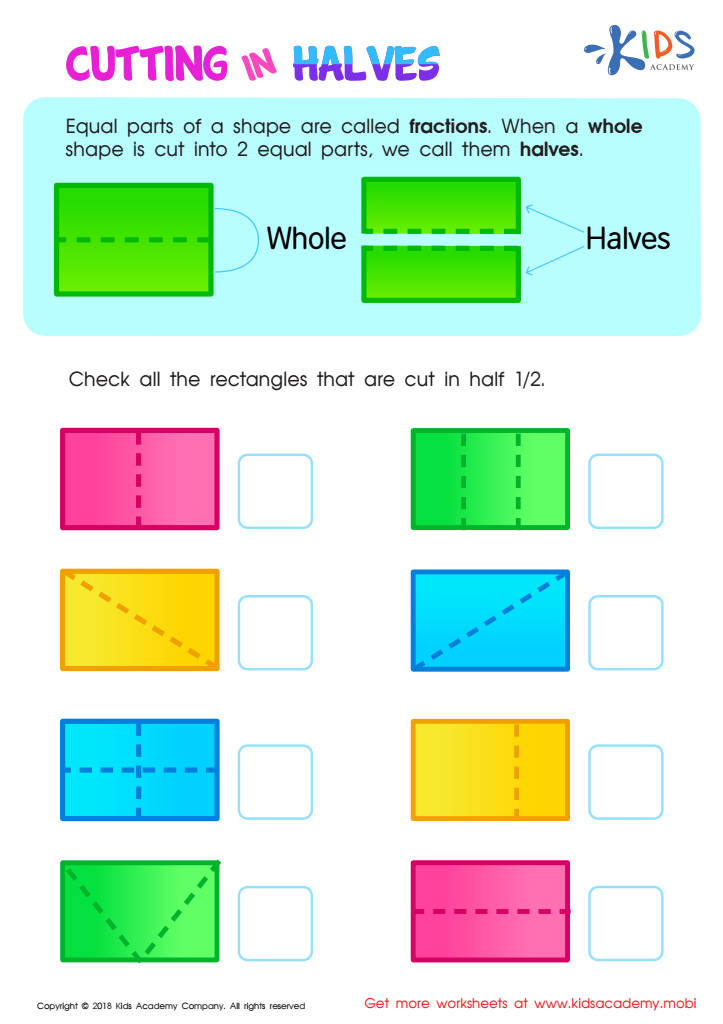
Cutting in Halves Worksheet
Show your child how to divide a whole shape, like a square, into smaller pieces to become fractions. Point out when a shape is divided into two equal parts, it's called a half. Look at the worksheet together, and identify all rectangles that are cut in half (½).
Cutting in Halves Worksheet
Worksheet
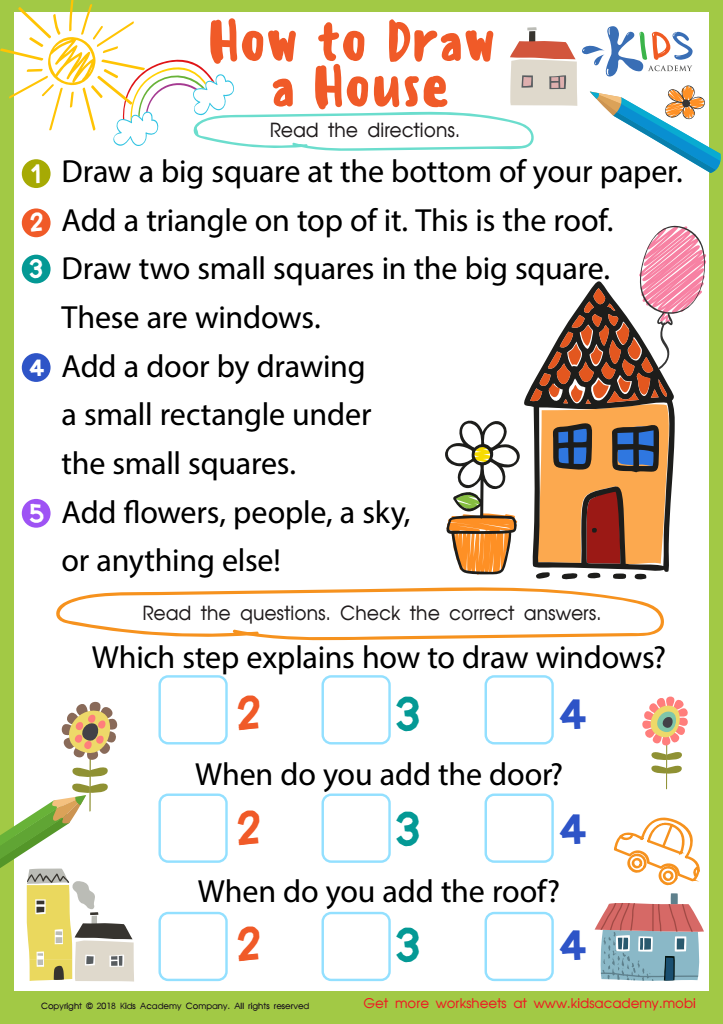
How to Draw House Worksheet
Does your child love to draw? Why not try teaching them some easy tricks? Get them to follow directions on this worksheet and learn how to draw a house. Read the questions at the end and ensure they get the answers right. Your kids will surely love it!
How to Draw House Worksheet
Worksheet
Join Kids Academy for Free
Who is primarily going to use this learning content?




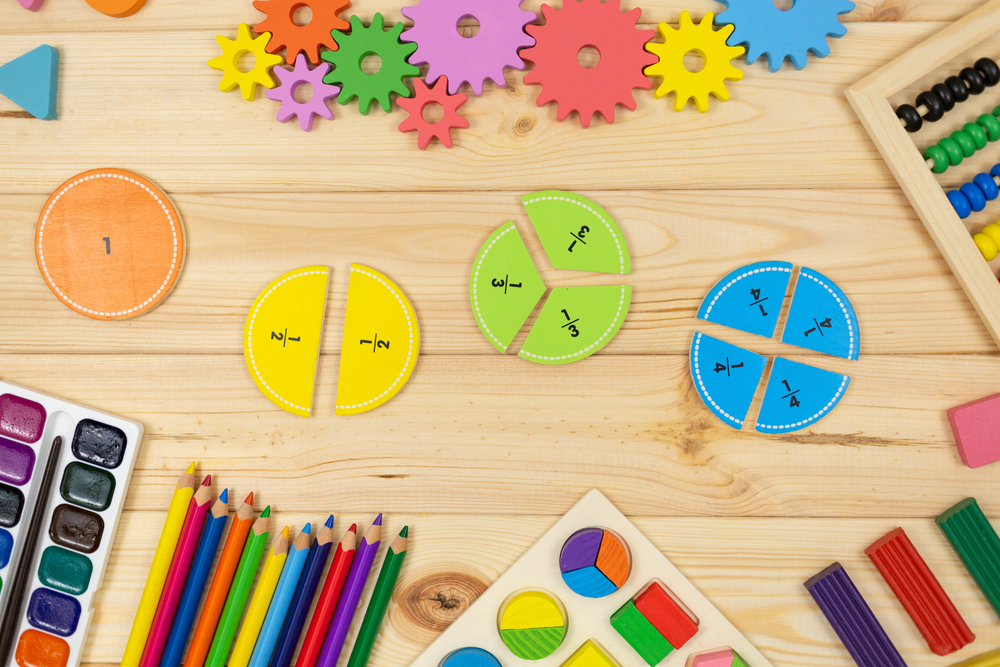


Understanding basic geometry is crucial for children ages 5-9 as it lays the foundation for their critical thinking and problem-solving skills. At this age, children are naturally curious, especially when exploring shapes, spaces, and spatial relationships. Introducing them to basic geometric concepts, such as shapes, symmetry, and measurements, enhances their cognitive development and promotes mathematical skills that are essential for their future education.
Geometry helps children become more observant of their surroundings. By identifying shapes in everyday objects, they learn to classify, compare, and contrast, which bolsters their analytical thinking. Additionally, spatial reasoning developed through basic geometric activities improves problem-solving skills in mathematics and other subjects.
Engaging with geometry also has real-world applications. Parents and teachers can integrate simple tasks like sorting objects, creating structures with blocks, or engaging in arts and crafts to make learning enjoyable. Strong early geometry skills promote confidence and readiness for more complex mathematical concepts later on. By investing time in teaching basic geometry, parents and teachers equip children with essential tools that support lifelong learning and a solid understanding of the world around them.








