Financial literacy Worksheets for Ages 5-9
6 filtered results
-
From - To
Introduce your child to the world of money management with our engaging Financial Literacy Worksheets for Ages 5-9. Carefully designed to align with early learning standards, these printable worksheets make understanding financial concepts easy and fun. Through interactive activities, young learners will grasp essential skills such as saving, spending, budgeting, and recognizing different denominations. Our age-appropriate exercises empower children to build a strong foundation for financial responsibility, equipping them with knowledge that will benefit them for a lifetime. Start your child’s journey to financial literacy today with our expertly crafted resources, available for download anytime.
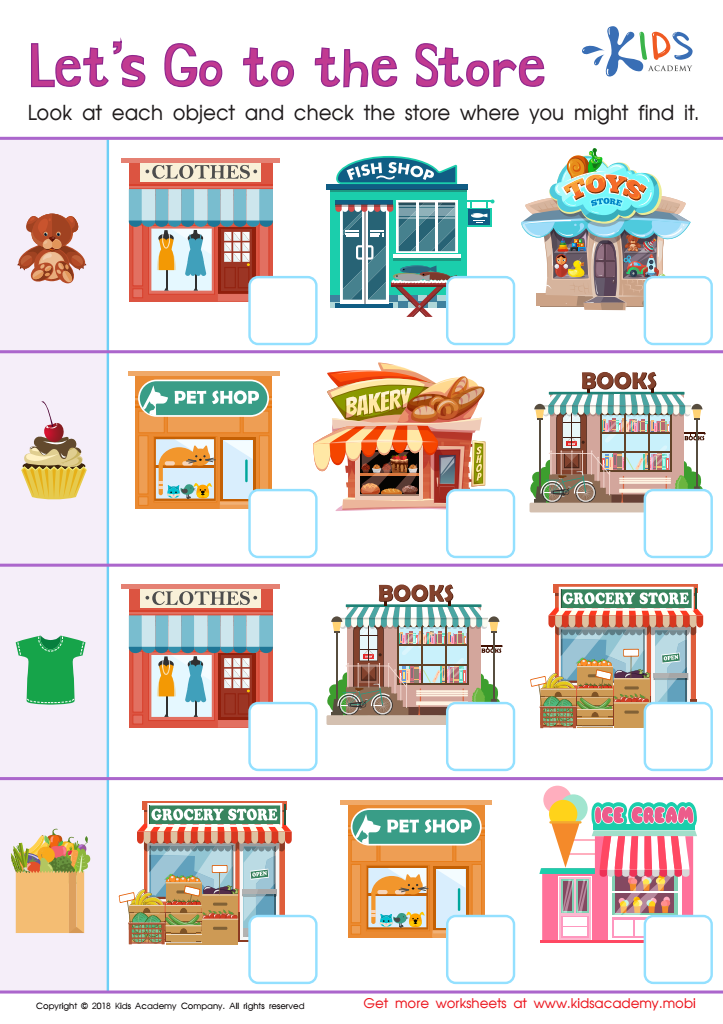
Let's Go to the Store! Worksheet
 Assign to My Students
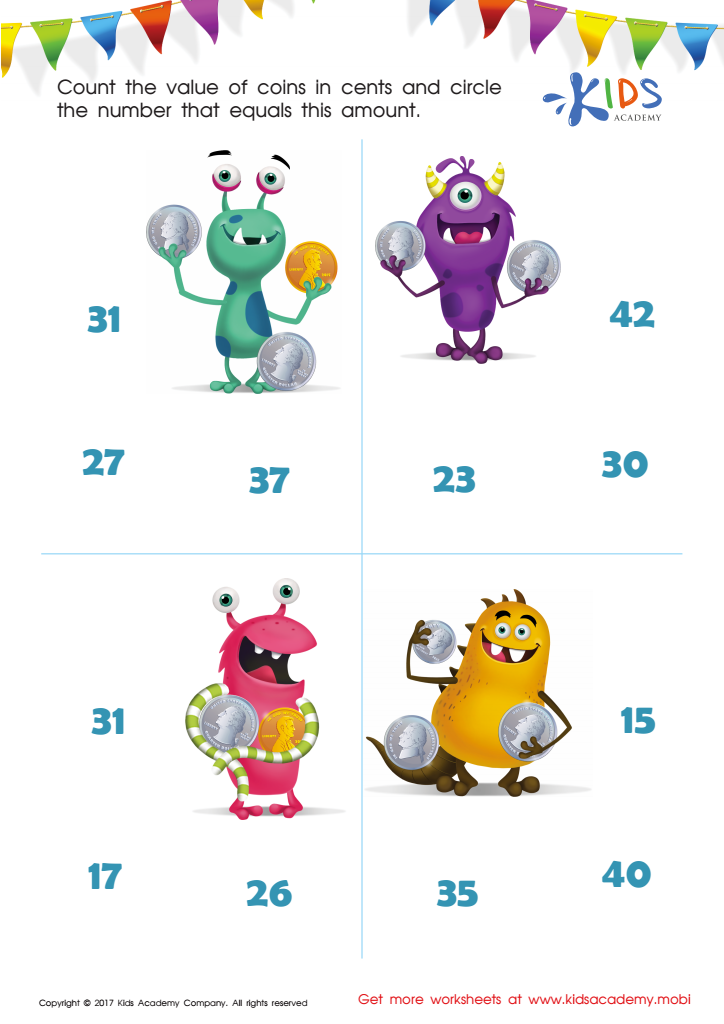
How Many Coins Money Worksheet

Recognizing Money Money Worksheet
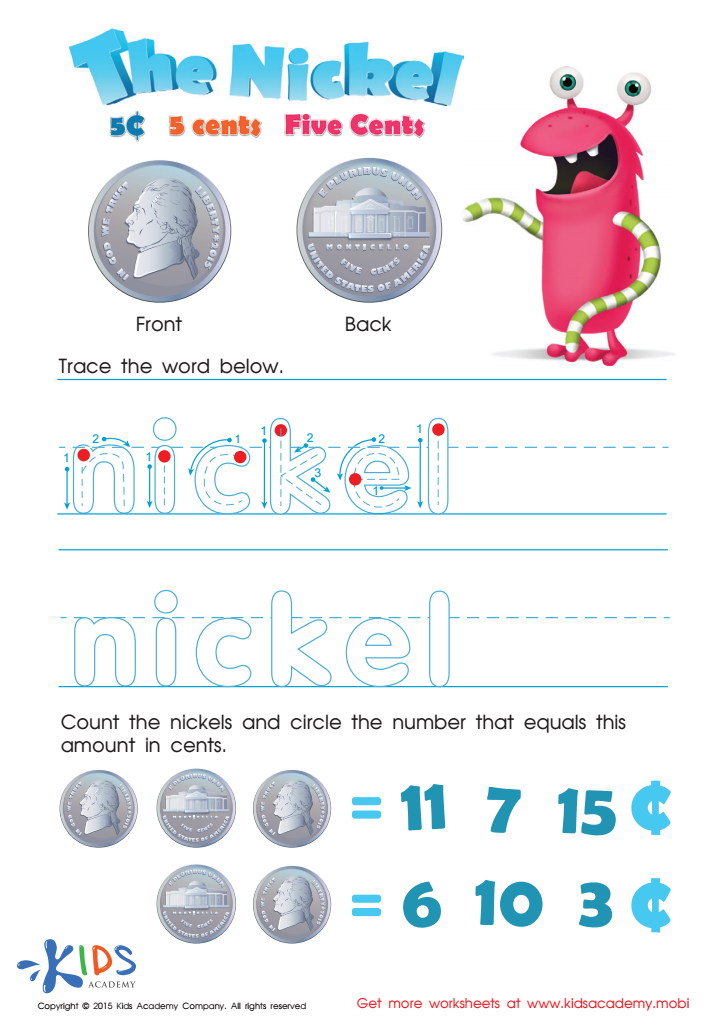
Five Cents or the Nickel Money Worksheet
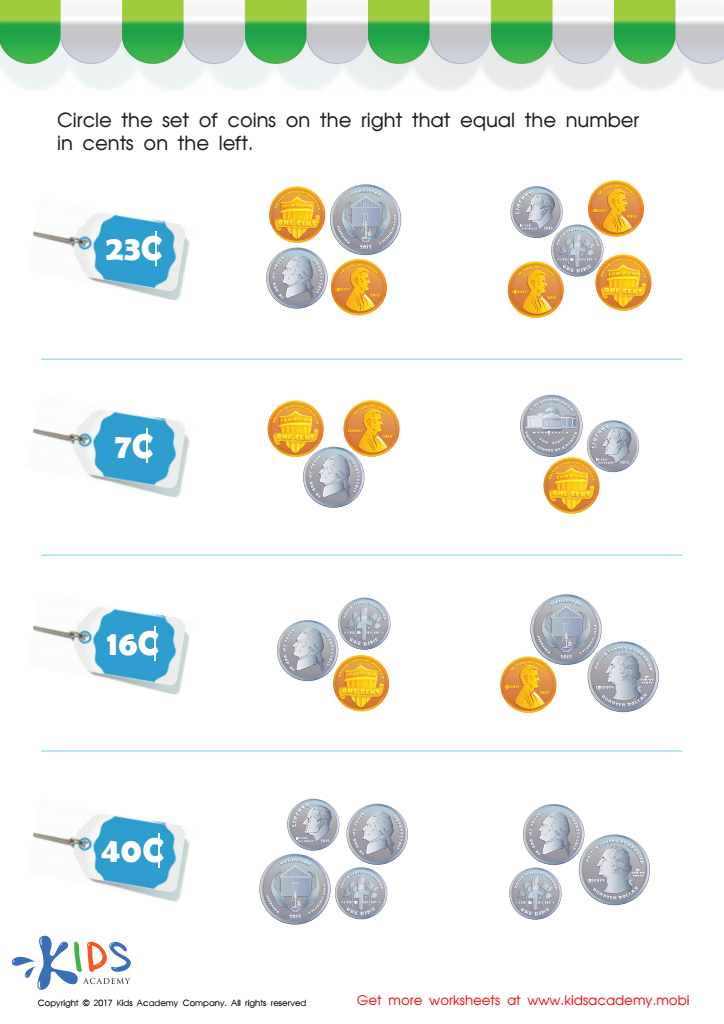
Picking the Coins You Need Money Worksheet




.jpg)



Financial literacy for young children, ages 5-9, is a critical aspect of their overall development. Early financial education equips kids with essential skills for managing money responsibly, setting strong foundations for lifelong financial health.
Firstly, introducing basic financial concepts such as saving, spending, and sharing helps cultivate healthy money habits early on. Understanding the value of money teaches kids to make informed choices, reducing the likelihood of impulse spending and fostering a mindset geared towards financial discipline.
Secondly, financial literacy builds crucial mathematical skills. Children learn to count, add, and subtract money, which reinforces their numeracy abilities in a practical context and makes these subjects more engaging and relatable.
In addition, financial education promotes goal setting and delayed gratification. For instance, saving up for a toy teaches patience and planning, core skills that are beneficial in numerous life situations. It also helps them understand the concept of trade-offs, mirroring real-life decision-making processes.
Finally, informed children are better equipped to navigate societal challenges as they grow. They are less likely to encounter debt problems, understand the implications of financial decisions, and are more inclined to pursue financial planning in their teen and adult years. By prioritizing financial literacy, parents and teachers empower their kids with confidence and competence, ensuring they are better prepared for the future.








