Fine motor skills development Worksheets for Ages 5-9 - Page 2
27 filtered results
-
From - To
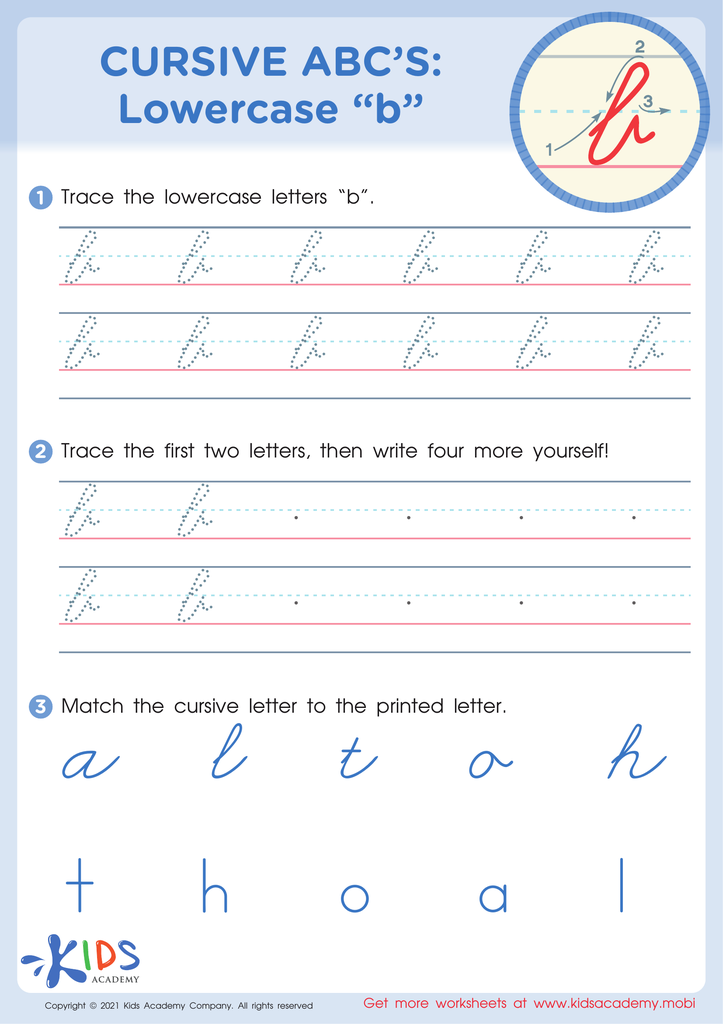
Cursive ABCs: Lowercase b
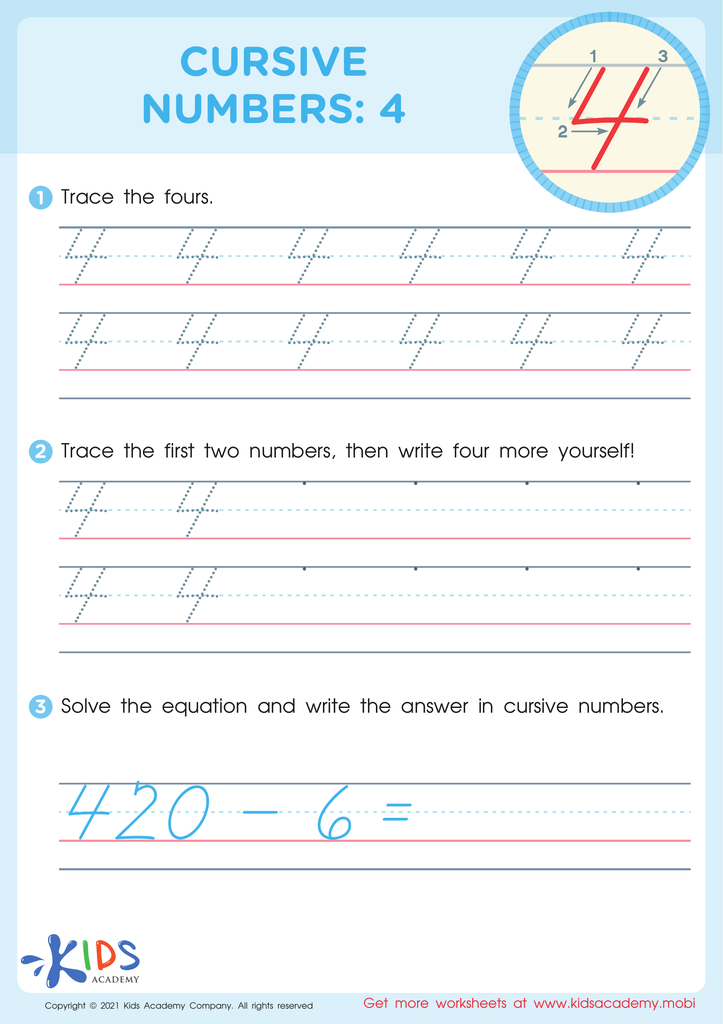
Cursive Numbers: 4 Worksheet








Fine motor skills, which involve the coordination of small muscle movements in the hands and fingers, are critical for children aged 5-9 because they lay the foundation for a wide range of essential activities. Parents and teachers should care about this development for several compelling reasons.
Firstly, fine motor skills are essential for academic success. Skills such as writing, drawing, and cutting with scissors are directly linked to a child's ability to perform well in school. A strong grip and precise motor control aid in clear handwriting, which, in turn, influences their overall learning experience.
Secondly, these skills impact daily tasks and independence. Tying shoelaces, buttoning clothes, and managing utensils during meals are all activities that require fine motor control. Developing these skills allows children to perform daily tasks with greater ease and independence, boosting their confidence and self-esteem.
Moreover, fine motor skill development is connected to cognitive growth. Activities that enhance motor skills often involve problem-solving and creativity, such as puzzles and craft projects. This dual engagement nurtures both physical dexterity and intellectual development.
Lastly, the improvement of fine motor skills fosters social interactions. Group activities like arts and crafts or simple games enable children to bond and communicate effectively with peers, building essential social skills.
In sum, nurturing fine motor skills from an early age is vital for everyday functioning, academic achievement, cognitive development, and social interaction, making it a key area of focus for both parents and teachers.








