
Fine motor skills (tracing) Worksheets for Ages 5-9
3 filtered results
Difficulty Level
Grade
Age
-
From - To
Subject
Activity
Standards
Give your child a head start in developing essential fine motor skills with our engaging tracing worksheets designed for ages 5-9. These interactive printables will help strengthen little hands and fingers through fun tracing exercises, preparing young learners for writing, drawing, and other vital tasks. Our diverse selection of activities keeps kids motivated and eager to practice. Whether at home or in the classroom, our worksheets provide an effective, enjoyable way to enhance fine motor proficiency. Give them the tools to succeed with Kids Academy’s fine motor skills tracing worksheets, perfect for young growing minds.
Favorites
With answer key
Interactive

The Night Sky: Leo Worksheet
Let your kids explore the wonders of the stars with this fun worksheet! They'll connect the dots to create the constellation Leo. Night gazing instruments, a telescope or this printout can help your kids learn about constellations and horoscopes. Download the worksheet and let the star watching begin!
 Assign to My Students
The Night Sky: Leo Worksheet
Worksheet
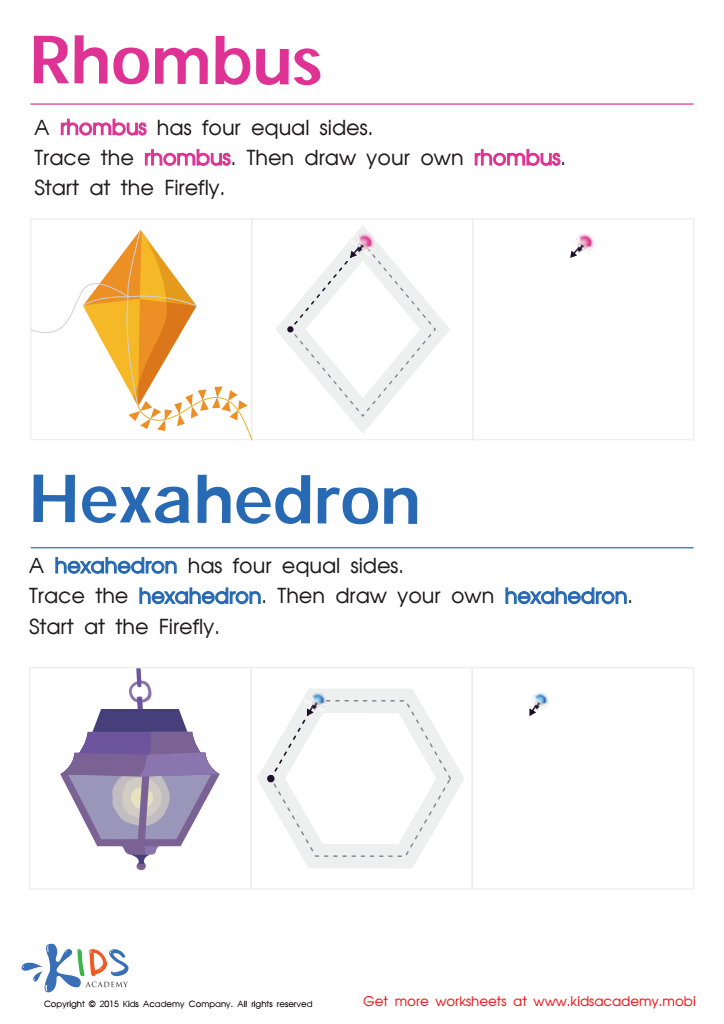
Draw a Rhombus And a Hexahedron Printable
Trace, draw and recognize shapes like rhombus, hexahedron and more! Start with the firefly to trace a rhombus, then use the yellow kite to remember the shape. Use the light to trace and draw a hexahedron. Learn with the best!
Draw a Rhombus And a Hexahedron Printable
Worksheet
Join Kids Academy for Free
Who is primarily going to use this learning content?








Fine motor skills, especially tracing, are crucial for children aged 5-9 as they lay the foundation for essential abilities that impact their daily lives and academic success. During early childhood, fine motor skills, which involve the coordination of small muscle movements in the hands and fingers, significantly influence tasks such as writing, cutting, and buttoning clothes. Tracing activities serve as an effective way to develop these skills, enabling children to control pencils or crayons with increased precision.
When children engage in tracing, they practice hand-eye coordination, patience, and concentration. These exercises refine their ability to draw shapes, letters, and numbers accurately, ultimately leading to better handwriting, which is fundamental for academic achievement. Solid handwriting skills will ease the learning process in subjects like reading, spelling, and math, enhancing overall classroom participation and confidence.
Moreover, fine motor proficiency supports independence in daily activities like dressing and eating, contributing to a child's self-esteem and autonomy. Providing encouragement and opportunities for tracing can help parents and teachers foster an environment where children develop the dexterity and motor confidence needed for both academic and personal growth. Prioritizing fine motor skills ensures a holistic approach to a child's development, preparing them for future educational challenges and life skills.








