
Improve counting Worksheets for Ages 5-9
3 filtered results
Difficulty Level
Grade
Age
-
From - To
Subject
Activity
Standards
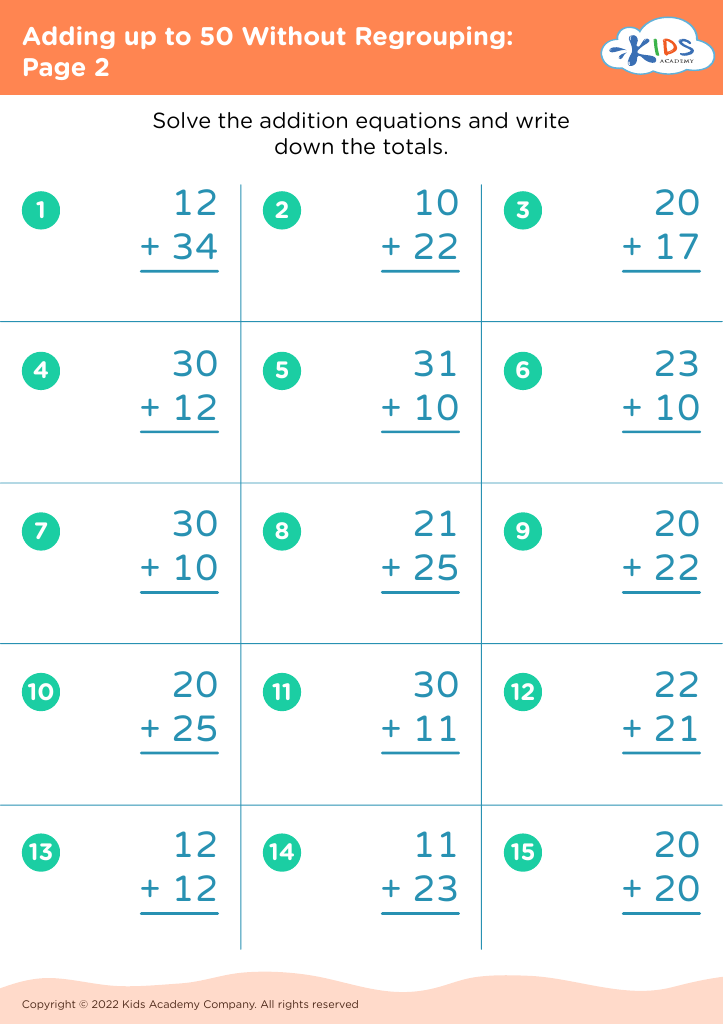
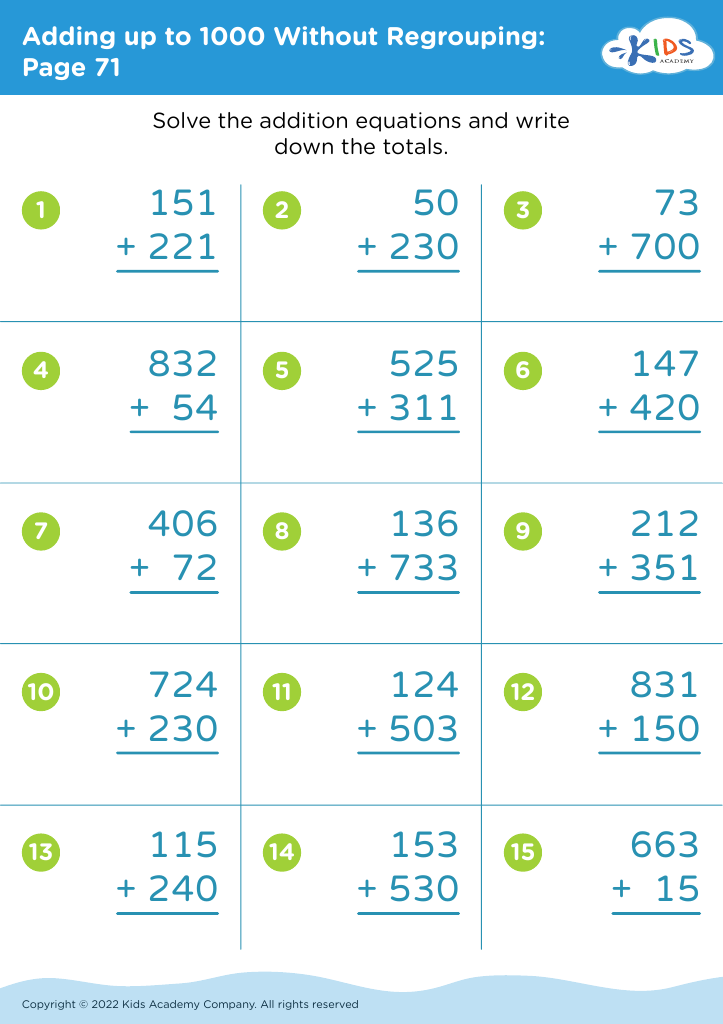
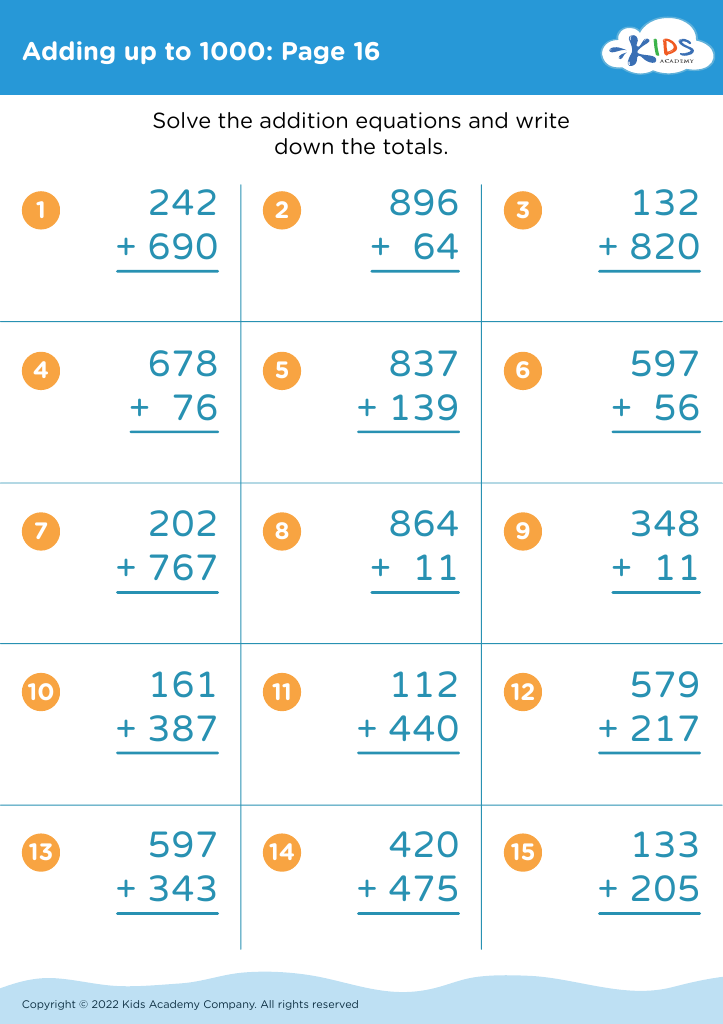
Discover our "Improve Counting Worksheets for Ages 5-9," designed to enhance your child's counting skills through fun and engaging activities. Our worksheets, available at Kids Academy, provide a variety of exercises that develop number recognition, skip counting, and basic arithmetic. These printable resources are perfect for both classroom and home use, ensuring foundational math skills are built in an interactive and enjoyable manner. Tailored specifically for young learners, these worksheets support different learning styles and help instill a love for math at an early age. Join us in creating a solid math foundation for your child today!
Favorites
With answer key
Interactive
Join Kids Academy for Free
Who is primarily going to use this learning content?








Counting is a fundamental skill that serves as the basis for more advanced mathematical concepts. For children aged 5-9, improving counting skills is crucial because it not only supports their ability to perform basic arithmetic operations, but also helps build strong number sense. When kids grasp the concept of counting, they begin to understand the relationships between numbers, including concepts such as greater than, less than, and equal to, which are essential for problem-solving and critical thinking.
Moreover, counting can enhance children's ability to recognize patterns, an essential skill not only in math but also in reading and science. It helps them develop logical thinking, make predictions, and establish connections, which are vital cognitive processes.
Teachers and parents can significantly enhance a child’s overall academic achievement by focusing on counting skills early on. For instance, games, hands-on activities, and real-life counting experiences make learning fun and engaging, fostering a positive attitude towards math.
Finally, strong counting skills contribute to greater confidence in handling everyday tasks, such as telling time, following a recipe, or even managing money. By establishing a strong foundation in counting, children are better prepared for future academic challenges and everyday life, making it an essential focus in early education.








