Improving fine motor skills Worksheets for Ages 5-9
3 filtered results
-
From - To
Unlock your child's potential with our engaging "Improving Fine Motor Skills Worksheets" for ages 5-9! Designed to enhance dexterity and hand-eye coordination, these worksheets are perfect for young learners. Through fun and interactive activities, children will develop essential skills like cutting, tracing, and drawing, all while discovering the joy of learning. Our resources support various learning styles and are suitable for both classroom and home use. Help your child build confidence in their abilities as they master the fine motor skills needed for effective writing, crafts, and everyday tasks. Download now and watch them thrive!
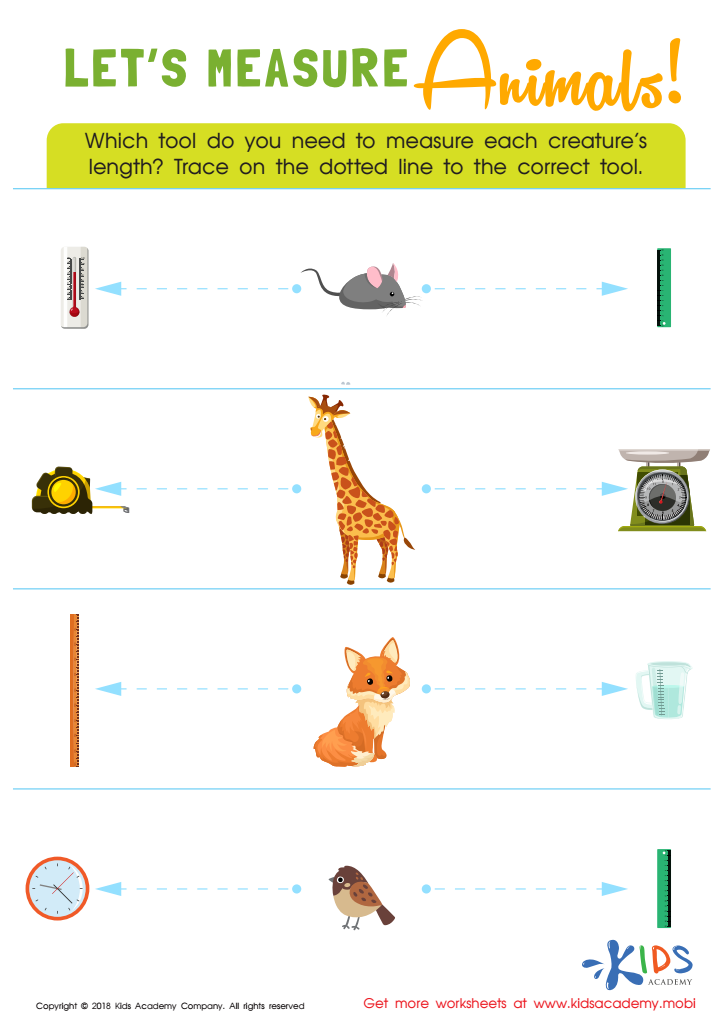
Let's Measure Animals! Worksheet
 Assign to My Students







Improving fine motor skills in children aged 5-9 is crucial for their overall development and daily functioning. Fine motor skills involve the coordination of small muscles in the hands and fingers, which are essential for tasks such as writing, drawing, and manipulating small objects. For parents and teachers, nurturing these skills fosters independence and confidence in children. Mastery of fine motor skills enhances academic performance; children who can effectively use tools, like scissors and pencils, are more likely to engage creatively and perform well in classroom activities.
Furthermore, fine motor skills play a pivotal role in everyday life. As children develop these skills, they gain the ability to tackle self-care tasks, such as buttoning clothes or tying shoes, leading to increased self-esteem. Moreover, the development of fine motor skills is linked to cognitive development, as the intricate movements require focus and coordination, reinforcing brain pathways associated with problem-solving and critical thinking.
Providing activities like art projects, puzzles, and activities that promote hand-eye coordination can greatly support this skill development. Thus, parents and teachers should prioritize improving fine motor skills as they are fundamentally tied to both academic success and personal growth during these formative years.








