Lowercase letter writing Worksheets for Ages 5-9
3 filtered results
-
From - To
Enhance your child's handwriting skills with our "Lowercase Letter Writing Worksheets" for ages 5-9! These engaging and colorful worksheets are designed to make learning fun and effective. Each worksheet offers guided practice to help children master the formation of lowercase letters, reinforcing fine motor skills and letter recognition. Our resource includes a variety of activities to cater to different learning styles, ensuring every child can thrive. Perfect for both classroom use and at-home practice, these worksheets will boost your child's confidence in writing. Download now and watch your child's handwriting improve as they enjoy the learning process!
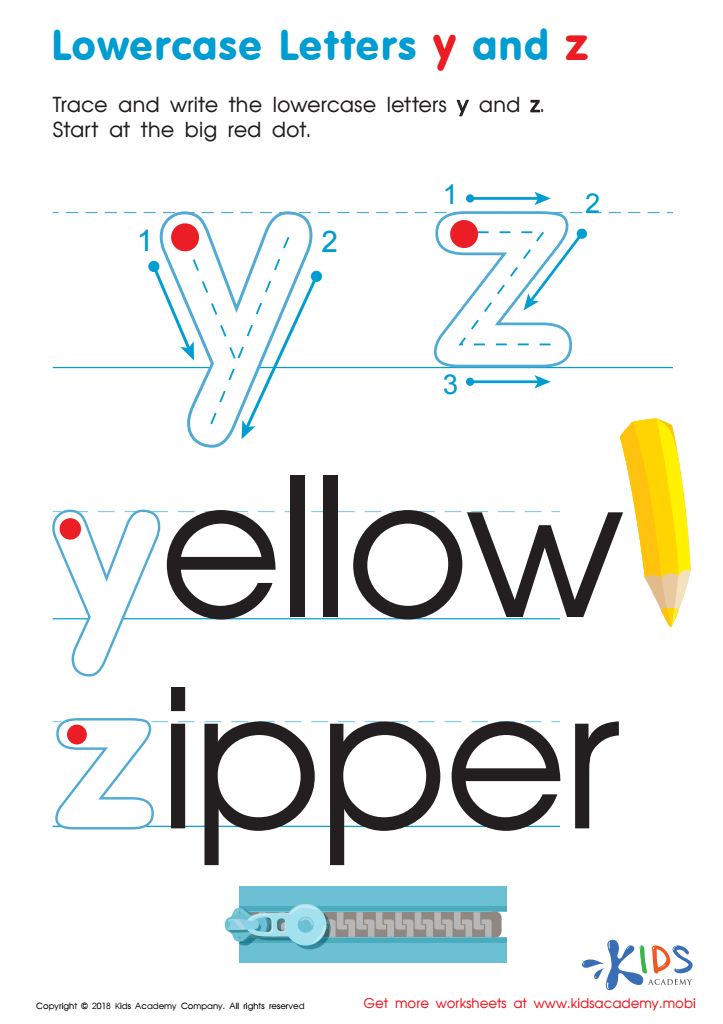
Lowercase Letters y z Worksheet
 Assign to My Students
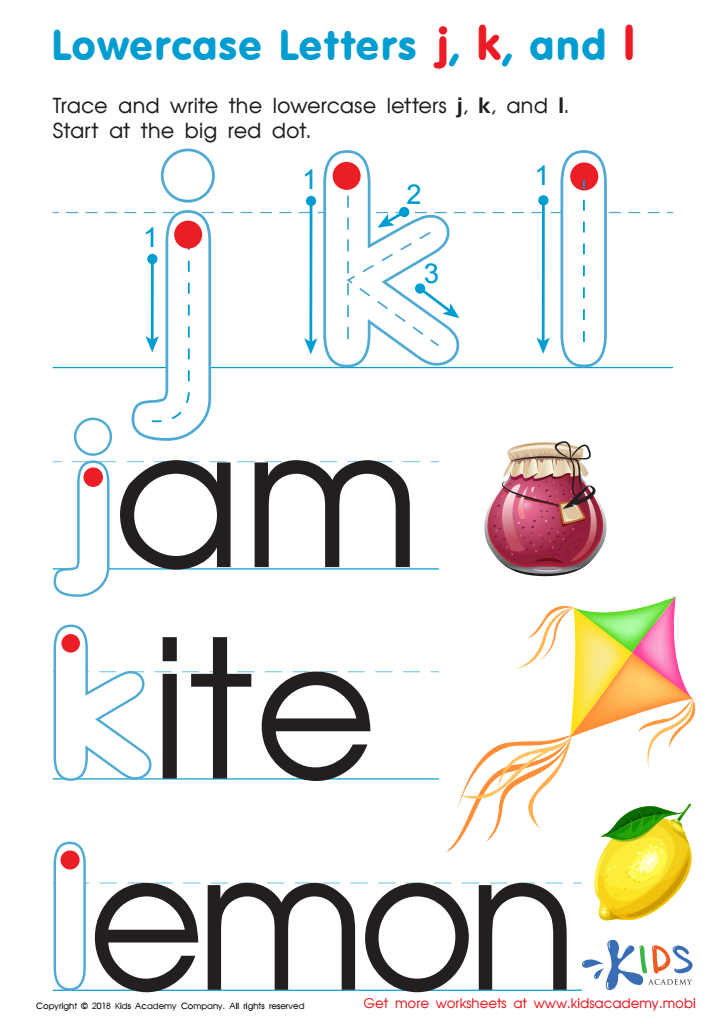
Lowercase Letters j k l Worksheet
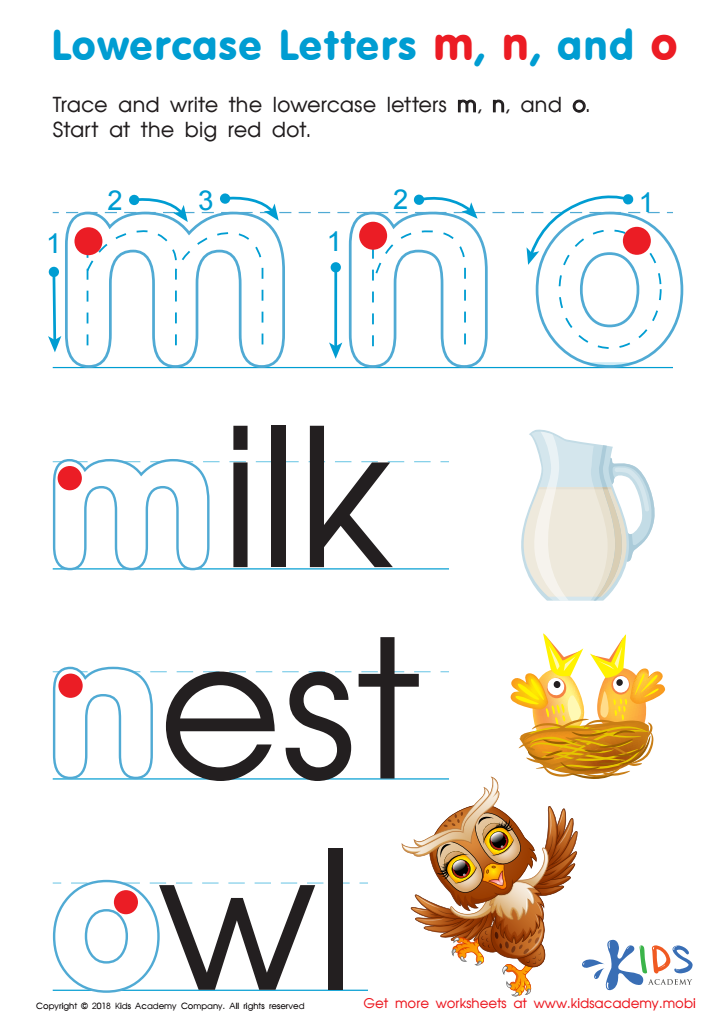
Lowercase Letters m n o Worksheet







Lowercase letter writing is crucial for children ages 5-9 as it lays the foundation for literacy and communication skills. First and foremost, mastering lowercase letters facilitates reading and writing fluency. Most written texts are composed predominantly of lowercase letters; therefore, children need to recognize and produce them confidently.
Writing in lowercase also helps develop fine motor skills, as forming these letters requires coordination and control. This skill is essential for overall handwriting development and later academic success. Additionally, learning lowercase letters encourages children to express their thoughts clearly and creatively, fostering a love for writing.
Furthermore, teaching lowercase letter writing can promote self-esteem and independence. Children feel a sense of accomplishment when they can communicate their ideas effectively. By mastering lowercase letters, they can contribute to group projects, illustrate stories, and participate in classroom discussions more effectively.
Lastly, understanding lowercase letters is integral in emerging language development, including phonemic awareness and vocabulary acquisition. Proficient use of lowercase letters supports spelling and grammar skills essential for coherent writing. Therefore, encouraging lowercase letter writing shouldn't just be an academic concern; it is fundamental to children's overall cognitive and emotional growth, making it vital for parents and educators to emphasize.








