Number counting Worksheets for Ages 5-9
4 filtered results
-
From - To
Discover our engaging Number Counting Worksheets designed for children ages 5 to 9! These educational tools are perfect for young learners to build a strong mathematical foundation while having fun. Our printable worksheets feature vibrant illustrations and diverse activities that help kids master counting, number recognition, addition, and subtraction. Ideal for both classroom and home settings, they cater to various skill levels and learning styles. With our comprehensive resources, children will develop their number skills confidently and enjoyably. Boost your child's math proficiency today with our expertly crafted worksheets tailored for early learners!
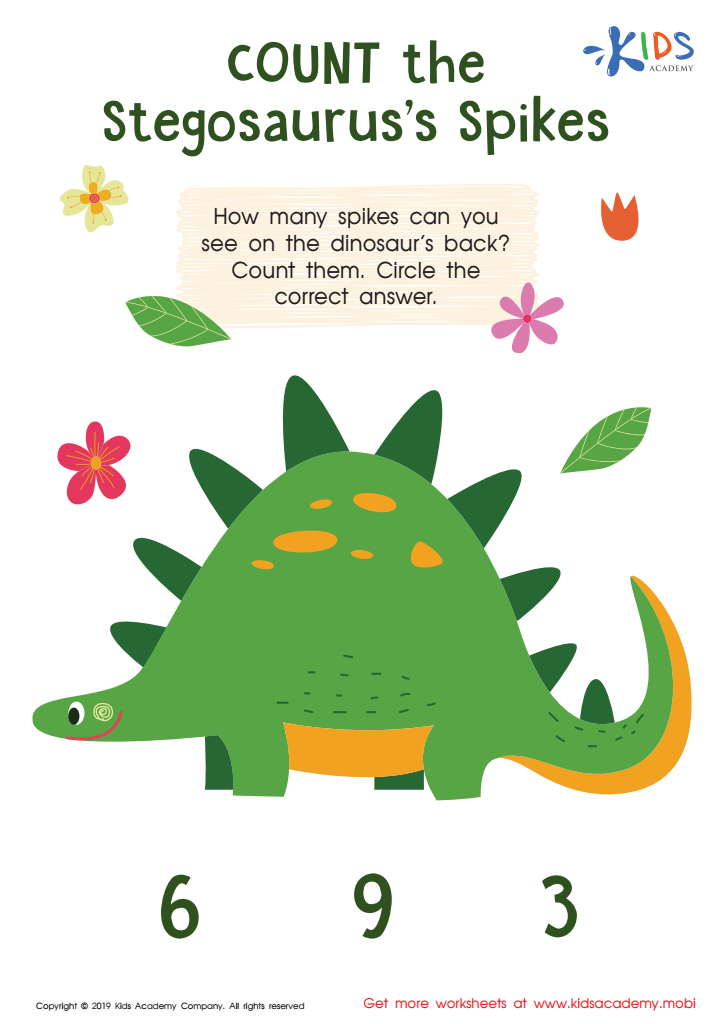
Count the Stegosaurus's Spikes Worksheet
 Assign to My Students
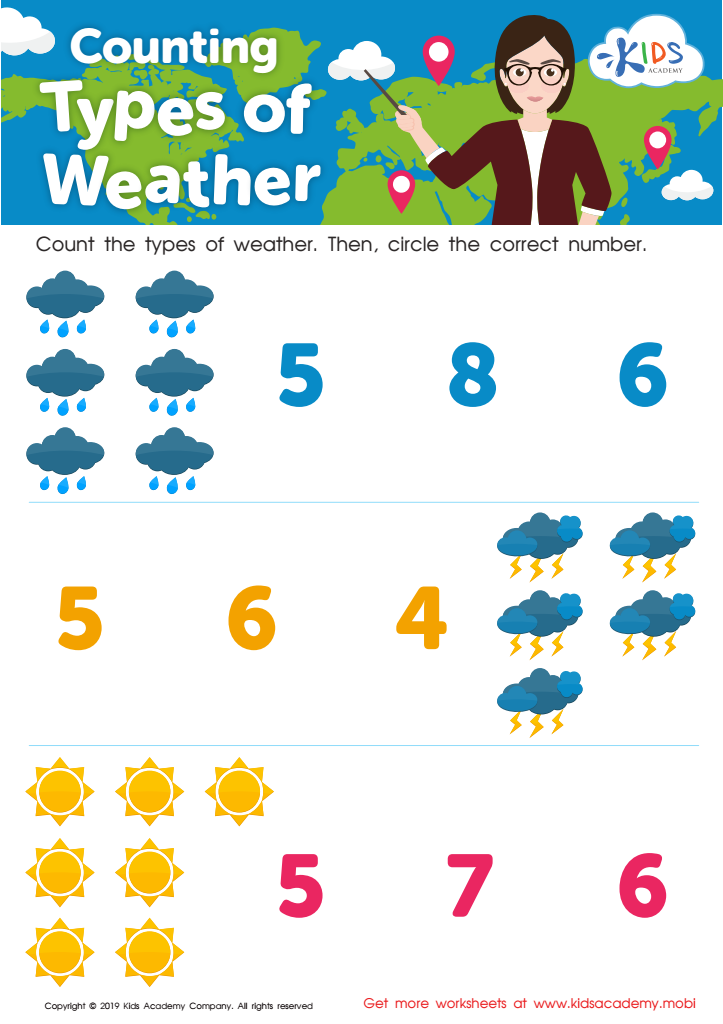
Counting Types of Weather Worksheet





.jpg)

Parents and teachers should prioritize number counting for children ages 5-9 because it forms the bedrock of mathematical understanding and everyday life skills. At this formative stage, children are like sponges, absorbing foundational concepts that will shape their future learning abilities.
Firstly, number counting enhances cognitive development. It encourages logical thinking and problem-solving skills. Recognizing and understanding numbers sets the stage for more complex mathematical concepts such as addition, subtraction, multiplication, and division.
Secondly, proficiency in counting supports academic achievement. Early numeracy skills are strong predictors of later success in mathematics and other subjects. Children who grasp counting well tend to perform better academically overall because they have developed concentration, attention to detail, and systematic thinking.
Additionally, counting is essential in daily life. Whether telling time, handling money, or following recipes, these skills are indispensably practical. Early exposure ensures that children can navigate these everyday tasks with confidence and independence.
Moreover, fostering a positive attitude towards mathematics at a young age is crucial. Engaging, playful counting activities make math enjoyable, reducing anxiety and building a lifelong appreciation for the subject.
In essence, focusing on number counting for young children aids in their intellectual, academic, and practical life skills development, setting a strong foundation for their future endeavors.








