Reading thermometers Worksheets for Ages 5-9
4 filtered results
-
From - To
Enhance your child's understanding of temperature with our engaging Reading Thermometers Worksheets for Ages 5-9! These printable resources are designed to make learning to read thermometers fun and intuitive. Perfect for early learners, each worksheet offers colorful visuals and easy-to-follow instructions that help kids grasp the concept of temperature in both Celsius and Fahrenheit. Through these interactive exercises, children will strengthen their math and science skills, boosting their ability to interpret everyday temperature readings accurately. Ideal for both classroom and home use, these worksheets offer a practical and enjoyable way to master a fundamental life skill.
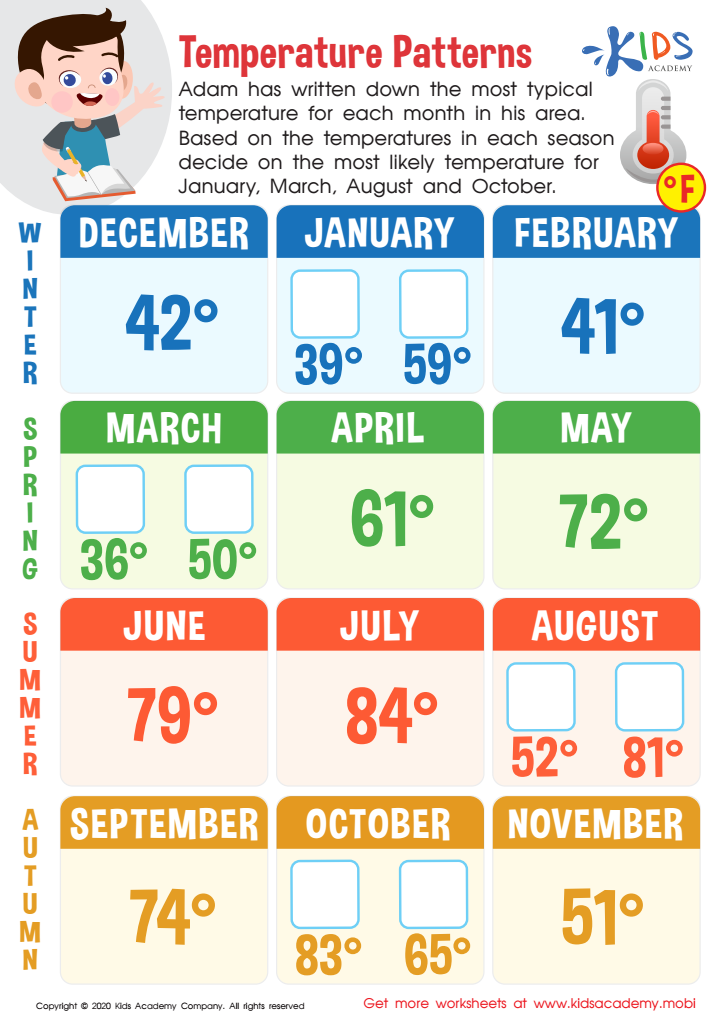
Temperature Patterns Worksheet
 Assign to My Students
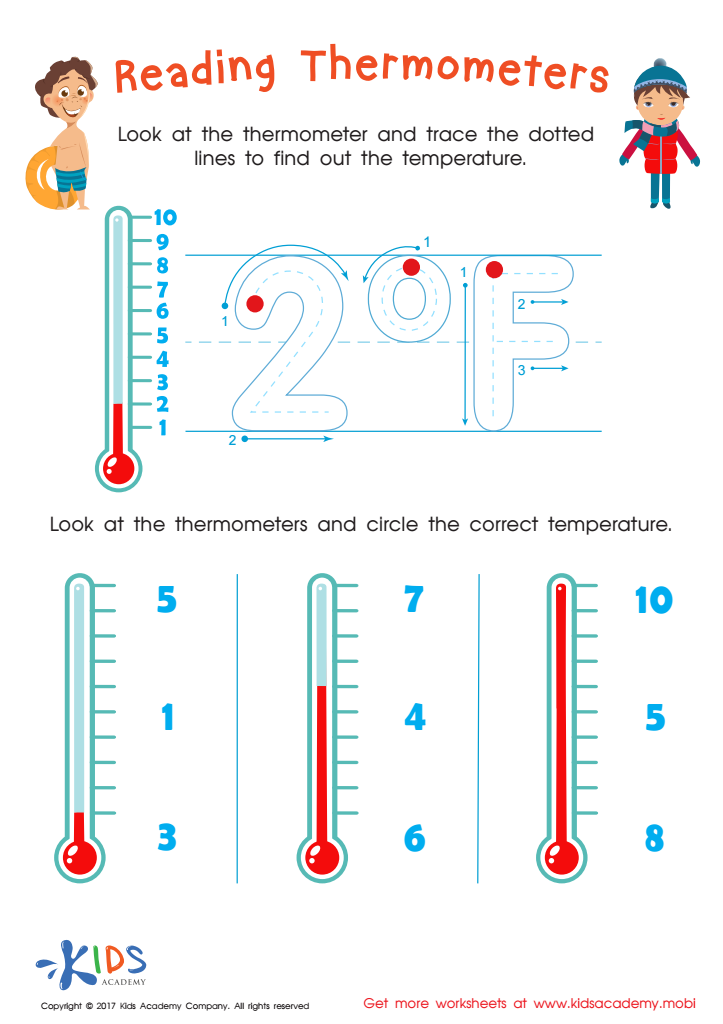
Reading Thermometers Printable
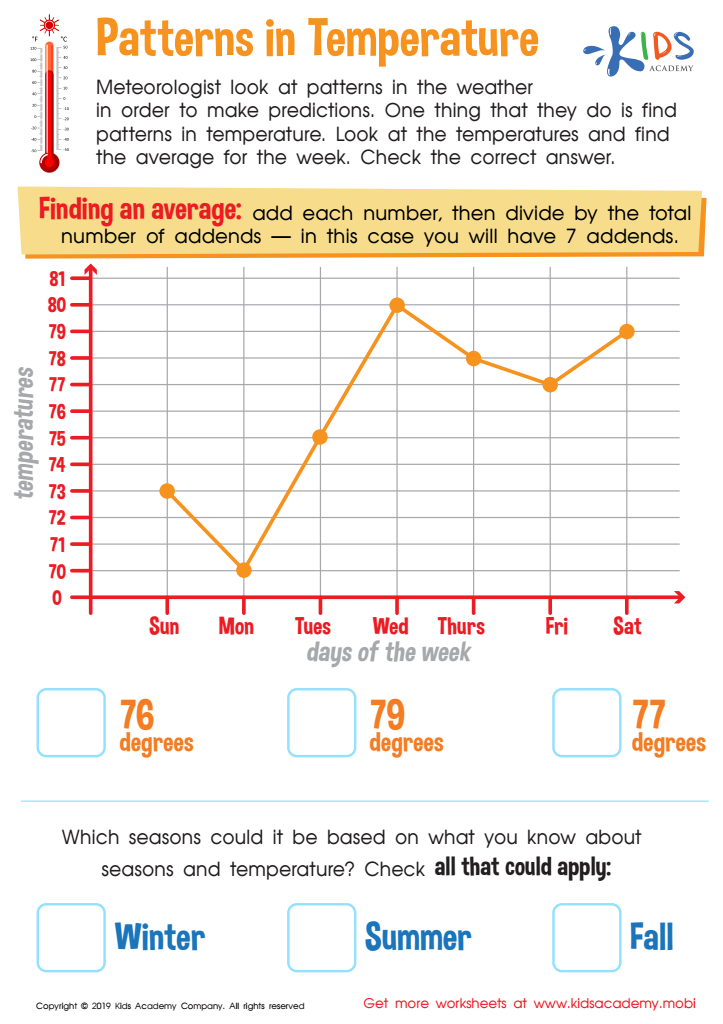
Patterns in Temperature Worksheet








Understanding how to read a thermometer is an essential skill for children aged 5-9 as it aids in developing their ability to engage with the world around them. For parents and teachers, fostering this knowledge is crucial for several reasons.
First, grasping how thermometers work contributes to a child's scientific literacy, laying a foundation for more complex scientific concepts later on. It offers a tangible way to understand temperature, a fundamental aspect of the environment and everyday life. For instance, by measuring indoor and outdoor temperatures, children learn about weather patterns, appropriate clothing, and seasonal changes.
Second, comprehension of thermometers is impactful for health and safety. Children who can read thermometers become aware of symptoms (like fever) and when they should seek help or rest. Educators can incorporate this into lessons on personal health, emphasizing the importance of monitoring body temperature.
Moreover, using thermometers can enhance mathematical skills like reading scales, measuring accurately, and comparing numbers. These are basic skills that can be applied in a variety of subjects and real-life situations.
Ultimately, when parents and teachers emphasize the importance of reading thermometers, they equip children with the capability to understand and interpret crucial information about their environment and well-being, embedding both practical and academic benefits.








