Understanding force Worksheets for Ages 5-9
3 filtered results
-
From - To
Unlock your child’s potential with our comprehensive "Understanding Force Worksheets for Ages 5-9." These vibrant, engaging worksheets introduce young learners to the basics of force and motion. Through fun activities and hands-on experiments, children will explore push, pull, gravity, and friction, fostering critical thinking and problem-solving skills. Perfect for both classroom use and homeschooling, each worksheet aligns with educational standards to support your child’s learning journey. From simple explanations to colorful illustrations, our resources make complex concepts easy to understand. Help your child discover the wonders of physics with our expert-designed worksheets!
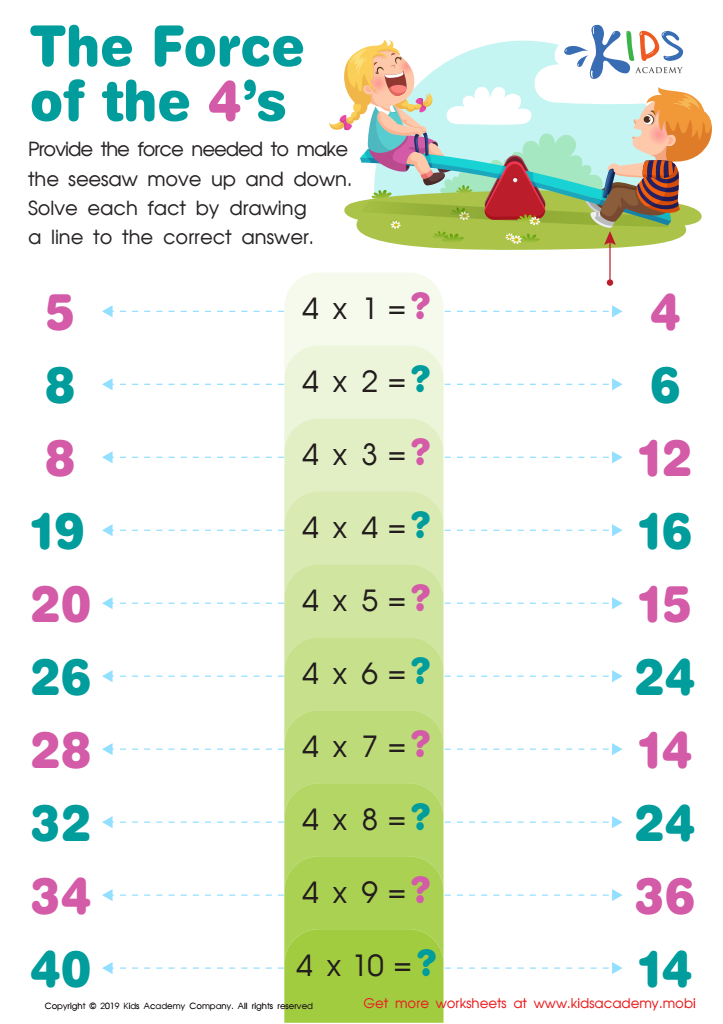
The Force of the 4's Worksheet
 Assign to My Students
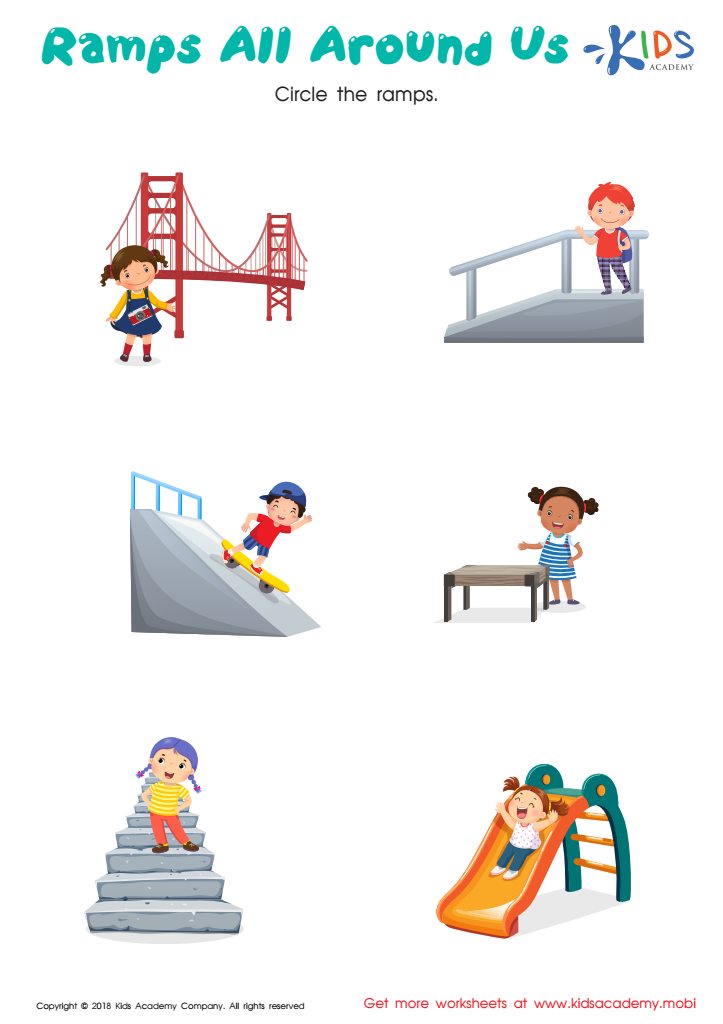
Ramps All Around us Worksheet
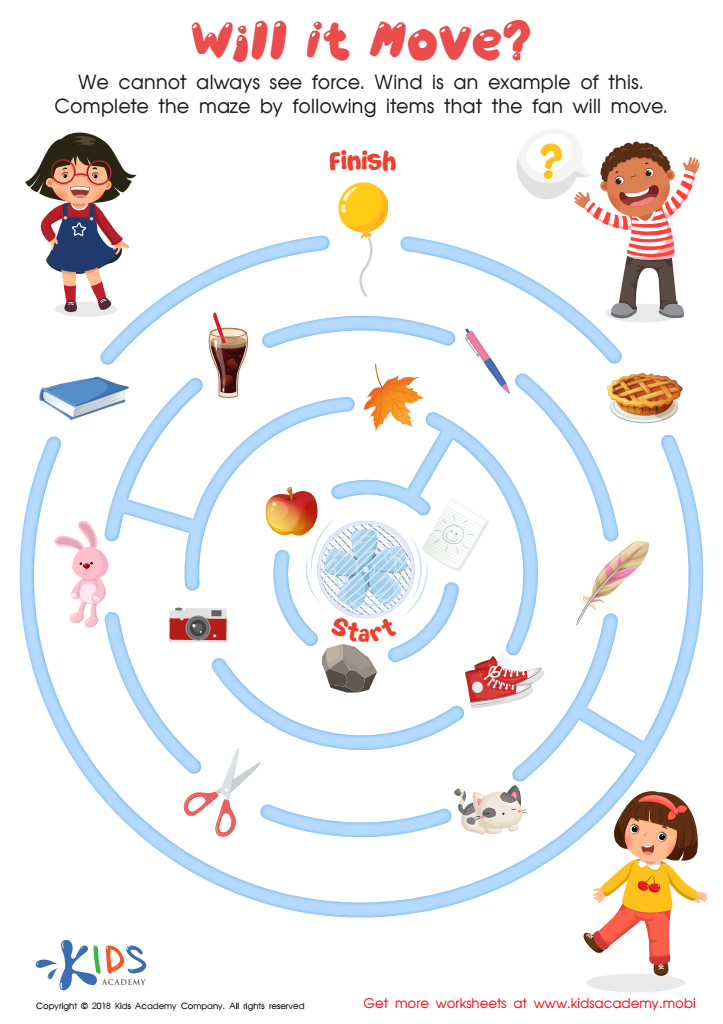
Will it Move? Worksheet






Understanding the concept of force at an early age is crucial for a child's overall development and can spark a lifelong interest in science and learning. For parents and teachers, fostering this understanding for children aged 5-9 helps build foundational skills in problem-solving and critical thinking. When children learn about force—such as push, pull, gravity, and friction—they begin to make connections between scientific concepts and their everyday experiences. For instance, when playing with a ball or riding a bike, they can relate those activities to the forces at play.
Instilling this knowledge encourages curiosity and motivates children to explore the world around them, asking questions about how and why things work. Additionally, understanding force lays the groundwork for more advanced STEM (Science, Technology, Engineering, and Mathematics) learning, which is increasingly important in today's technology-driven world.
From a practical perspective, understanding forces can also improve children's coordination and physical awareness by aligning their actions with real-world physics. Parents and teachers who emphasize these concepts create a learning environment where children feel empowered to experiment, observe outcomes, and draw logical conclusions. Fostering such an environment enables children to develop a lasting love for science and learning, setting them on a path to become informed and innovative contributors to society.








