Understanding measurement Worksheets for Ages 5-9
3 filtered results
-
From - To
Welcome to our “Understanding Measurement Worksheets” designed for children aged 5-9! These engaging, printable worksheets aim to introduce young learners to the fundamental concepts of measurement, including length, weight, volume, and more. With a variety of fun activities, your child will explore measuring tools, compare sizes, and practice using their new skills in real-world scenarios. Our worksheets promote critical thinking and hands-on learning, making measurement enjoyable and accessible. Whether at home or in the classroom, these resources support literacy and numeracy development, setting a strong foundation for future math success. Start your child’s measurement journey today!
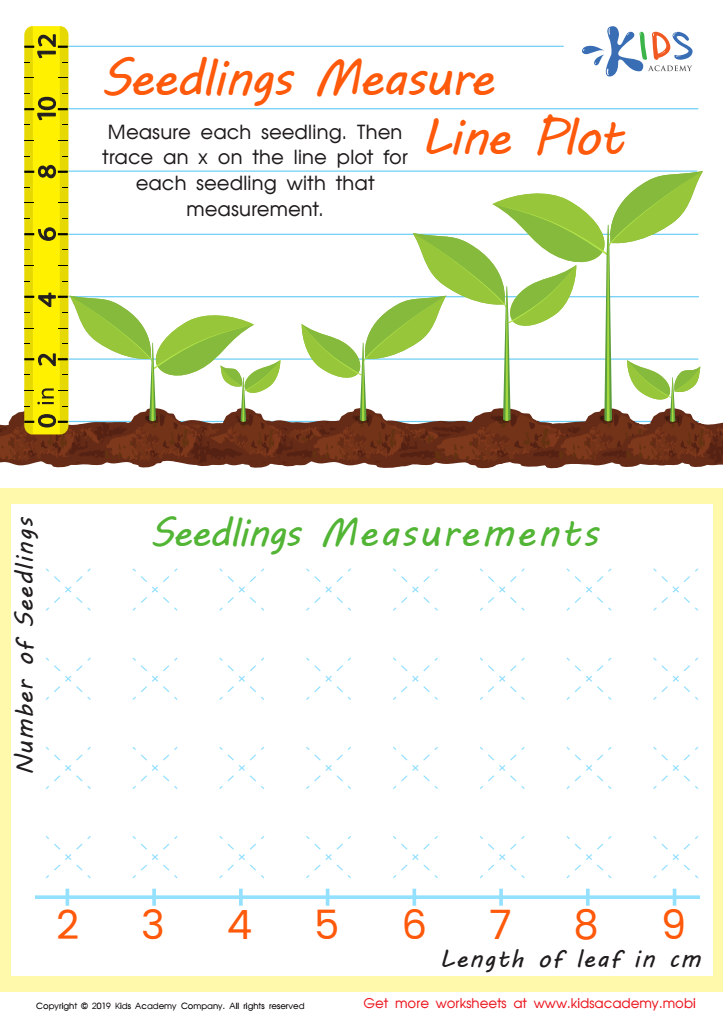
Seedling Measure Line Plot Worksheet
 Assign to My Students
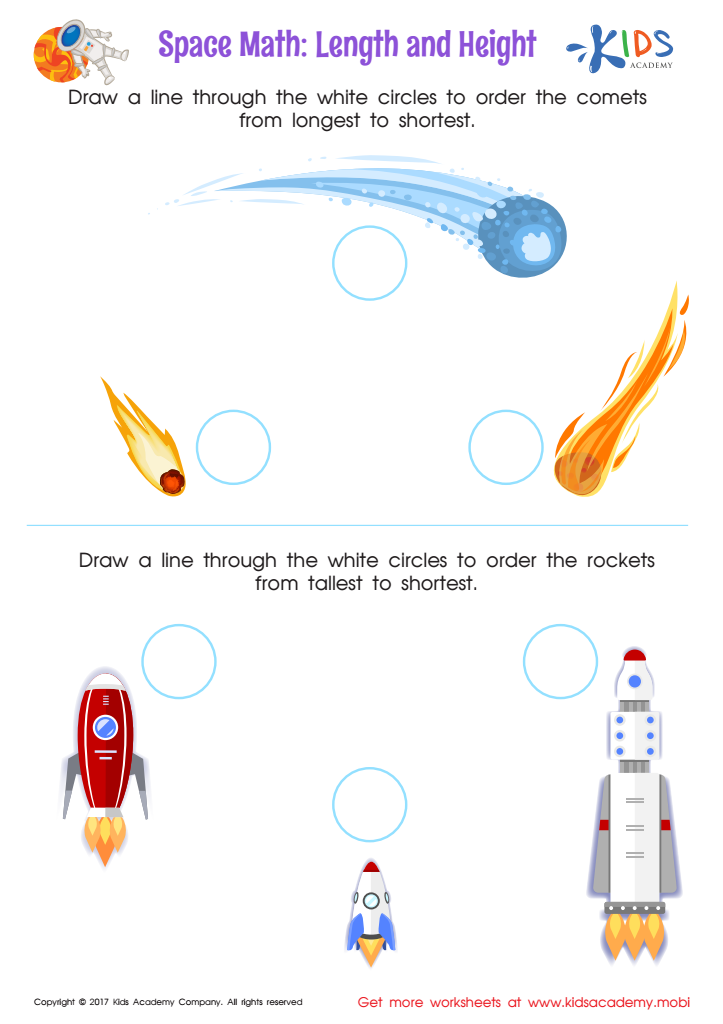
Space Math Worksheet
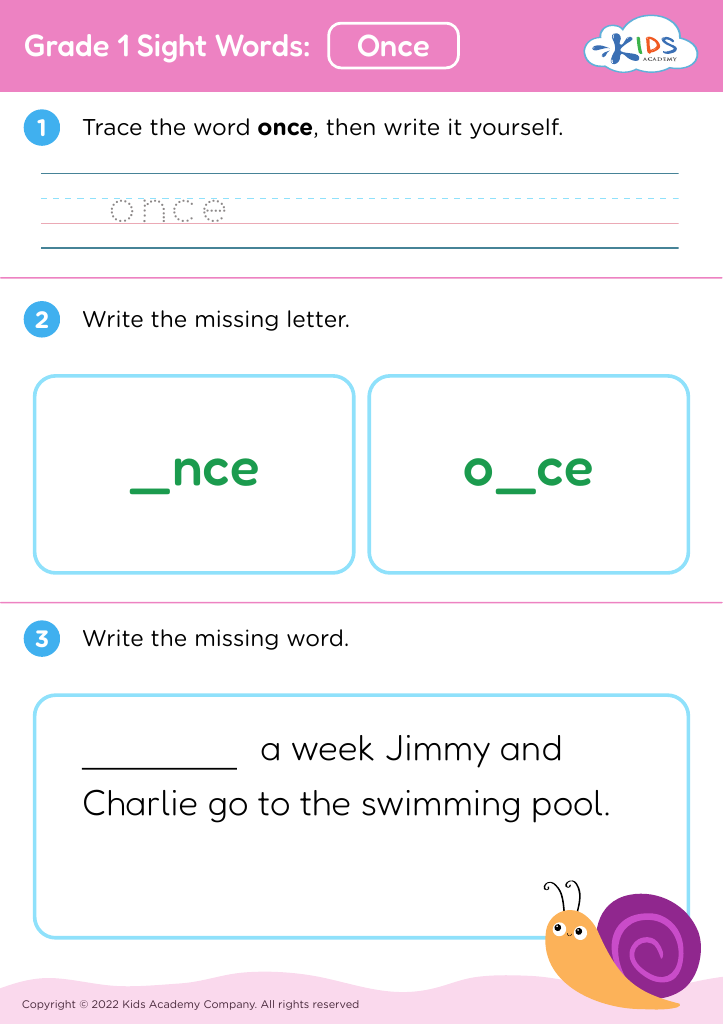







Understanding measurement is a fundamental skill for children ages 5-9, as it forms the basis for critical thinking and problem-solving abilities. At this age, children are naturally curious and eager to explore the world around them, making it an ideal time to introduce measurement concepts. Parents and teachers should care about fostering this understanding because measurement is essential for daily life tasks, from cooking and building to shopping and personal health.
Learning measurement not only sharpens mathematical skills but also promotes logical reasoning and spatial awareness. When children estimate, measure, and compare lengths, weights, and volumes, they engage in hands-on activities that enhance their cognitive development. Additionally, measurement activities can be integrated into fun and creative projects, making learning enjoyable and meaningful.
Moreover, early mastery of measurement concepts lays the groundwork for later academic success in mathematics and science. It empowers children to make sense of and interact with their environment, cultivating a sense of confidence and independence. As measurement becomes an integral part of their learning journey, they develop essential skills that will serve them well beyond the classroom, reinforcing the pivotal role parents and teachers play in this aspect of education.








