Animal recognition Adding in the Forest Worksheets for Ages 5-9
15 filtered results
-
From - To
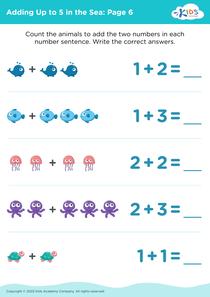
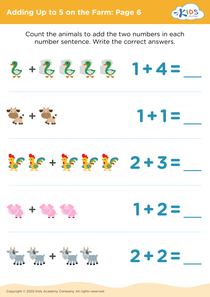
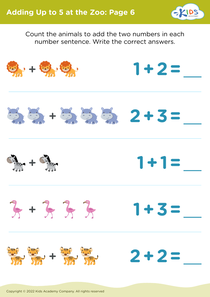
Discover our "Animal Recognition Adding in the Forest" worksheets designed for children ages 5-9. These engaging activities combine basic addition skills with animal recognition to create a fun, educational experience. Children will explore a forest setting, identifying various animals while solving simple math problems. This dual-focus approach enhances both math abilities and cognitive skills related to nature and wildlife. Perfect for early learners, these worksheets make learning interactive and enjoyable. Boost your child's confidence and knowledge with our beautifully illustrated and thoughtfully designed printables. Get ready for a forest adventure that makes math and animal recognition exciting!
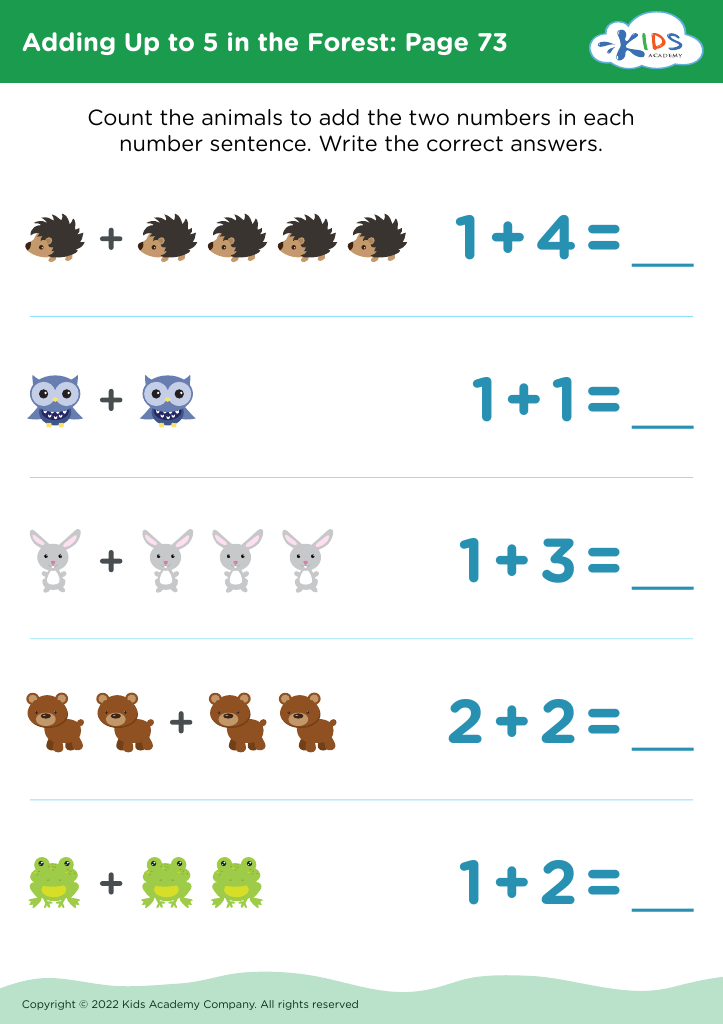
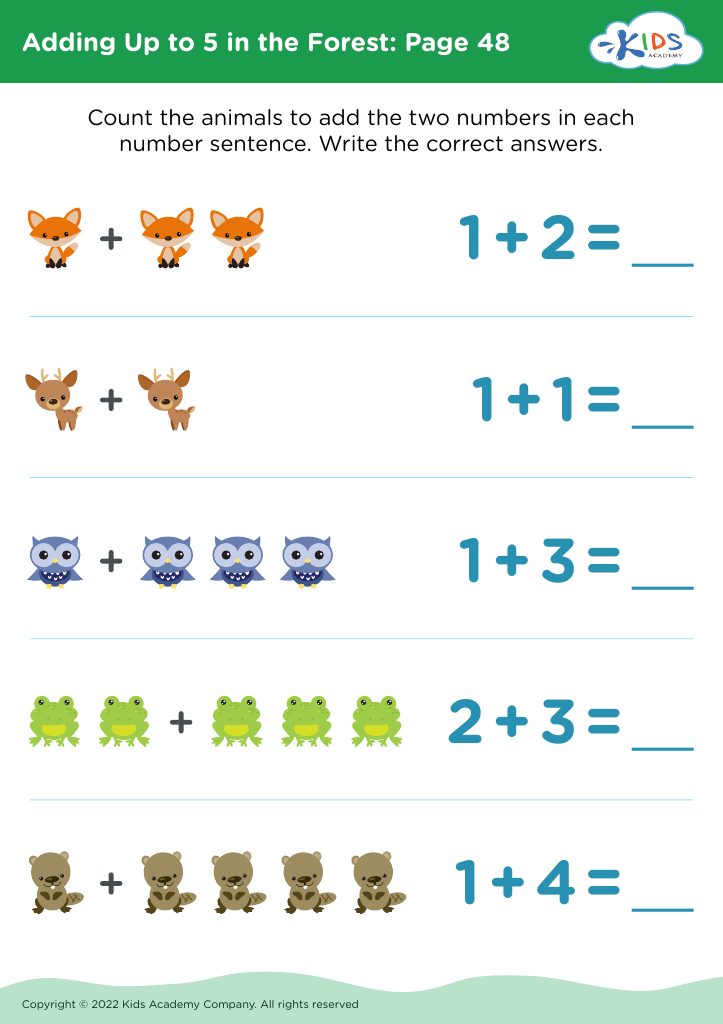
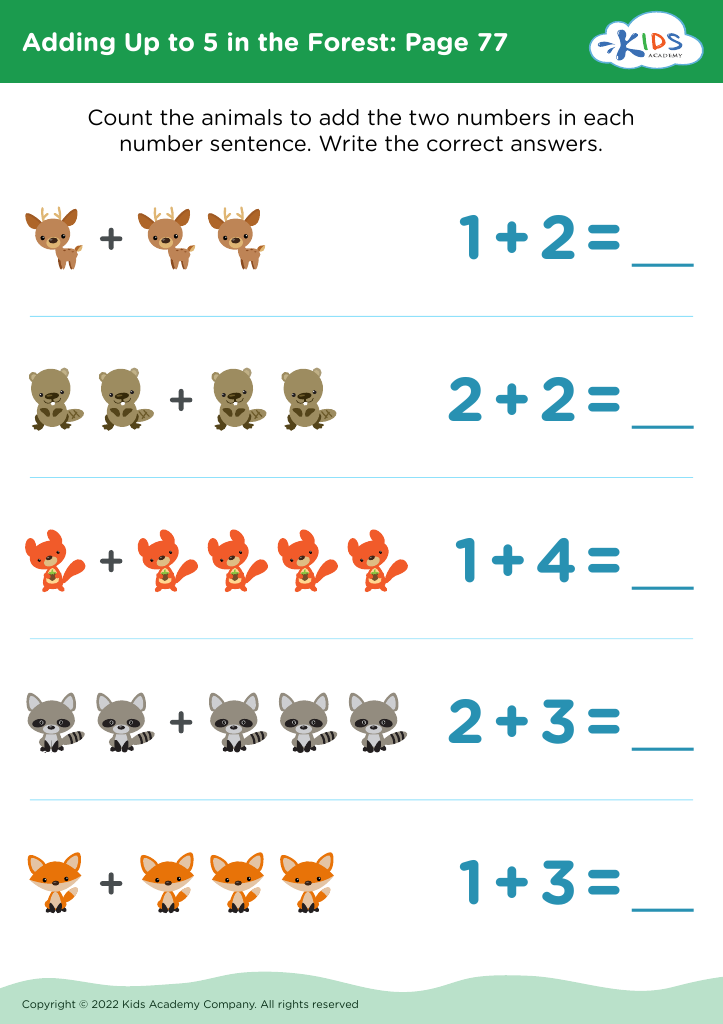
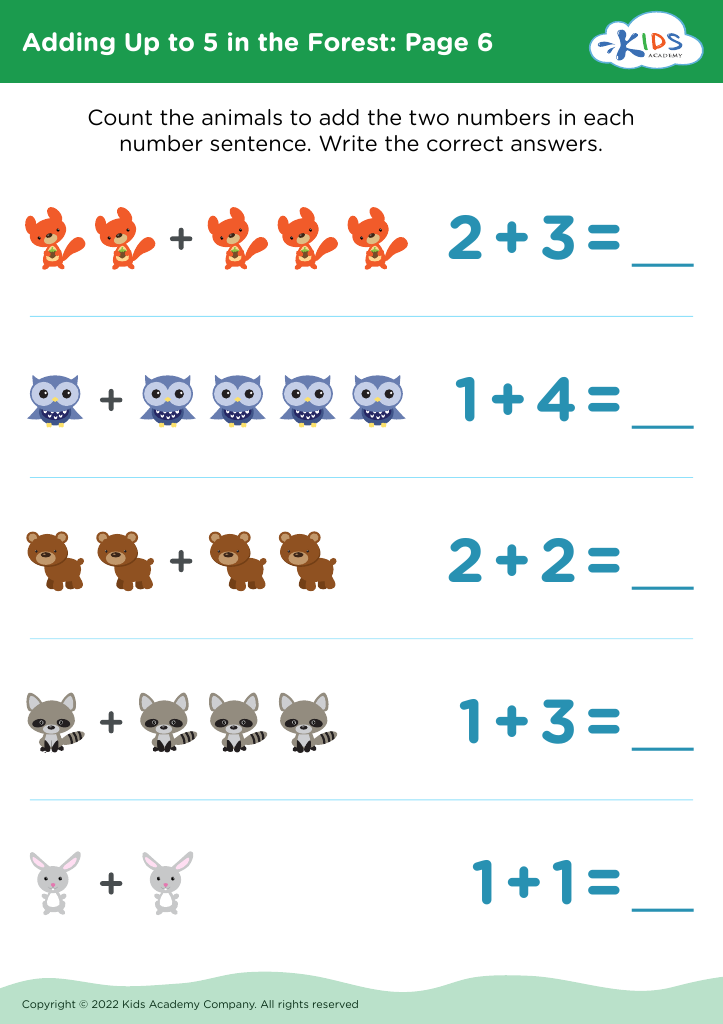
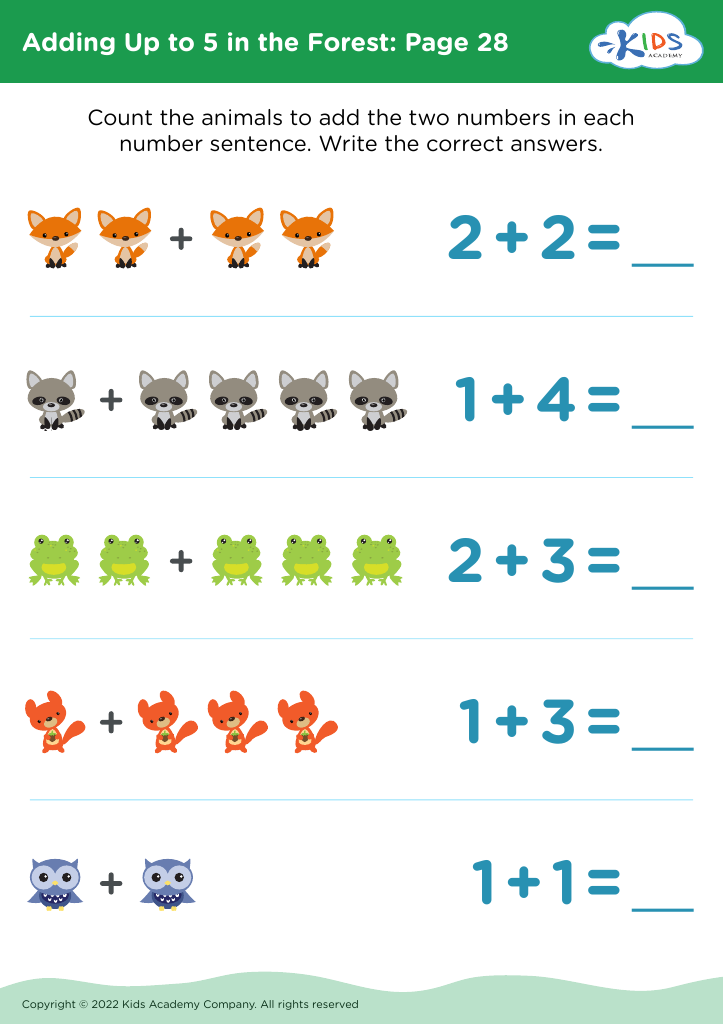
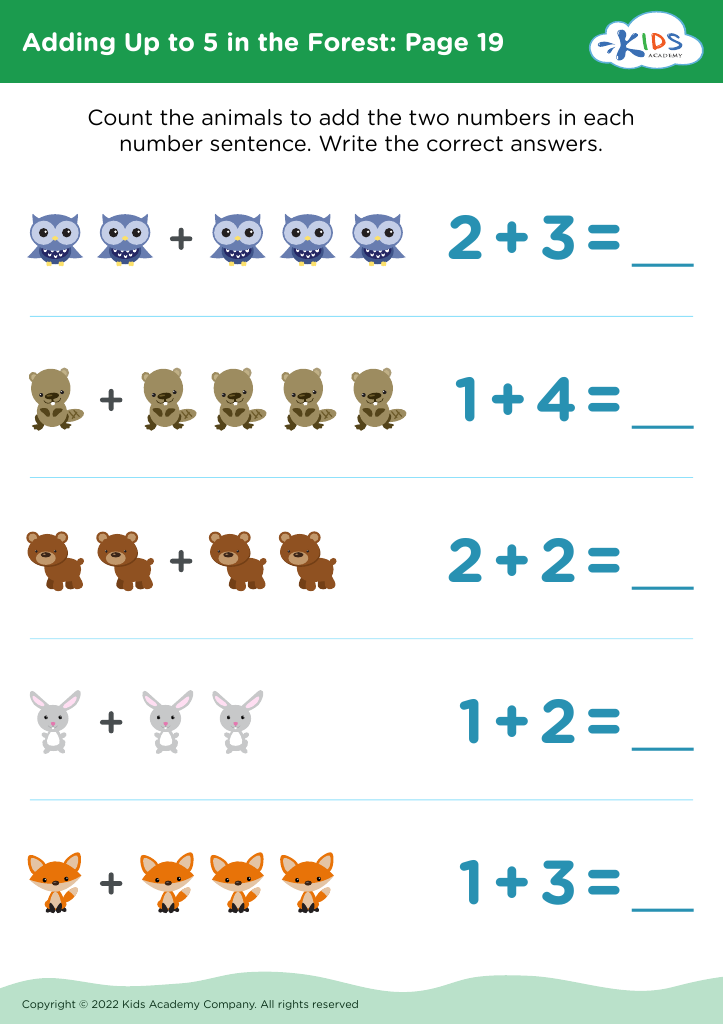
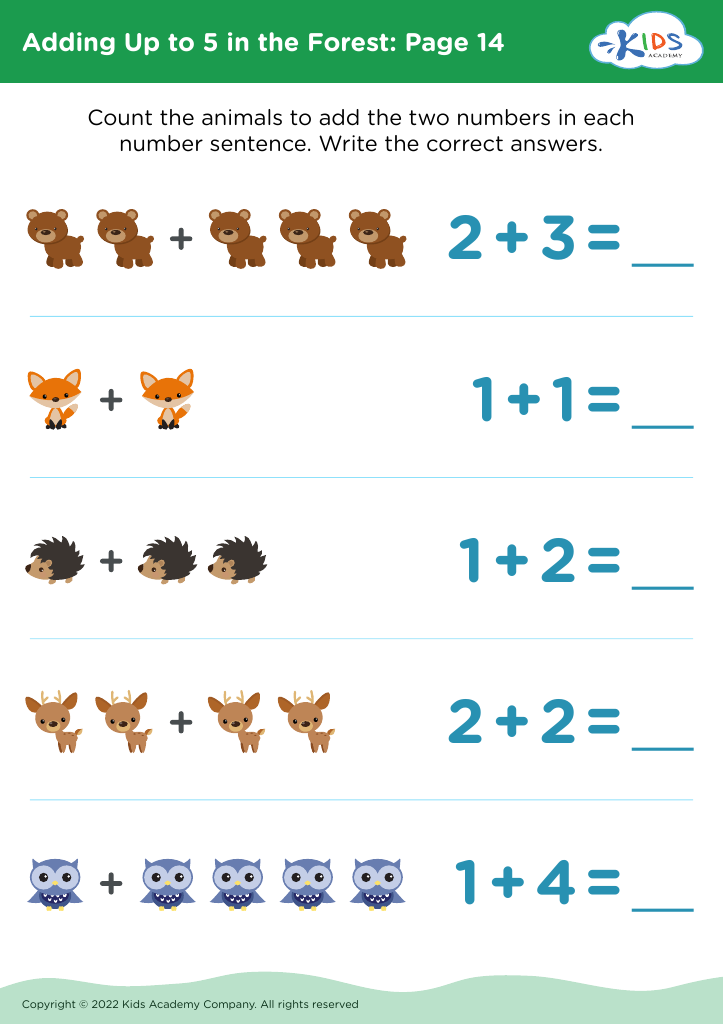
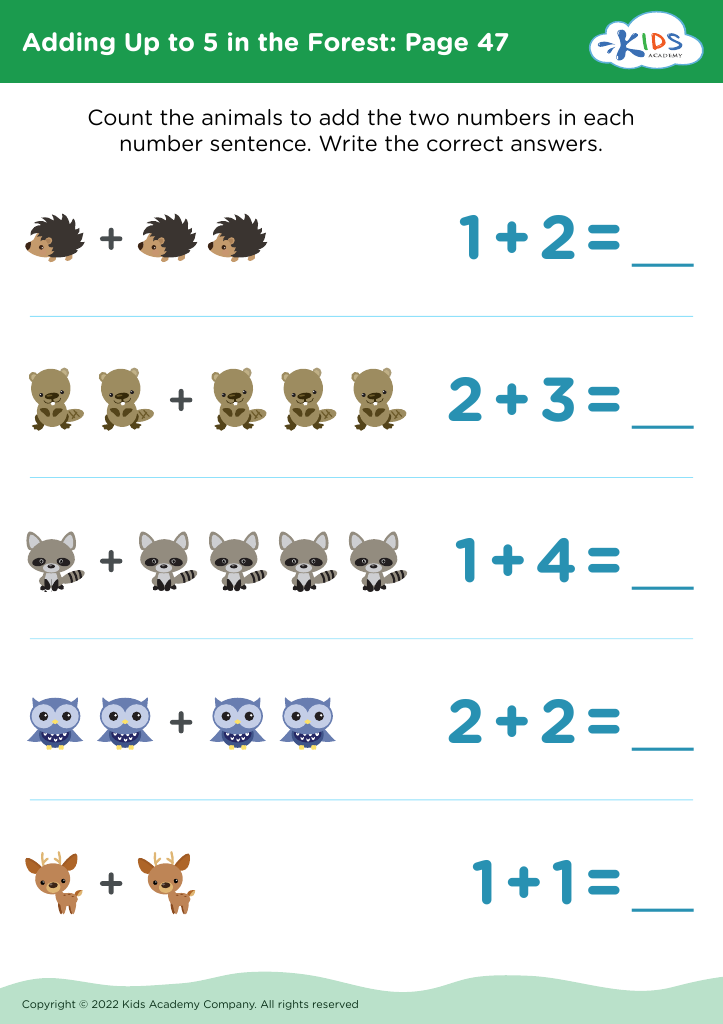
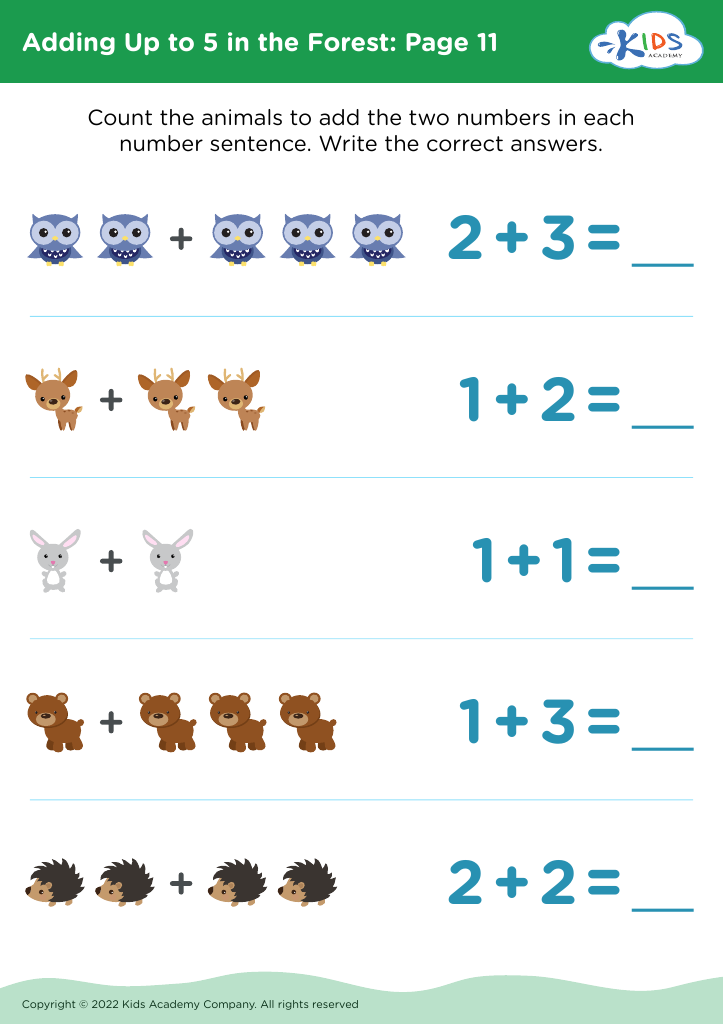
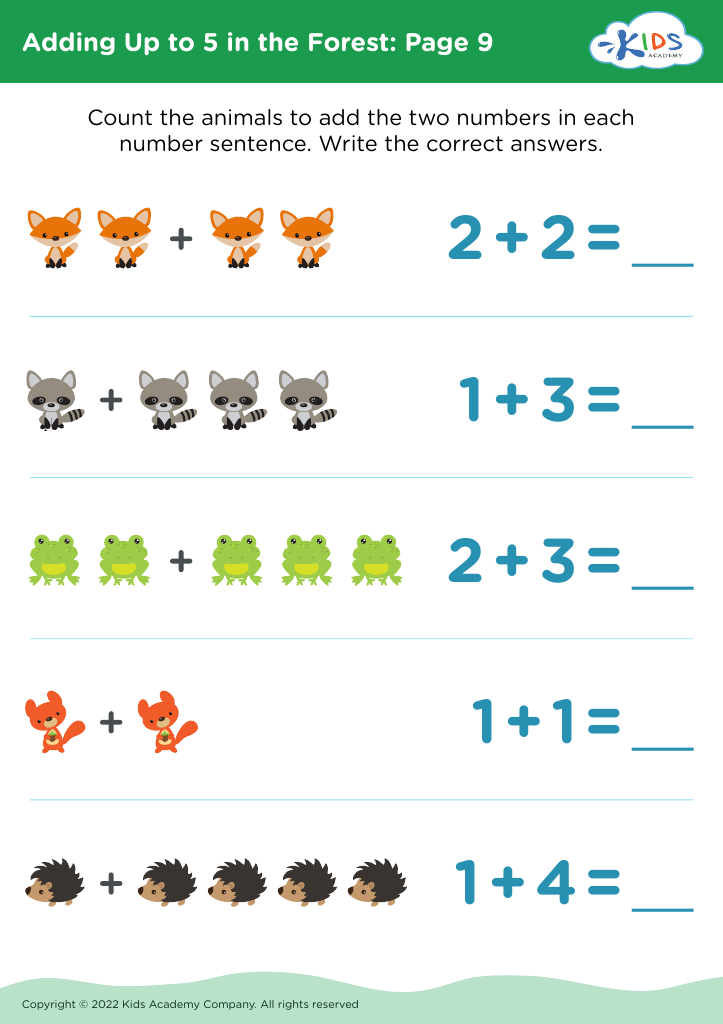
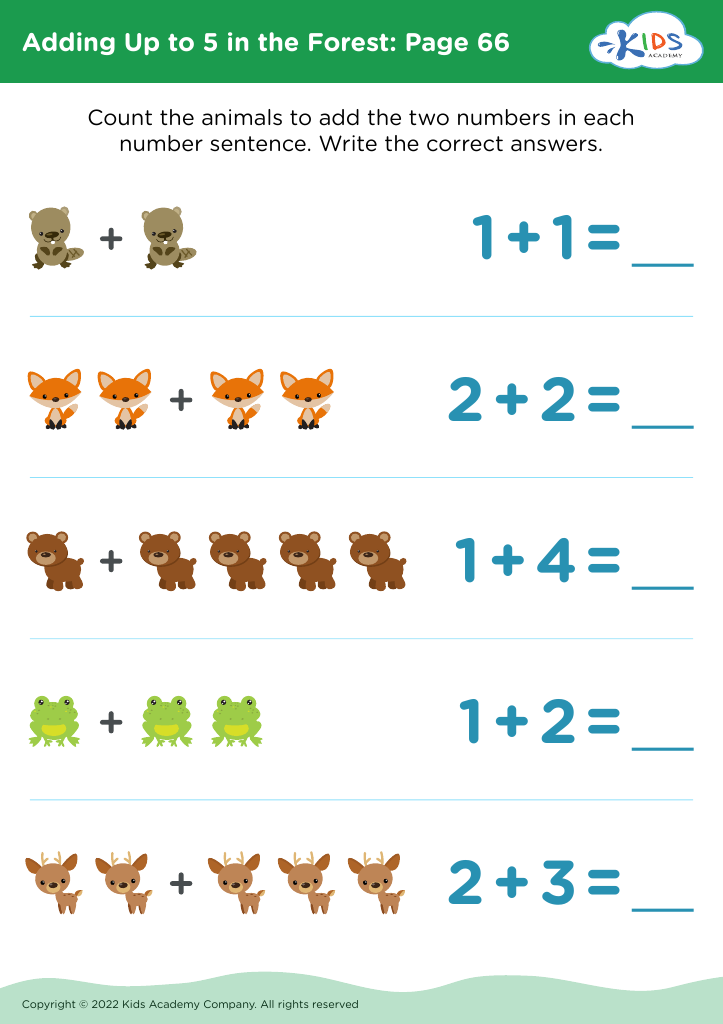
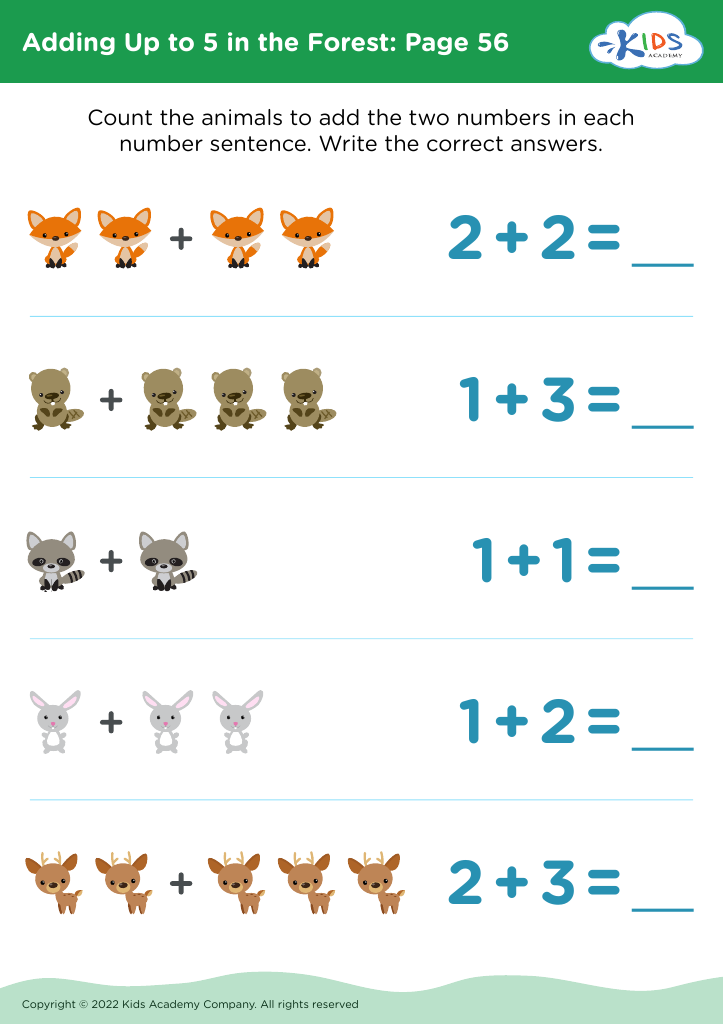
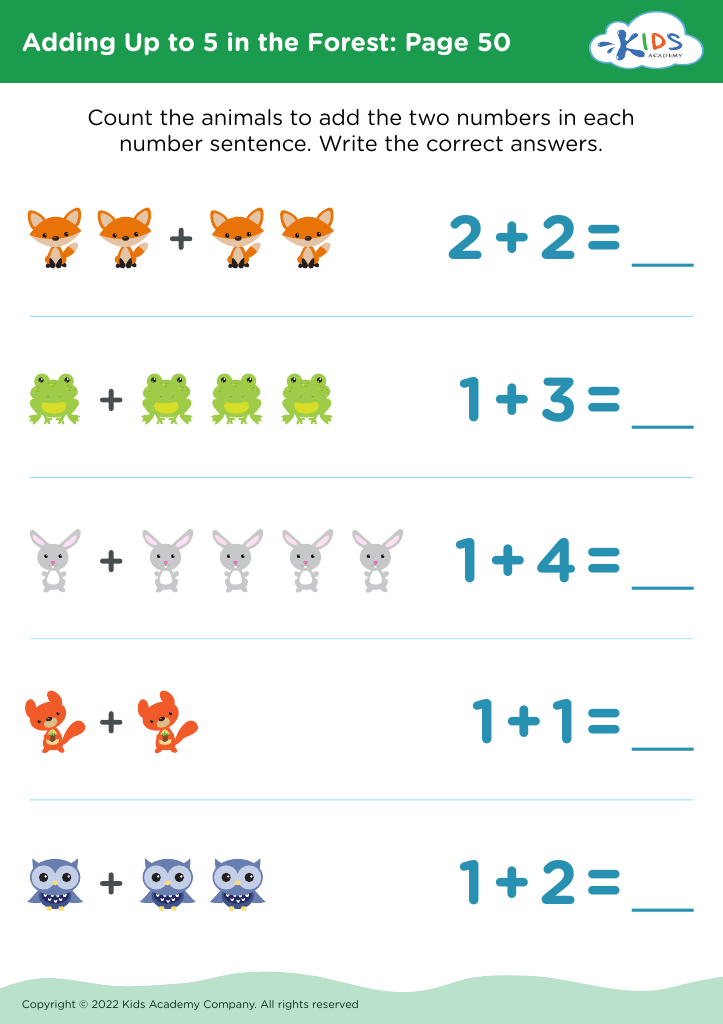
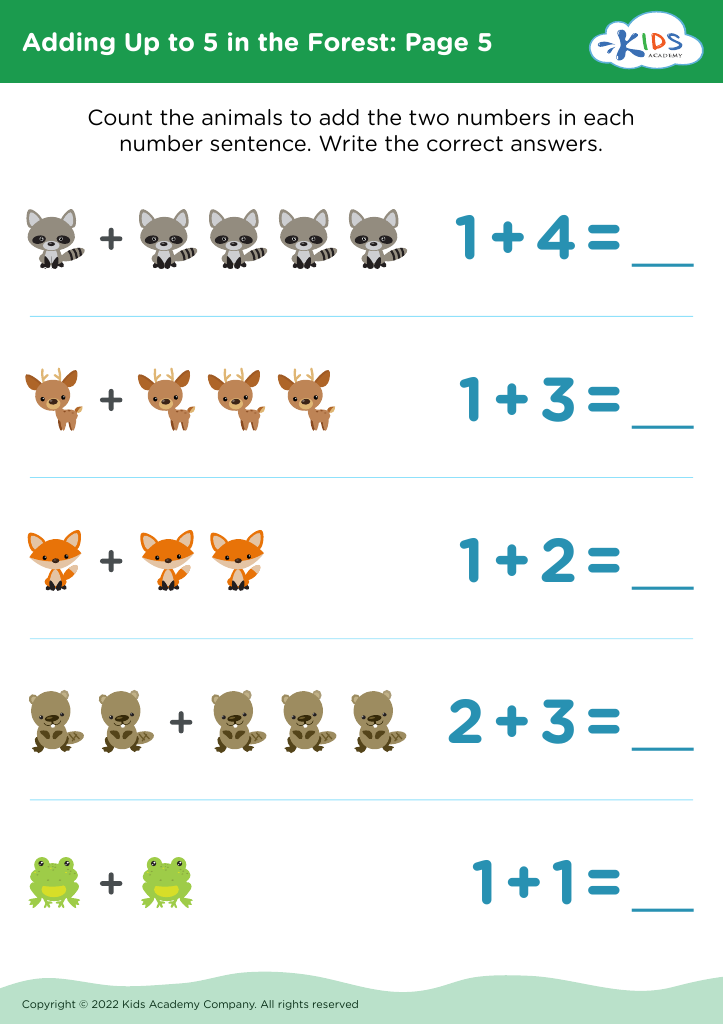
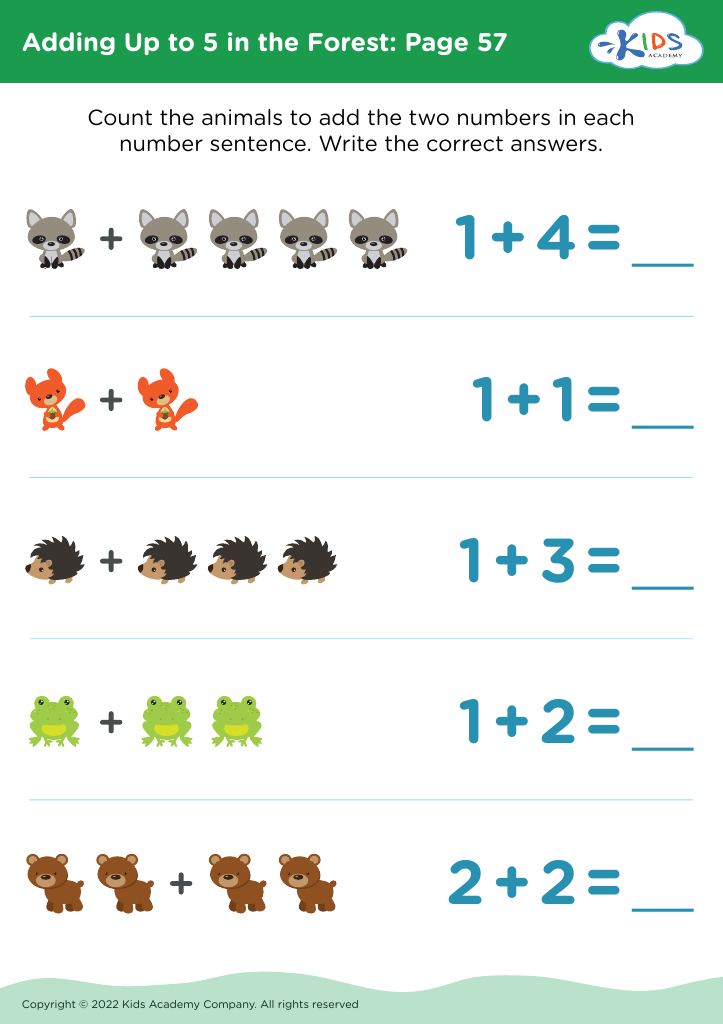



Animal recognition and mathematical skills are fundamental parts of a child's early educational development, making 'Animal Recognition Adding in the Forest' an excellent learning tool for children aged 5-9. Firstly, animal recognition is a gateway to environmental education, fostering a child’s love and respect for nature. Understanding different creatures and their habitats encourages empathy and a greater appreciation of biodiversity, which is essential for developing responsible future citizens.
Moreover, incorporating animals in basic math exercises, like counting and adding, livens up the learning experience. Children find it engaging to work with familiar and exciting subjects like animals, which can increase their motivation and willingness to learn. Hands-on activities, such as identifying and counting forest animals, cater to young children’s kinesthetic learning style and ensure concepts are grasped well.
These learning activities support cognitive development by helping children practice critical thinking and problem-solving skills in a playful context. They also promote teamwork and communication if done in group settings, contributing to their social development. Therefore, parents and teachers should care because this method not only reinforces educational content but also supports broader developmental and environmental awareness goals, ultimately shaping well-rounded individuals.