Basic Addition Skills Adding in the Forest Worksheets for Ages 5-9 - Page 3
55 filtered results
-
From - To
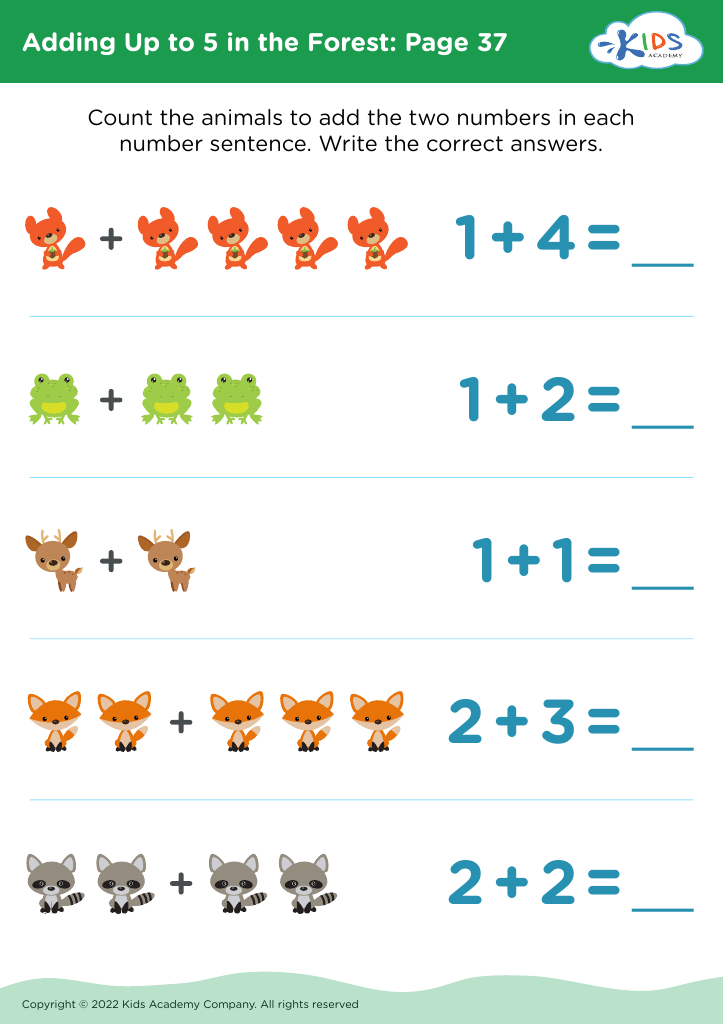
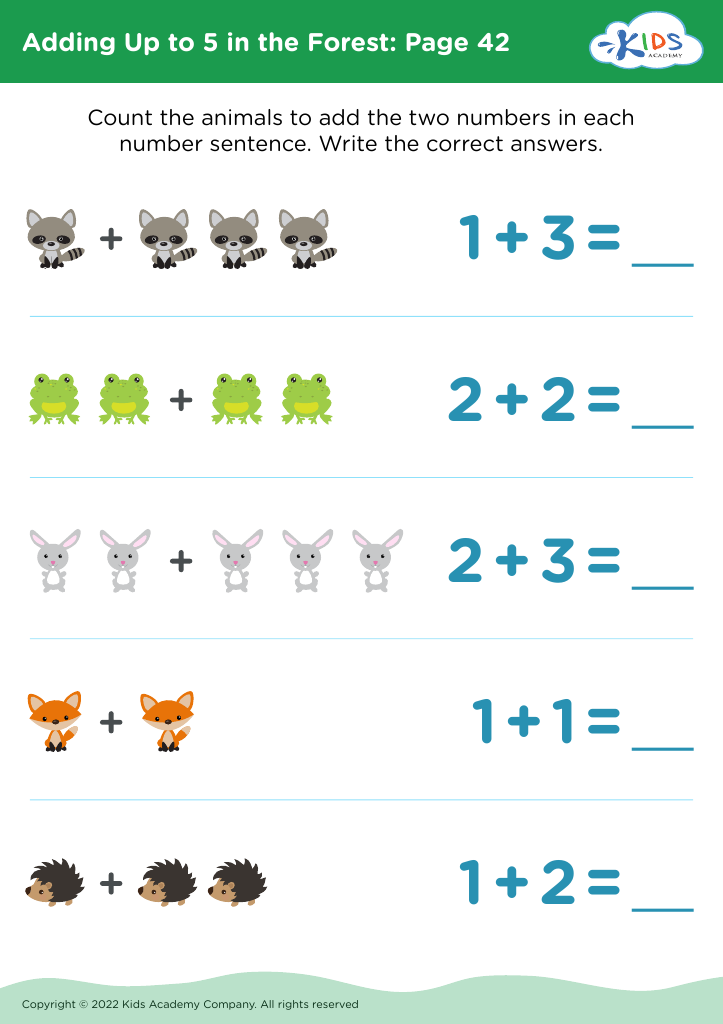
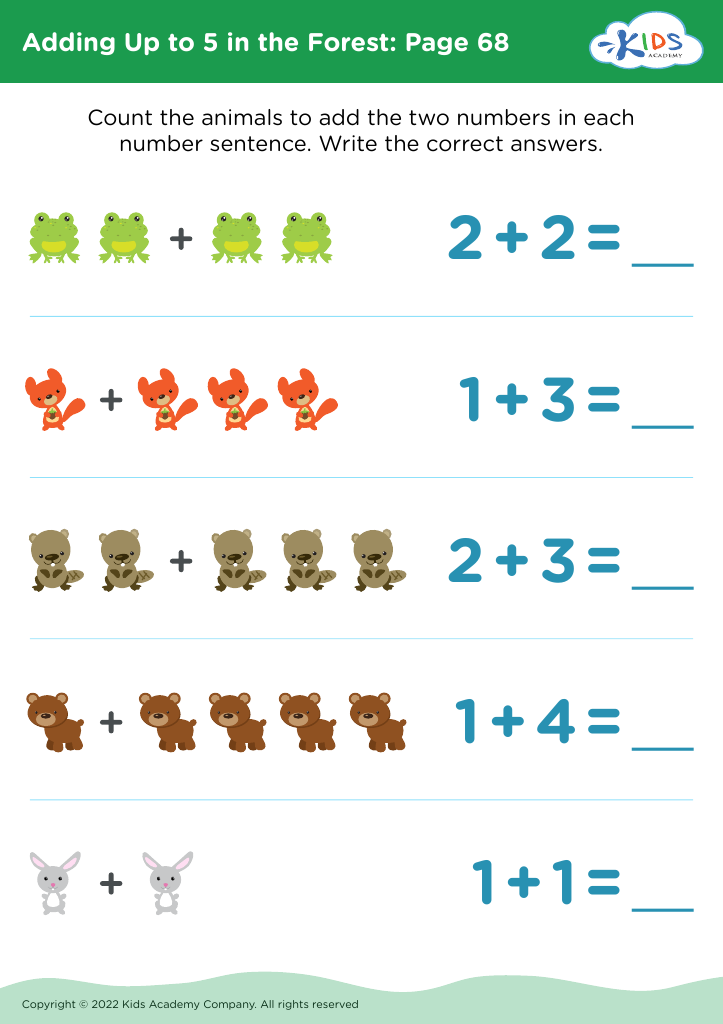
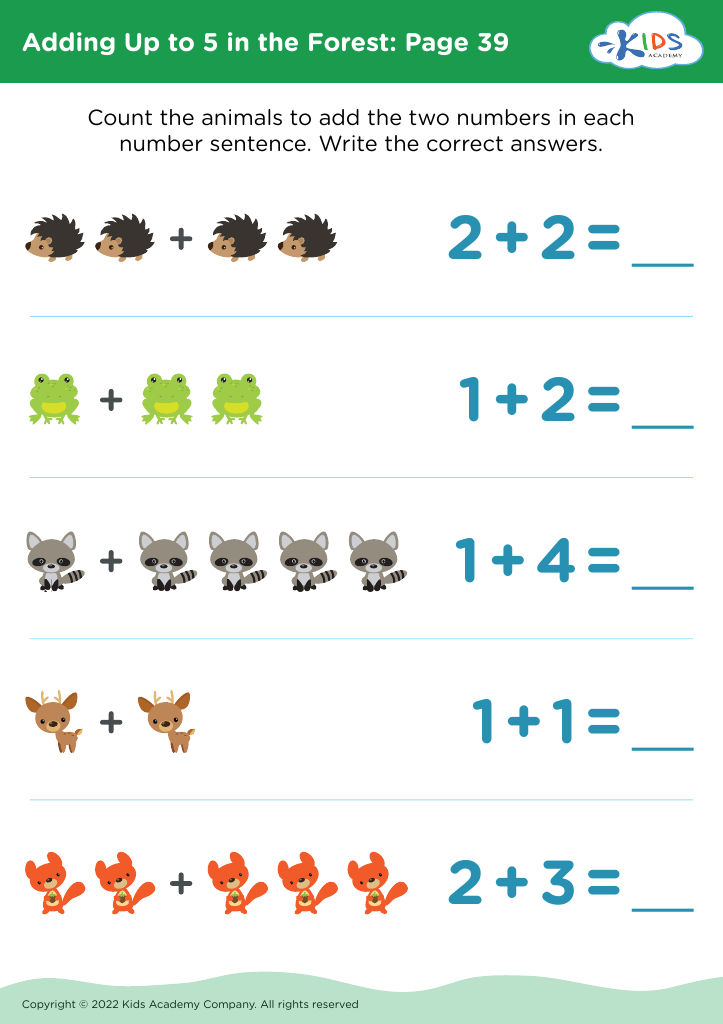
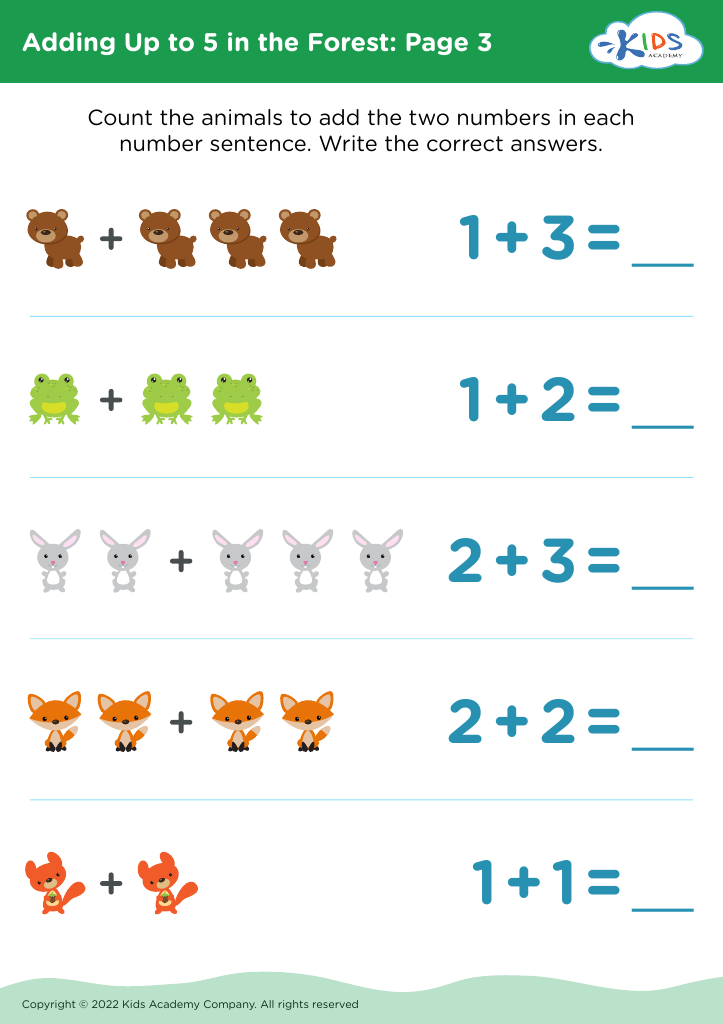
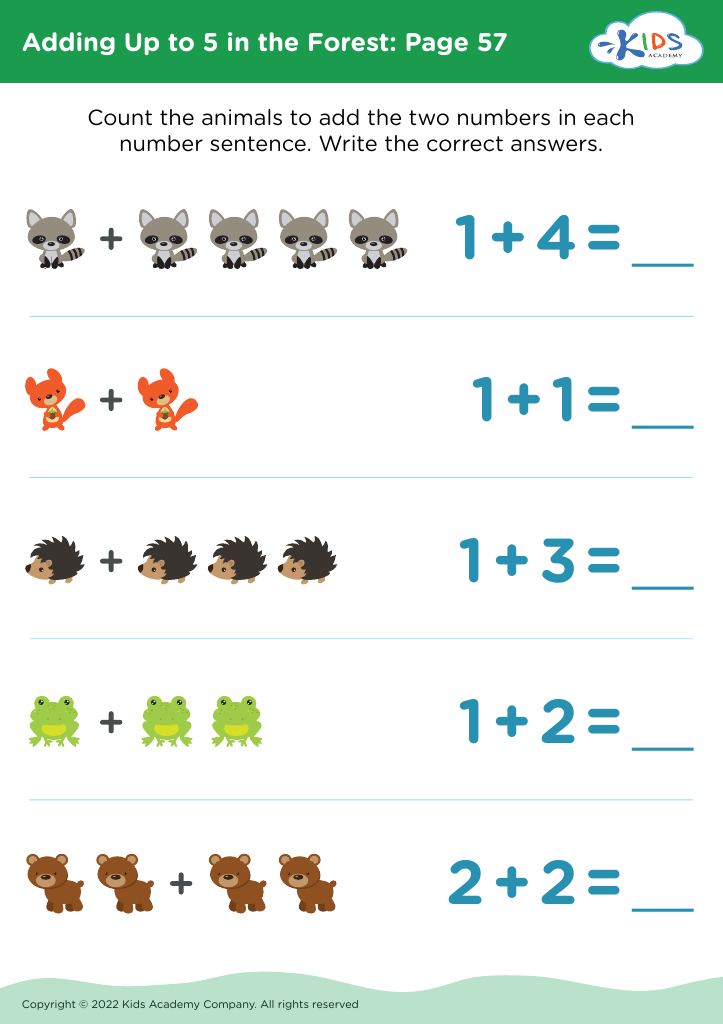
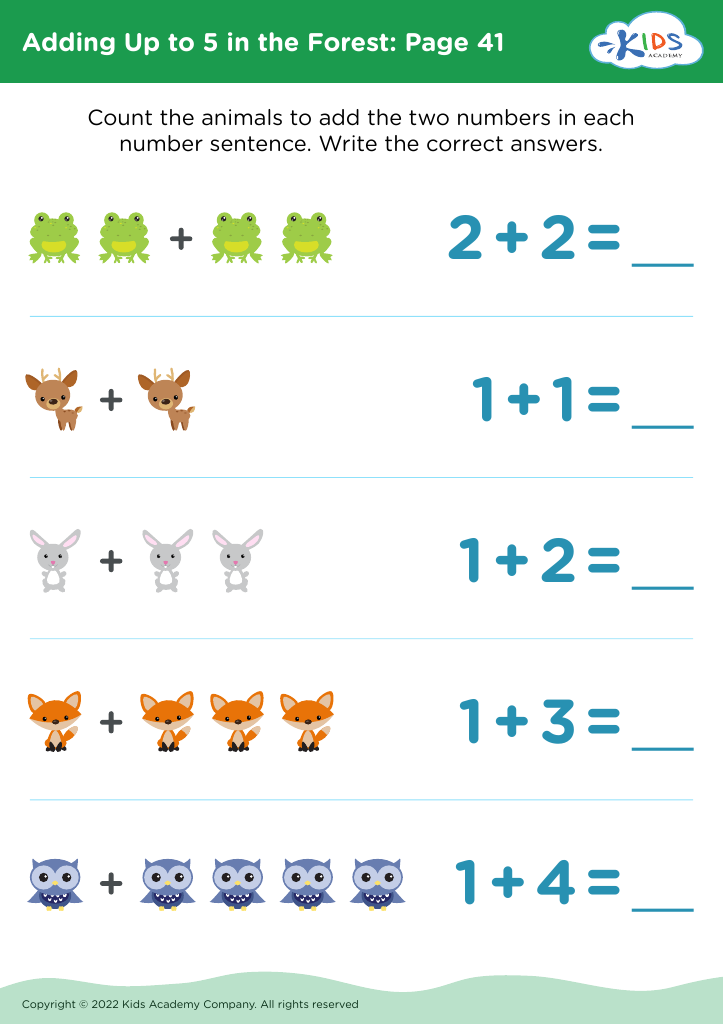




Basic addition skills are foundational in early education, especially for children aged 5-9, as they serve as the building blocks for future mathematical learning. Programs like "Adding in the Forest" uniquely integrate math with engaging, outdoor experiences, making learning both fun and relatable. Parents and teachers should care about such initiatives because they help children develop their arithmetic skills in a natural, hands-on environment.
Learning addition isn't just about understanding numbers; it enhances critical thinking, problem-solving, and analytical skills. When children encounter math in a dynamic setting—like the forest—they foster a deeper connection to the subject. This approach makes abstract concepts tangible, facilitating more effective learning.
Additionally, integrating nature into learning can promote physical activity and encourage social interactions among peers. This not only nurtures academic outcomes but also contributes to emotional and social development. By prioritizing programs that weave basic skills with outdoor exploration, parents and teachers create a richer and holistic educational experience, where children are more likely to engage, internalize content, and develop a lifelong love for learning. Ultimately, cultivating these essential skills at a young age sets the stage for future academic success and confidence in mathematics.