Fine motor skills (writing) Adding in the Forest Worksheets for Ages 5-9
3 filtered results
-
From - To
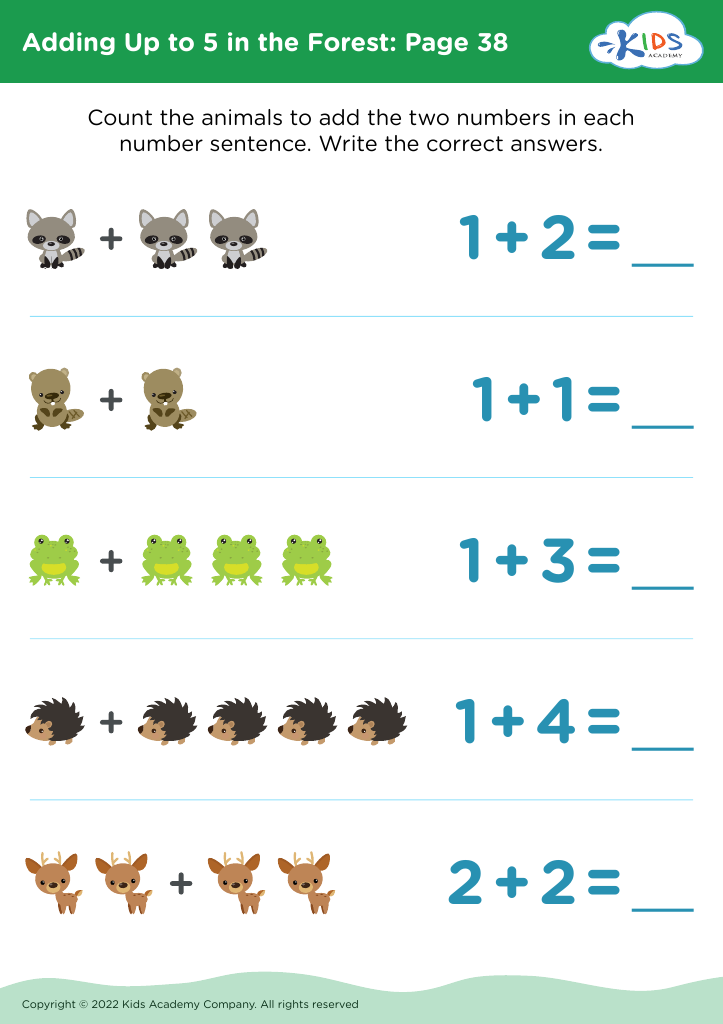
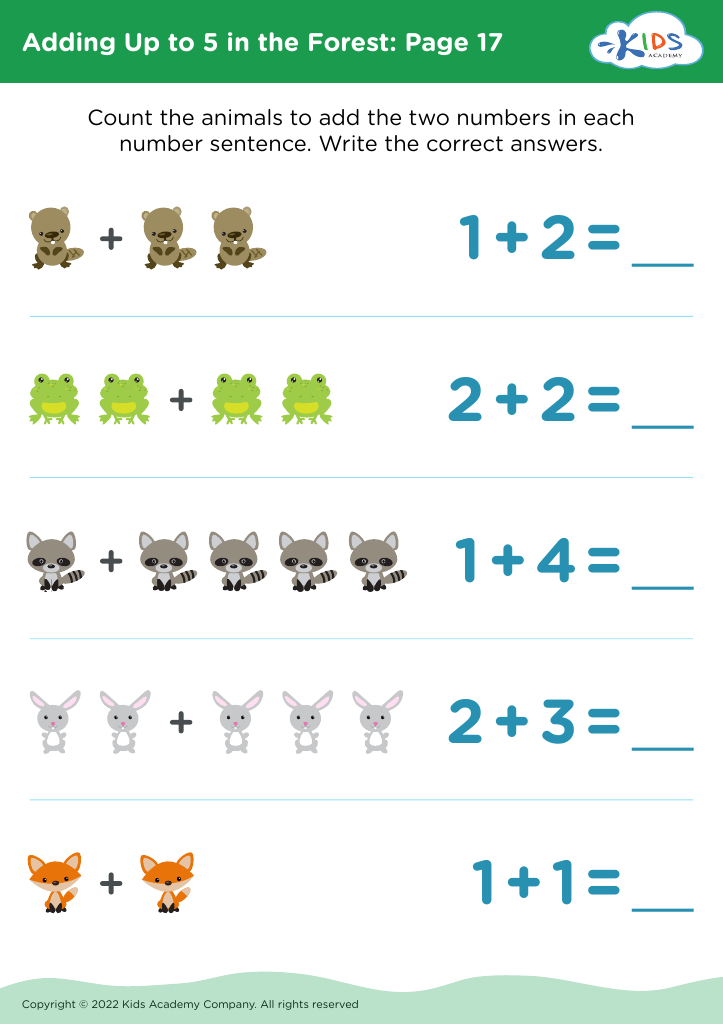
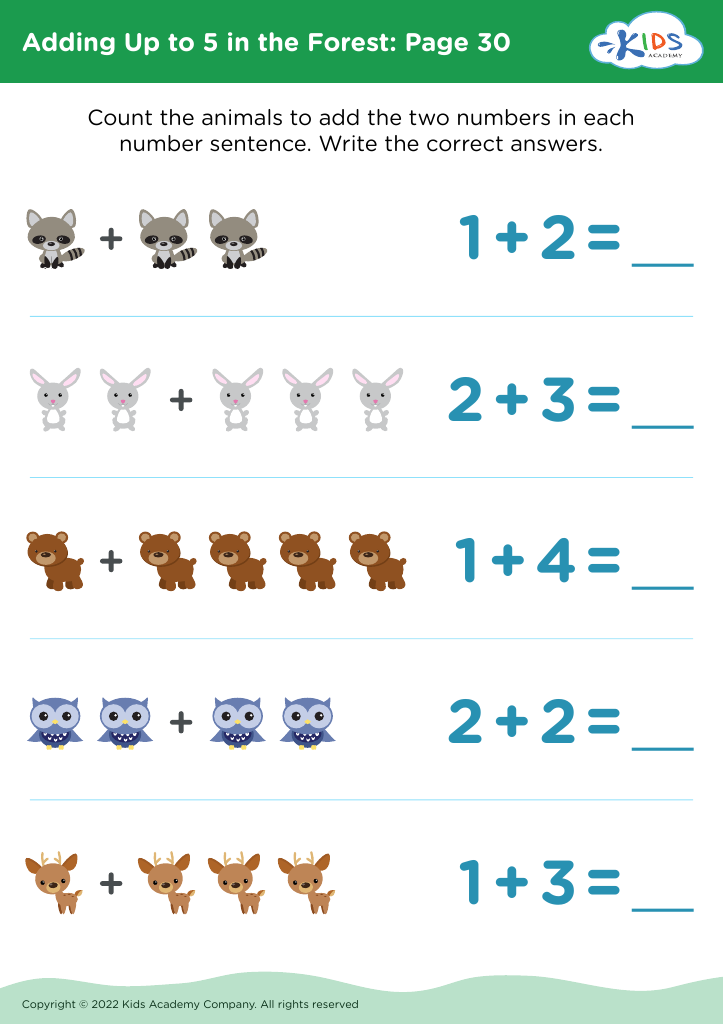
Enhance your child's fine motor skills with our engaging "Adding in the Forest" worksheets, designed specifically for ages 5-9. These fun and interactive activities combine exciting forest themes with essential writing practice, allowing young learners to develop better control and dexterity while adding. As they trace, connect, and write, children will gain confidence in their handwriting abilities while mastering basic addition concepts. Each worksheet is crafted to stimulate creativity and promote a love for learning in an enjoyable environment. Perfect for home or classroom use, these worksheets make mastering fine motor skills both educational and enjoyable for your little explorers!



Fine motor skills are essential for children's development, particularly in the context of writing, which plays a crucial role in their academic success. For children aged 5-9, mastering fine motor skills enhances their ability to grasp and manipulate writing instruments effectively, allowing for more fluid and legible handwriting. This skill not only affects their performance in school but also boosts their confidence in expressing thoughts and ideas through written language.
Incorporating activities in natural settings, like forest schools or outdoor experiences, can significantly benefit the development of fine motor skills. These environments encourage hands-on learning, where children can engage in activities that promote hand-eye coordination and sensory exploration, such as building with natural materials, drawing with sticks, or creating outdoor crafts. Such connections to nature can make learning enjoyable, fostering a love for writing alongside skill development.
Teachers and parents should prioritize fine motor skills by creating fun and engaging activities that motivate children. Enhancing these skills not only supports academic progress but also helps develop critical cognitive and social-emotional abilities. Investing time and resources in fine motor development invites a lifelong appreciation for writing and learning.