Problem Solving Adding in the Forest Worksheets for Ages 5-9
3 filtered results
-
From - To
Immerse your child in a fun and educational adventure with our "Problem Solving Adding in the Forest Worksheets" tailored for ages 5-9. These engaging worksheets integrate essential addition skills with imaginative forest scenarios, turning learning into an exciting journey. Young learners will practice adding numbers as they solve captivating, forest-themed problems that enhance critical thinking and problem-solving abilities. Perfect for classroom or at-home use, our worksheets support cognitive development and build a solid mathematical foundation. Download now to help your child explore the wonders of math in the enchanting world of the forest!
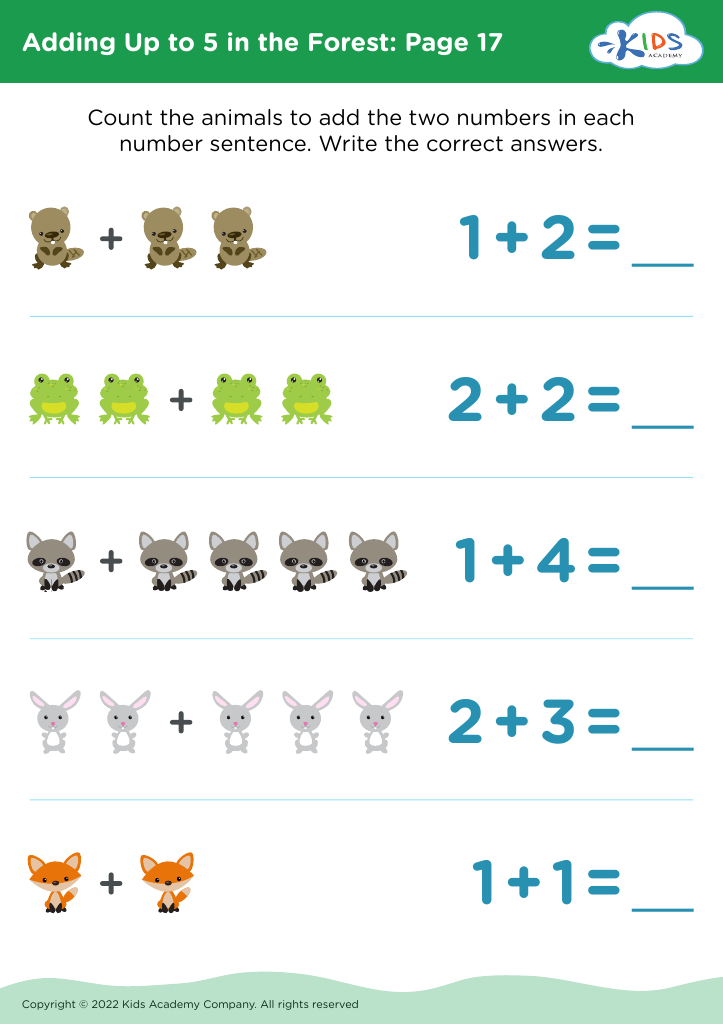
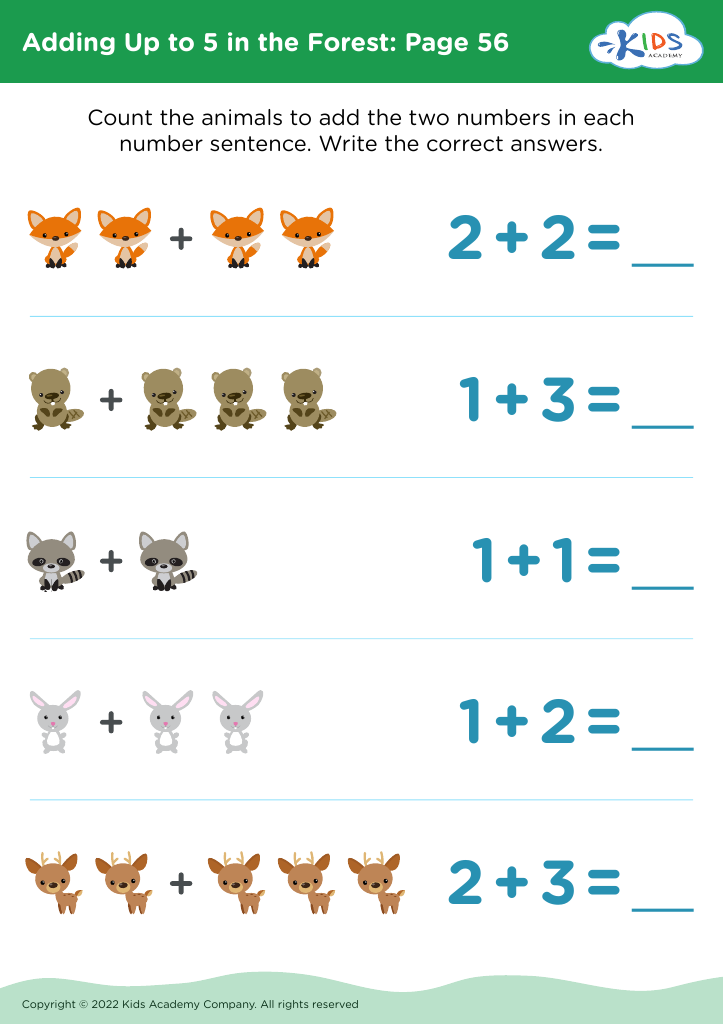
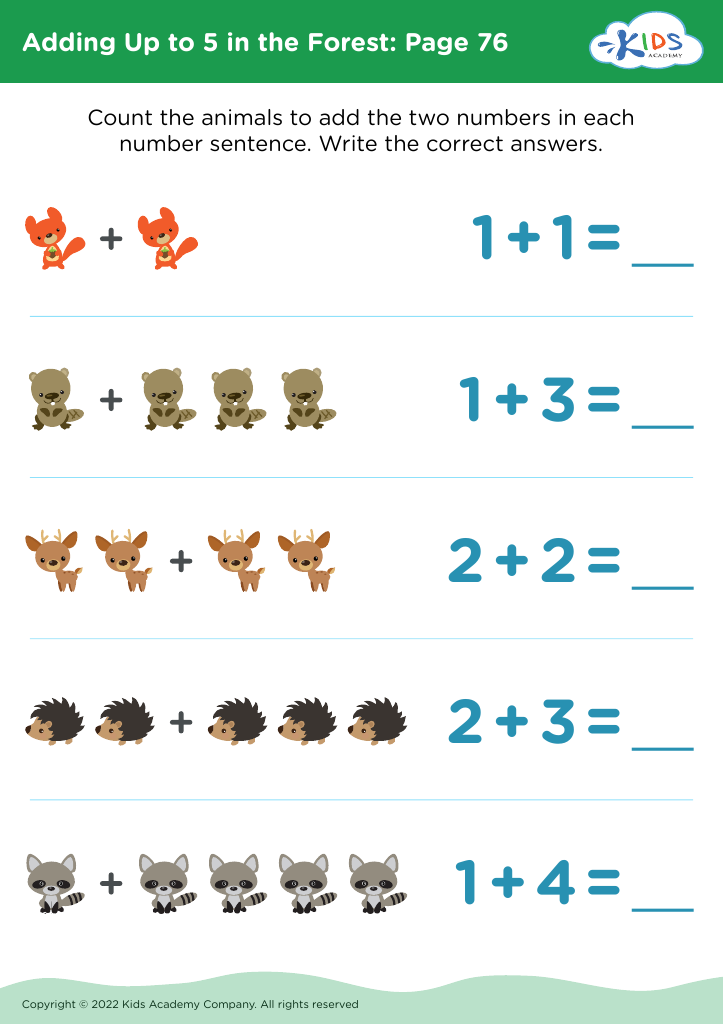



Parents and teachers should care about Problem Solving Adding in the Forest for ages 5-9 because it cultivates foundational math skills and enhances critical thinking in an engaging, nature-themed context. This method uses the relatable, imaginative setting of a forest to capture young learners' interest, making abstract math concepts, such as addition, concrete and enjoyable.
Activities involve visual elements like trees and animals, which helps children better understand quantity and number representation. Working through these problems in a story-based environment also encourages curiosity, patience, and perseverance as children are naturally driven to find solutions to complete the adventurous narratives.
Moreover, integrating math learning with themed problem-solving exercises fosters cognitive development and improves abilities in logical reasoning, pattern recognition, and spatial awareness. It simultaneously develops soft skills such as collaboration and communication, as forest adventure-themed activities can often be performed in groups or pairs.
In essence, making math fun and relevant through the Forest theme provides a dual benefit: solidifying early numeracy skills necessary for future academic success and nurturing a positive attitude towards learning, fostering an early love for the subject that may inspire continuous exploration and enthusiasm in mathematics.