Critical Thinking Adding up to 1000 Misc Worksheets for Ages 5-9
3 filtered results
Difficulty Level
Grade
Age
-
From - To
Subject
Activity
Standards
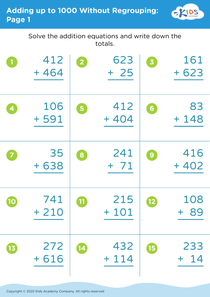
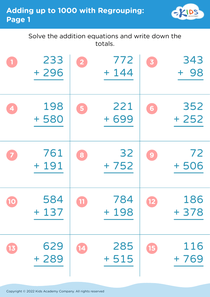
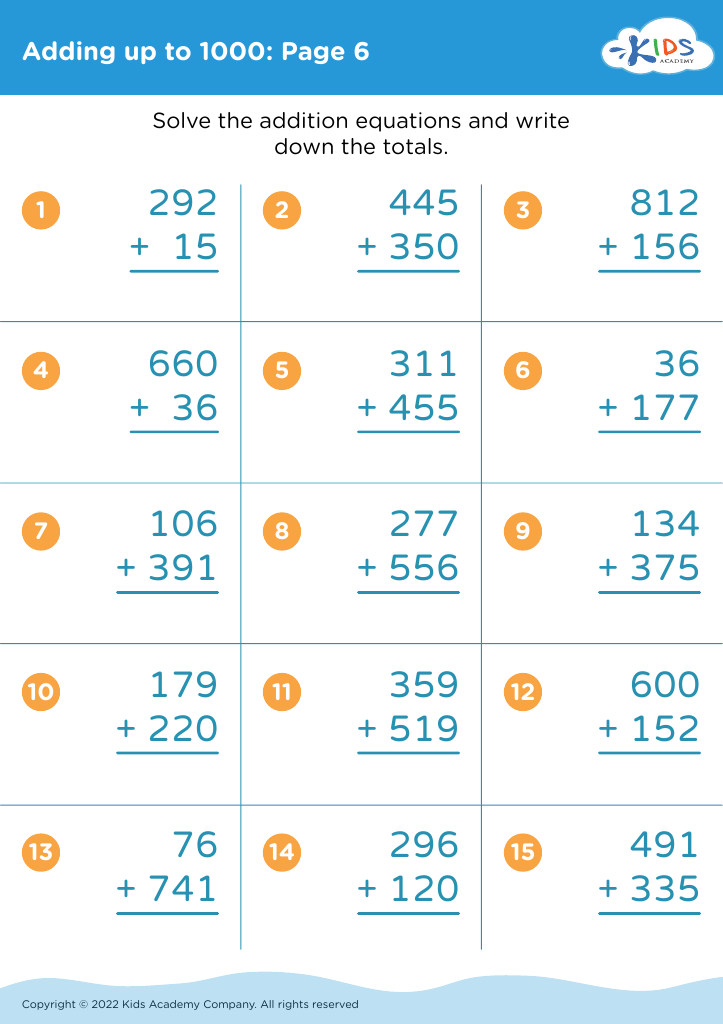
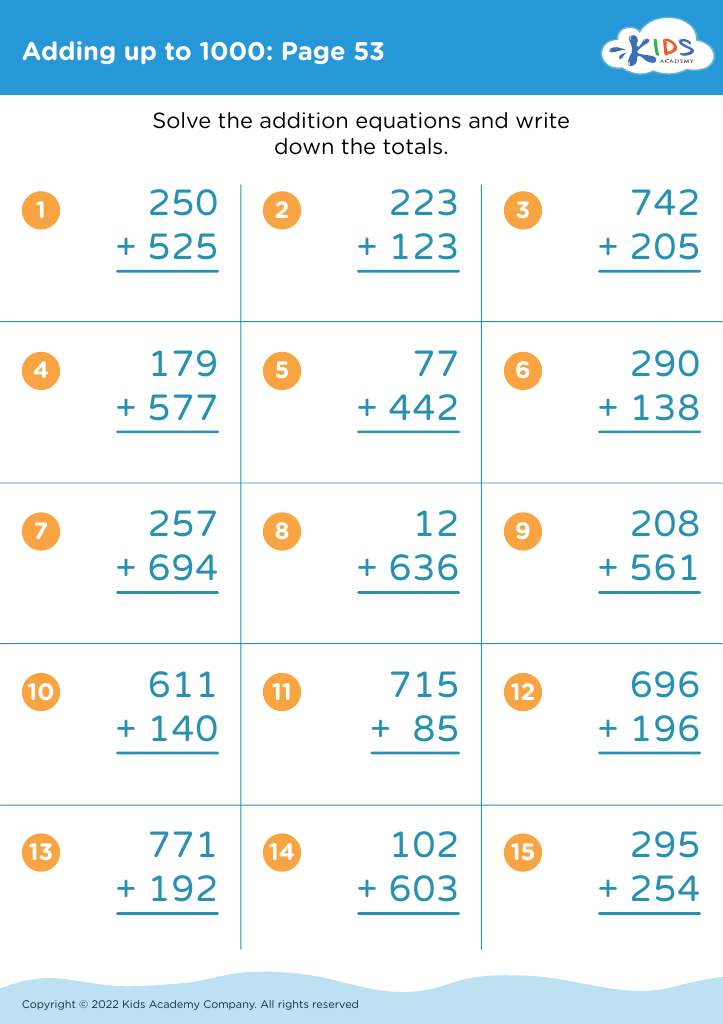
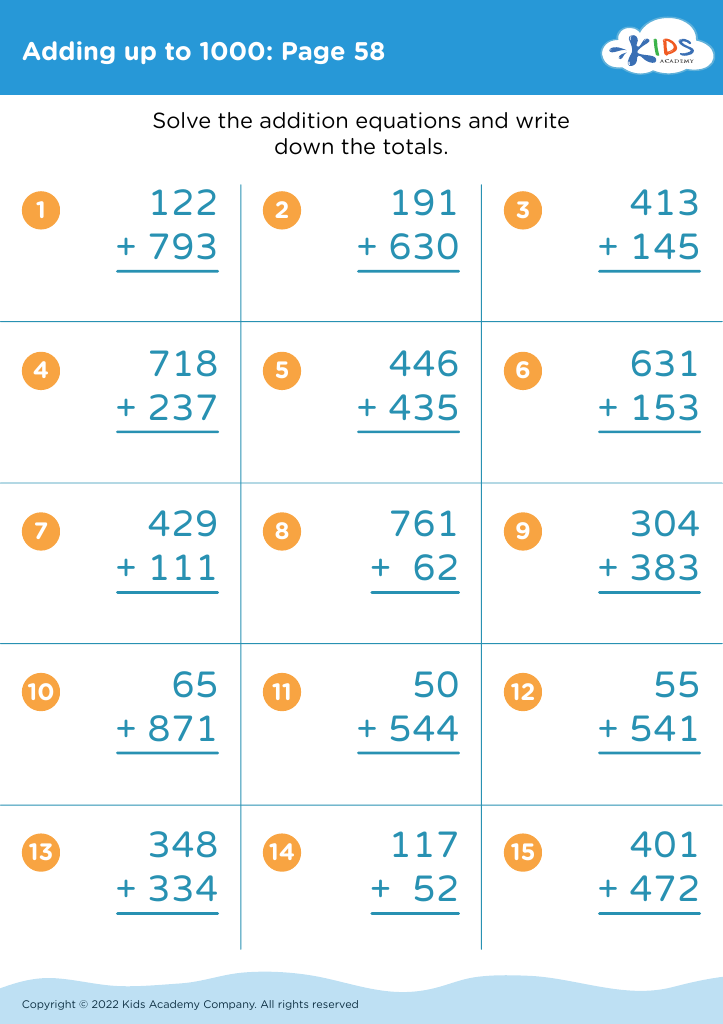
Unlock your child's potential with our Critical Thinking Adding Up to 1000 Misc Worksheets for ages 5-9! These engaging worksheets are designed to enhance mathematical skills while fostering critical thinking. Packed with fun problems and interactive activities, children will explore various methods to approach addition, tackle challenges, and develop problem-solving strategies. Each worksheet encourages curiosity and deepens understanding, making math enjoyable and accessible. Ideal for classroom settings or at-home learning, these resources provide a blended approach to education, equipping young learners with essential skills for future success. Encourage your child to think critically while mastering addition—explore our collection today!
Favorites
With answer key
Interactive
Join Kids Academy for Free
Who is primarily going to use this learning content?


Critical thinking is an essential skill for children aged 5-9, as it lays the foundation for problem-solving and decision-making in their future. Parents and teachers should care about fostering critical thinking for several reasons. First, it encourages curiosity. Young children are naturally inquisitive, and by supporting critical thinking, we nurture their desire to ask questions and seek understanding of the world around them.
Moreover, critical thinking promotes independence. As children learn to evaluate information, assess situations, and consider multiple perspectives, they become more self-sufficient learners. This means they are more equipped to tackle challenges independently, both in academic settings and in daily life.
Additionally, critical thinking enhances communication skills. Children learn to articulate their thoughts and ideas clearly, leading to more effective collaboration and interaction with peers and adults. This is crucial not only for school but also for social development.
Lastly, critical thinking prepares children for the future job market, where creativity and problem-solving are highly valued. By encouraging these skills early on, we are equipping them with the tools they need to thrive in an increasingly complex world. Ultimately, fostering critical thinking is an investment in a child's emotional, social, and intellectual growth.