Fine Motor Skills Adding up to 1000 Misc Worksheets for Ages 5-9
5 filtered results
-
From - To
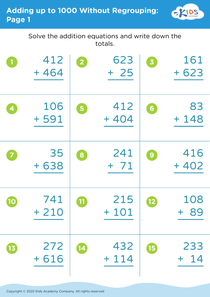
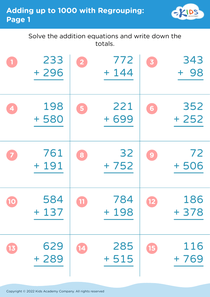
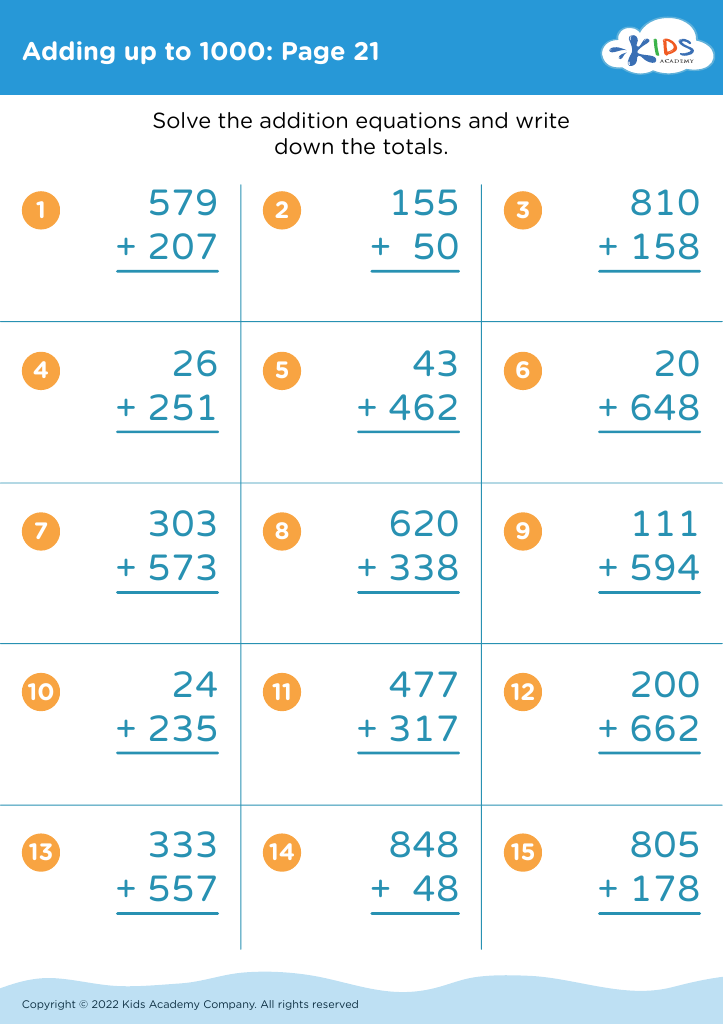
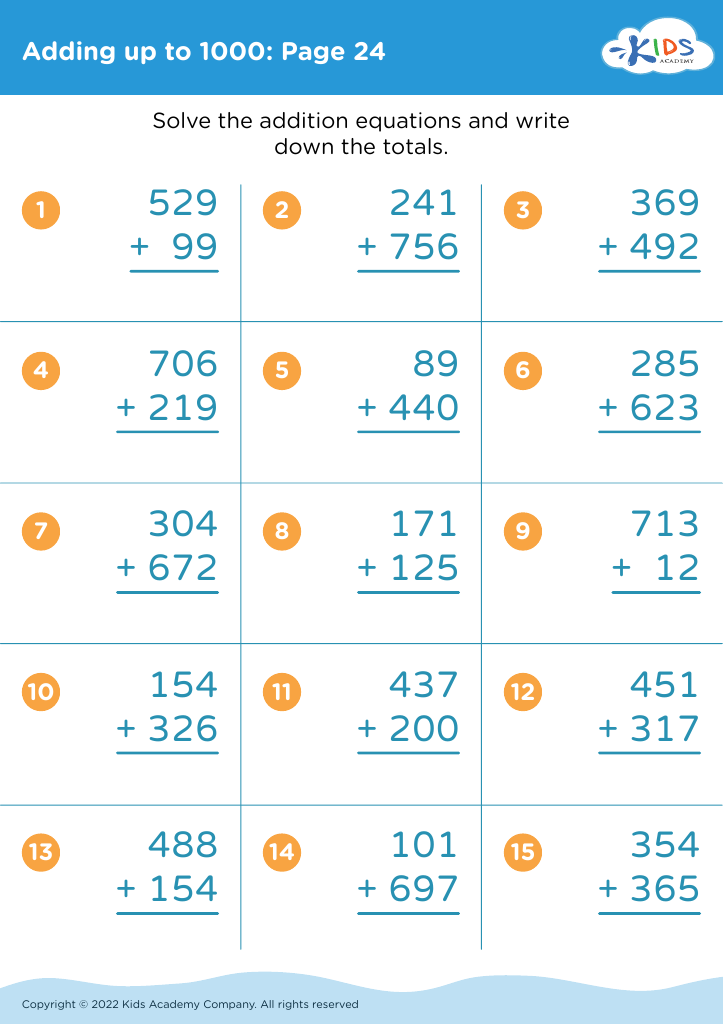
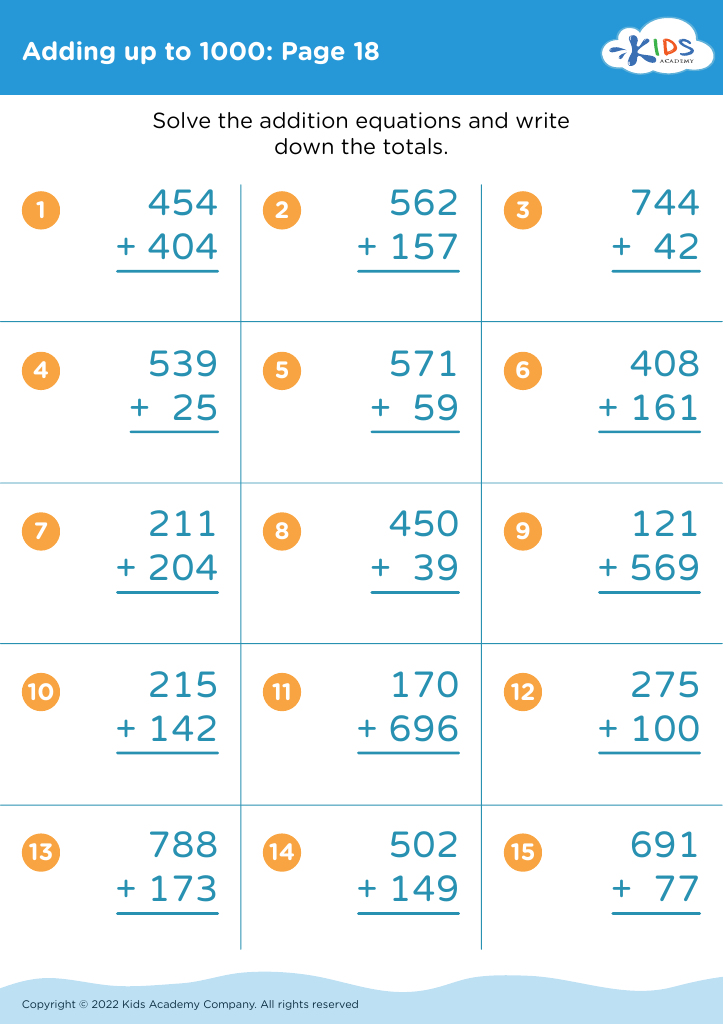
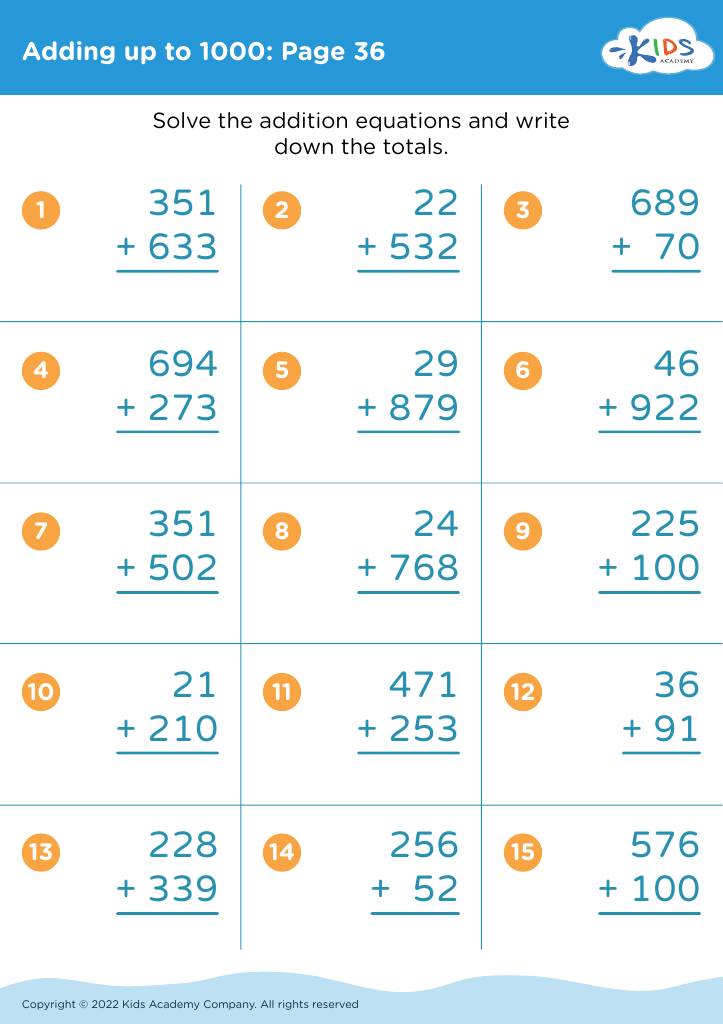
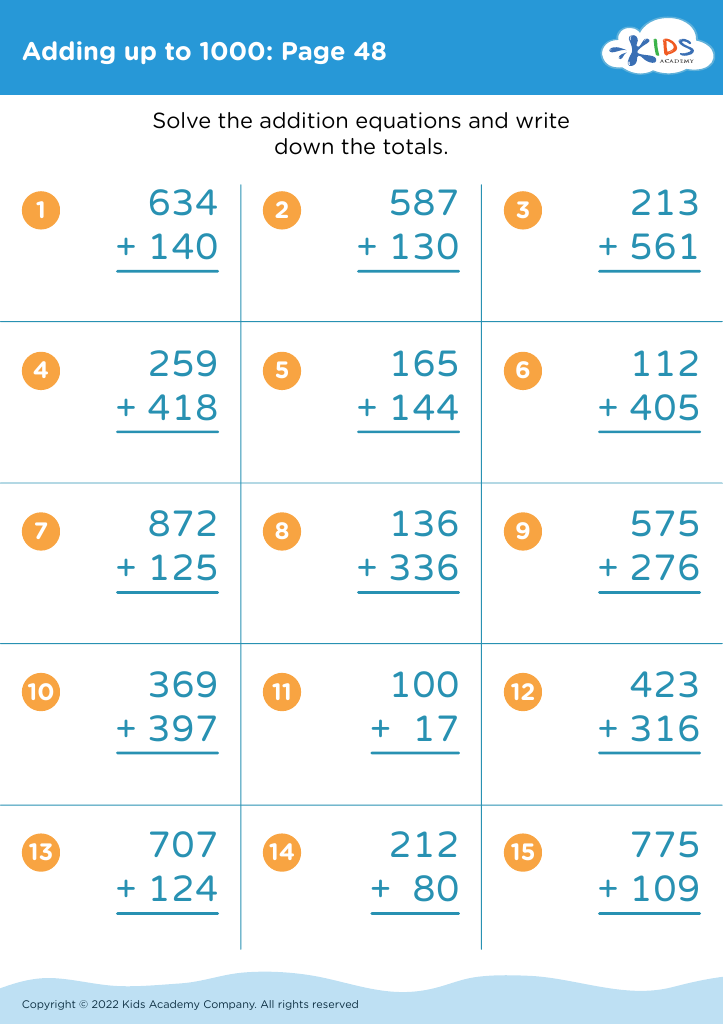
Welcome to our "Fine Motor Skills Adding Up to 1000 Misc Worksheets" designed especially for ages 5-9! Our engaging and educational worksheets aim to enhance your child's fine motor skills while mastering addition up to 1000. Each worksheet combines captivating visuals with interactive activities that promote dexterity, coordination, and number sense. From tracing numbers to completing colorful illustrations, these diverse exercises keep young learners excited and motivated. Perfect for home or classroom use, our resources cater to various learning styles, ensuring every child builds confidence and proficiency in math. Explore our extensive collection today and inspire your child's educational journey!


Fine motor skills are crucial for children aged 5-9, as they lay the groundwork for countless everyday tasks and academic success. Parents and teachers should prioritize these skills for several reasons.
Firstly, fine motor skills enhance a child’s ability to perform basic tasks such as writing, drawing, cutting, and manipulating small objects, which are essential for school readiness. As children improve these skills, they gain confidence in their ability to express themselves creatively and communicate effectively through writing and art.
Moreover, developing fine motor skills supports cognitive development. Coordinating hand movements with visual input teaches children to focus and follow multi-step instructions. Activities such as threading beads, building with small blocks, or playing with putty can stimulate both motor skills and cognitive functions.
Additionally, fostering fine motor skills can help prevent future learning difficulties. Poor coordination may lead to challenges in school, impacting a child's self-esteem and enthusiasm for learning. By introducing targeted activities at home or in the classroom, parents and teachers can support growth in these essential skills, ensuring children are better prepared for academic challenges. Investing in fine motor development is an investment in a child’s overall well-being and future success.