Fraction simplification Adding up to 1000 Misc Worksheets for Ages 5-9
5 filtered results
-
From - To
Discover our engaging "Fraction Simplification Adding Up to 1000" worksheets designed for children ages 5-9. These printable resources help young learners master the essentials of fraction simplification while developing their math skills. Each worksheet features fun, interactive exercises that encourage kids to identify, simplify, and understand fractions in an engaging format. Perfect for classroom use or home practice, these materials align with educational standards and promote a solid foundation in math. Encourage your child's growth and confidence in handling numbers with our thoughtfully crafted worksheets that make learning about fractions enjoyable and accessible. Get started on their math journey today!
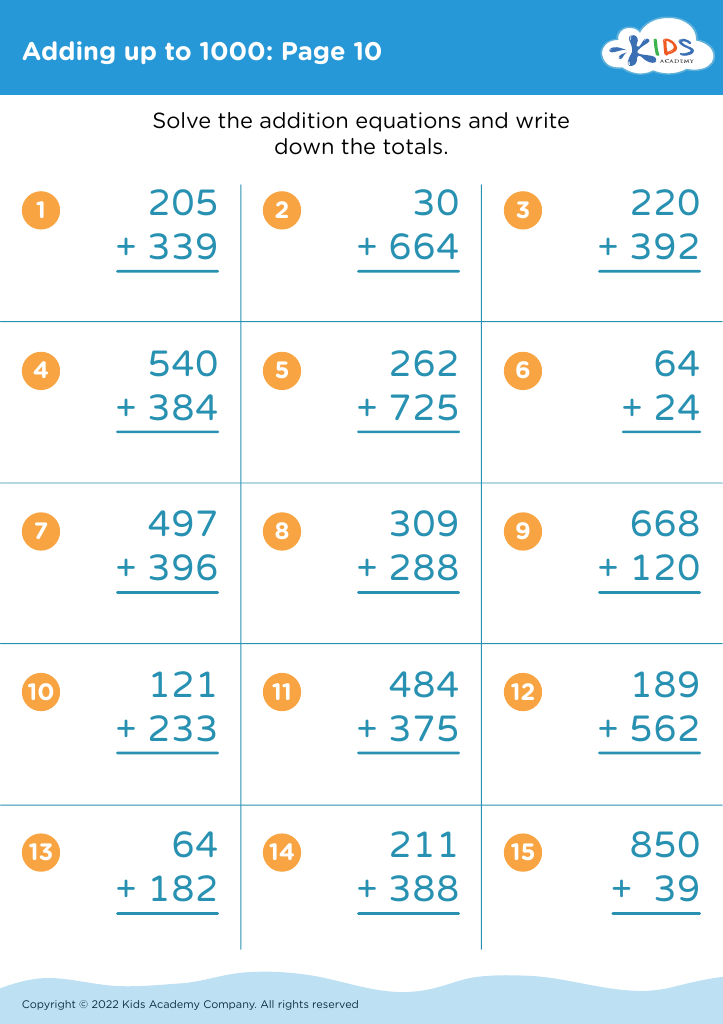
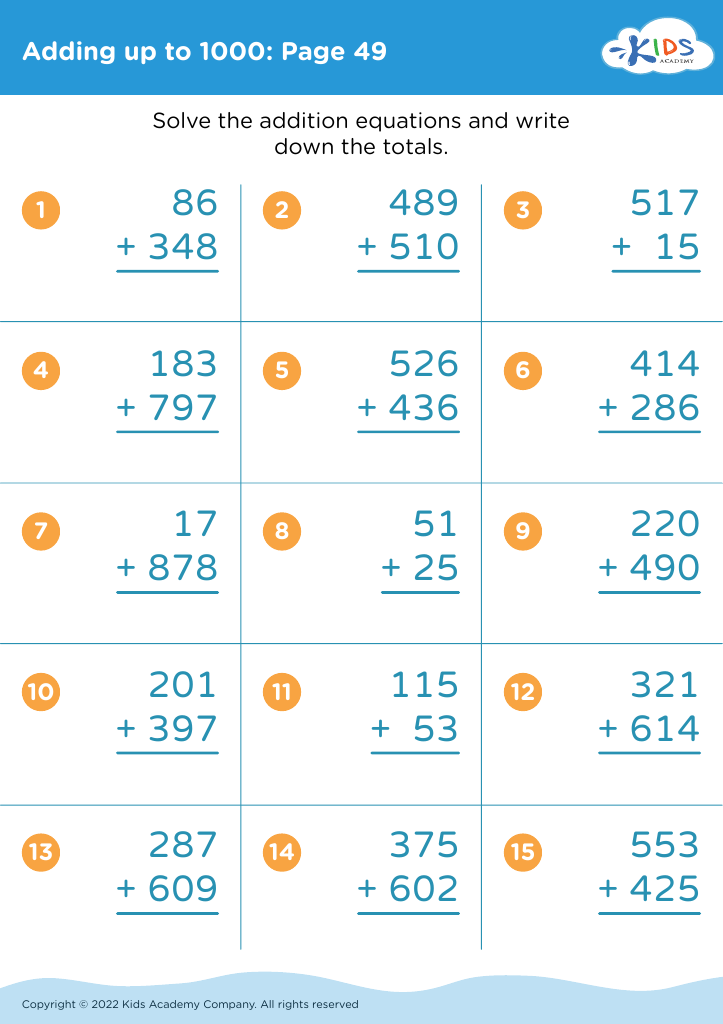
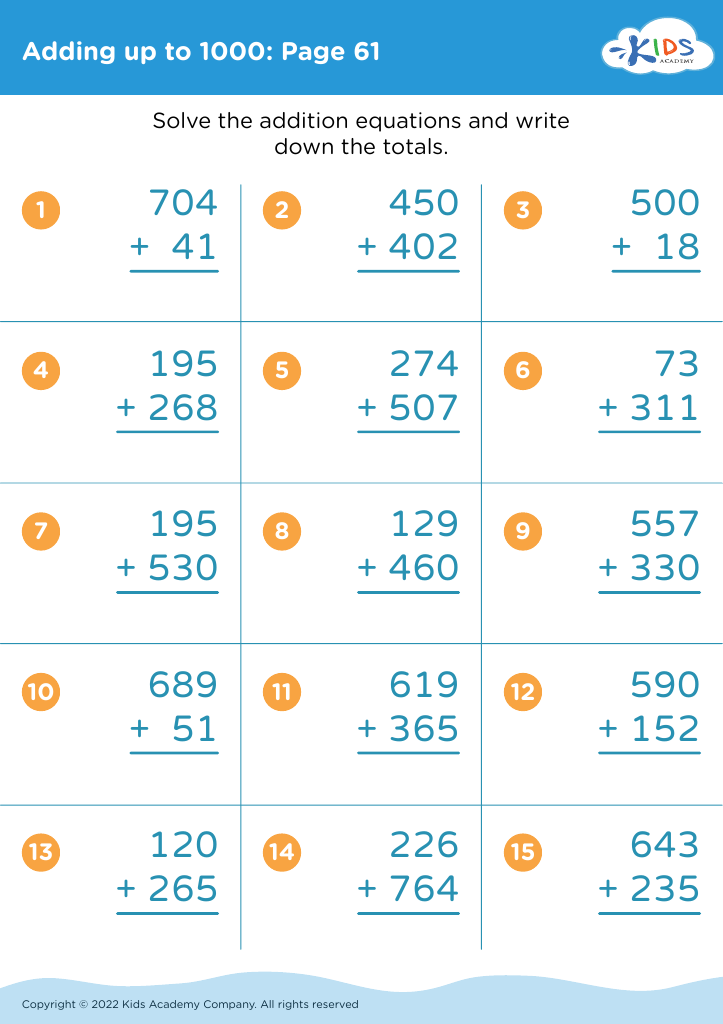
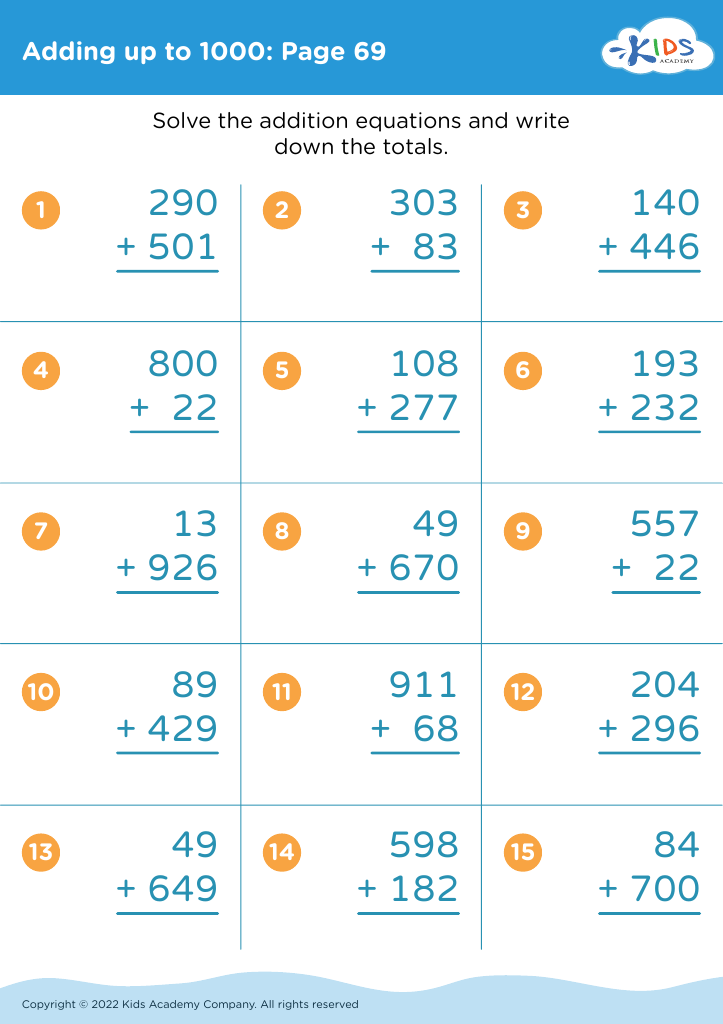
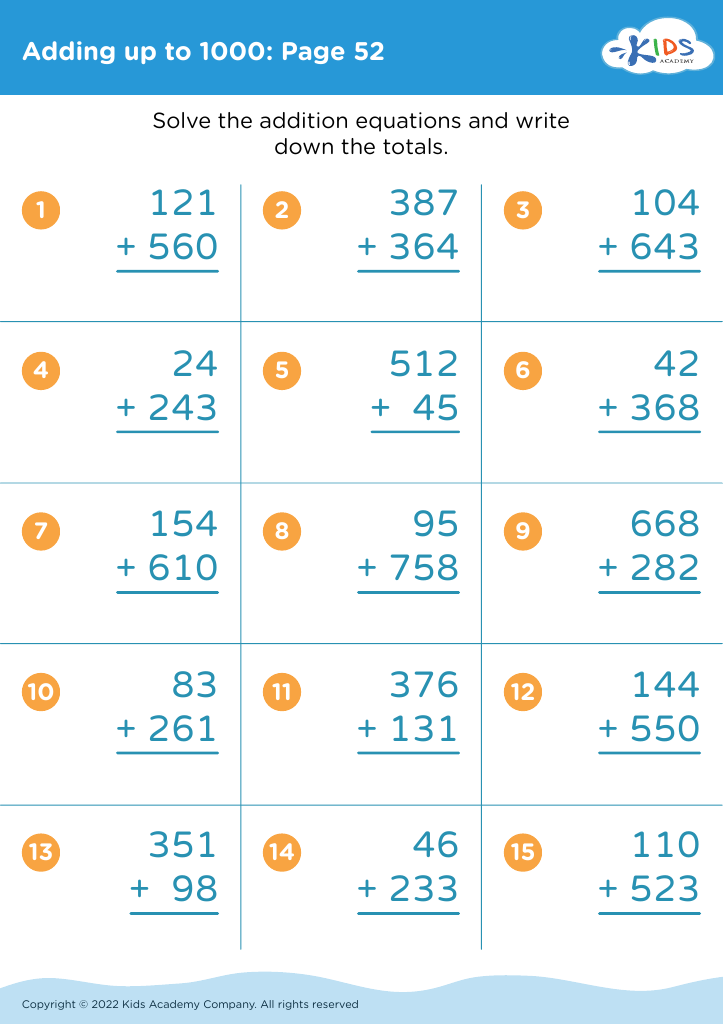


Fraction simplification and the concept of adding up to 1000 are vital for young learners, especially for those aged 5-9, as they serve as foundational skills in mathematics. Understanding fractions helps children grasp the concept of parts of a whole, which plays a crucial role in their daily experiences, such as sharing food or measuring ingredients. Simplifying fractions fosters clarity and precision, making it easier for students to solve problems and form connections between numbers.
Adding up to 1000 encourages numerical fluency and enhances mental math skills. At this age, children are developing their ability to visualize and manipulate numbers, which prepares them for more complex mathematical operations in the future. Engaging with these concepts can also spark interest in mathematics, promoting positive attitudes towards the subject.
For parents and teachers, emphasizing these lessons can strengthen critical thinking and problem-solving skills. By recognizing the importance of fraction simplification and accumulating numbers, educators can help children build confidence and competence in math. This early foundation is vital in a progressively mathematical world, enabling students to approach more advanced concepts with ease and curiosity as they advance in their education.