Fine Motor Skills Adding up to 1000 with Regrouping Worksheets for Ages 5-9
4 filtered results
-
From - To
Enhance your child’s fine motor skills with our engaging “Fine Motor Skills Adding up to 1000 with Regrouping” worksheets, perfect for ages 5-9. Designed to build essential math, coordination, and precision, these worksheets help young learners practice and master addition with regrouping. Each colorful and interactive sheet provides opportunities for consistent practice, ensuring your child gains confidence and proficiency in math. This resource supports developmental fine motor skills through hands-on activities and is ideal for parent-led or independent practice. Prepare your child for academic success with our expertly crafted worksheets available at Kids Academy.
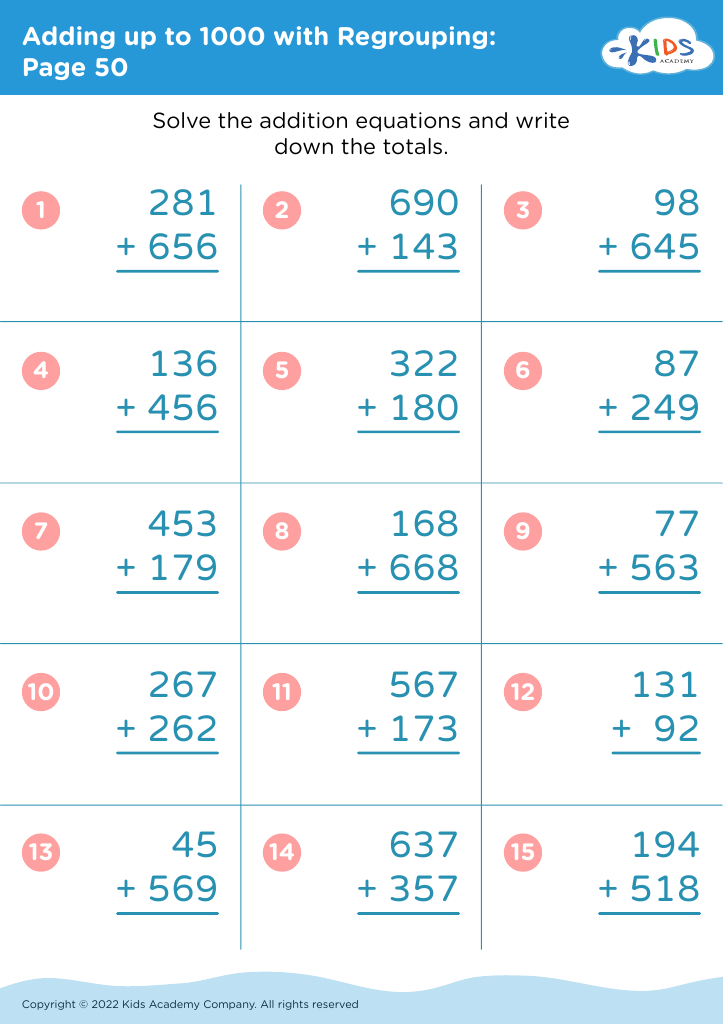
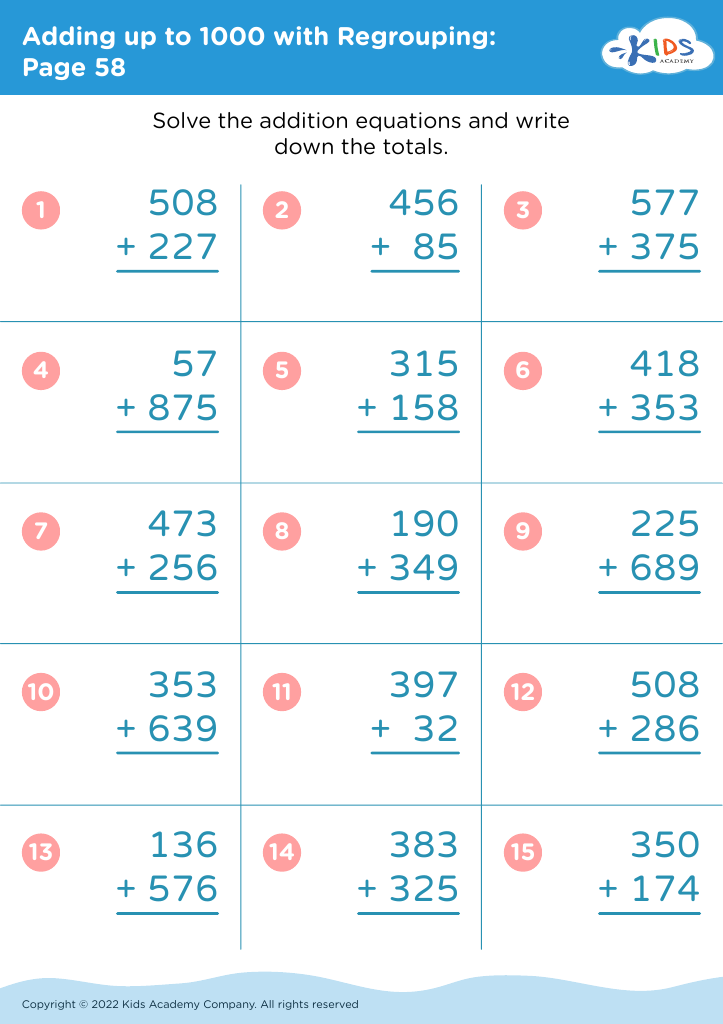
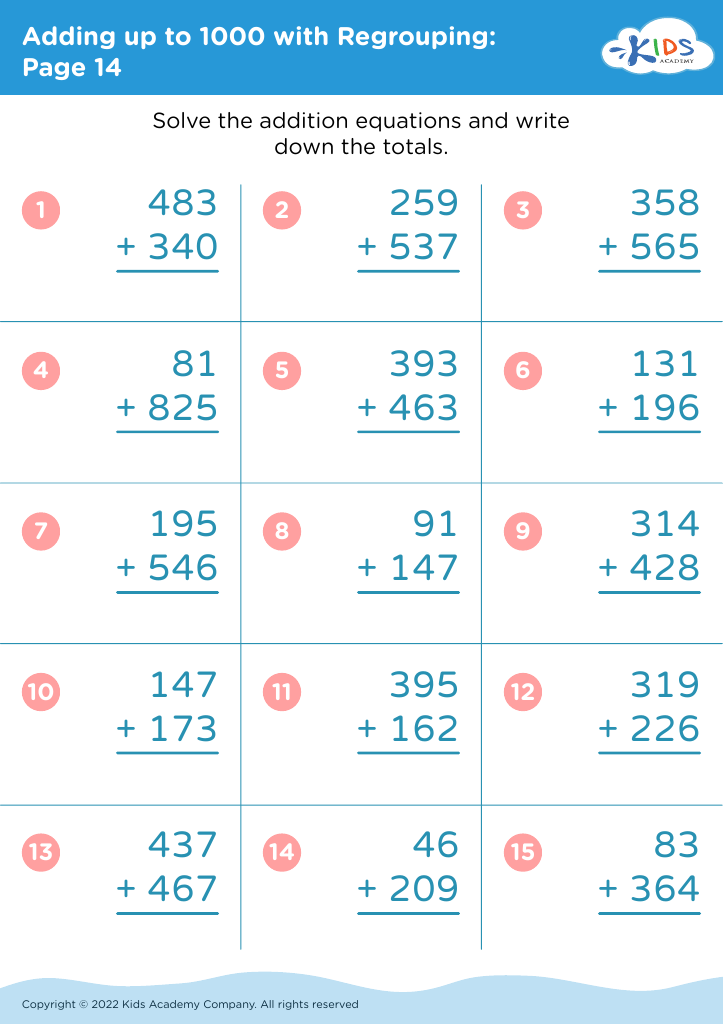
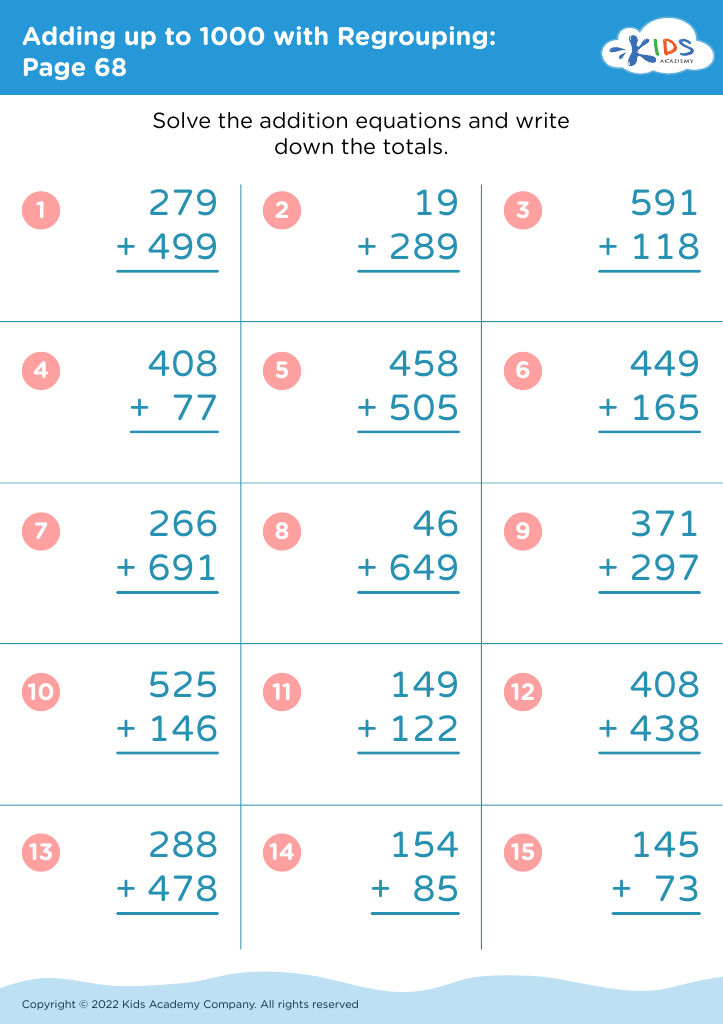


Fine motor skills are the essential abilities required for children to perform tasks that demand precision and coordination of small muscles, particularly in their hands and fingers. Developing these skills is crucial for ages 5-9 as it directly influences their capacity to execute everyday activities, from writing to buttoning shirts. Adding up to 1000 with regrouping when done through hands-on activities, such as using manipulatives or writing calculations, can enhance these motor skills significantly.
For parents and teachers, emphasizing fine motor skills development is essential for a number of reasons. Firstly, strengthening these skills builds a foundation for academic success; fluent handwriting, for instance, is key to efficient note-taking and examination performance. Consequently, active engagement with numeric tasks that involve detailed hand movements nurtures overall cognitive growth and spatial understanding.
Furthermore, these skills transcend academic settings, contributing to a child’s independence and self-esteem. Holding a pencil correctly, cutting with scissors, or tying shoelaces all stem from proficient fine motor abilities. Thus, by encouraging activities like adding numbers with regrouping, caregivers and educators provide structured practice that bolsters the physical and mental dexterity needed in broader life contexts. This proactive approach ultimately supports holistic development, preparing children for diverse challenges that lie ahead.