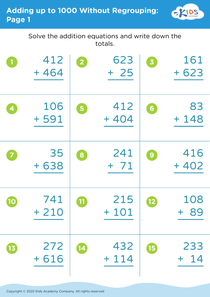
Fraction comparison Adding up to 1000 with Regrouping Worksheets for Ages 5-9
3 filtered results
-
From - To
Enhance your child's math skills with our "Fraction Comparison Adding up to 1000 with Regrouping Worksheets for Ages 5-9." These engaging and educational worksheets are designed to help young learners master the concept of comparing fractions while practicing addition with regrouping. Perfect for kids ages 5 to 9, each worksheet is carefully crafted to build confidence and boost proficiency in fundamental math skills. Our activities provide a fun and interactive way to learn, making complex topics accessible and enjoyable. Start today to support your child's educational journey and foster a love for mathematics!
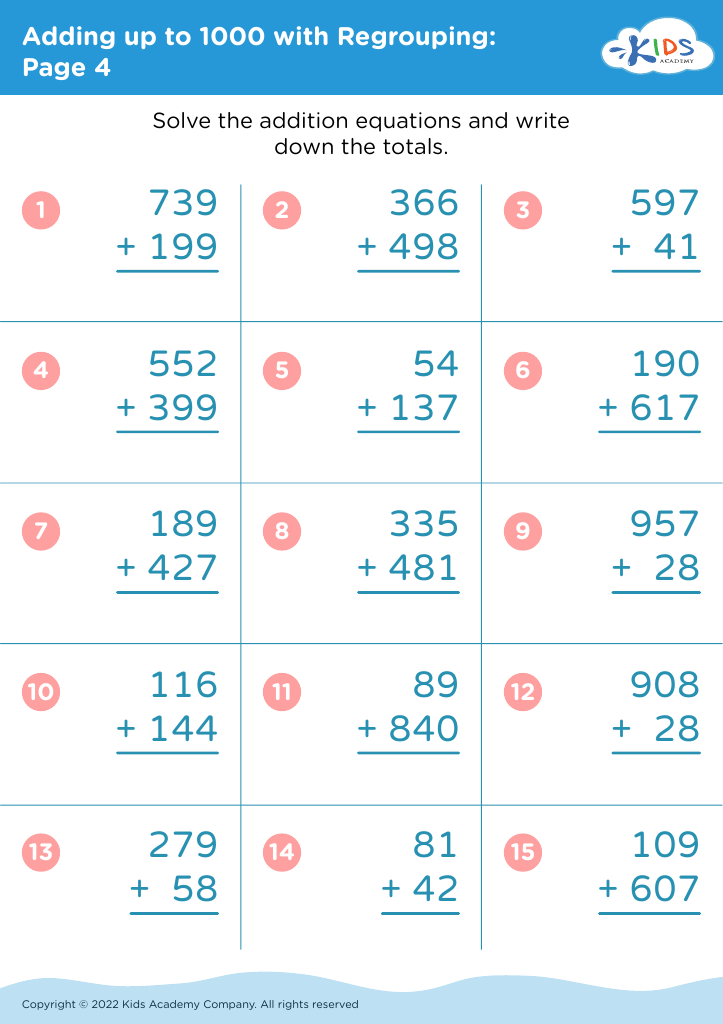
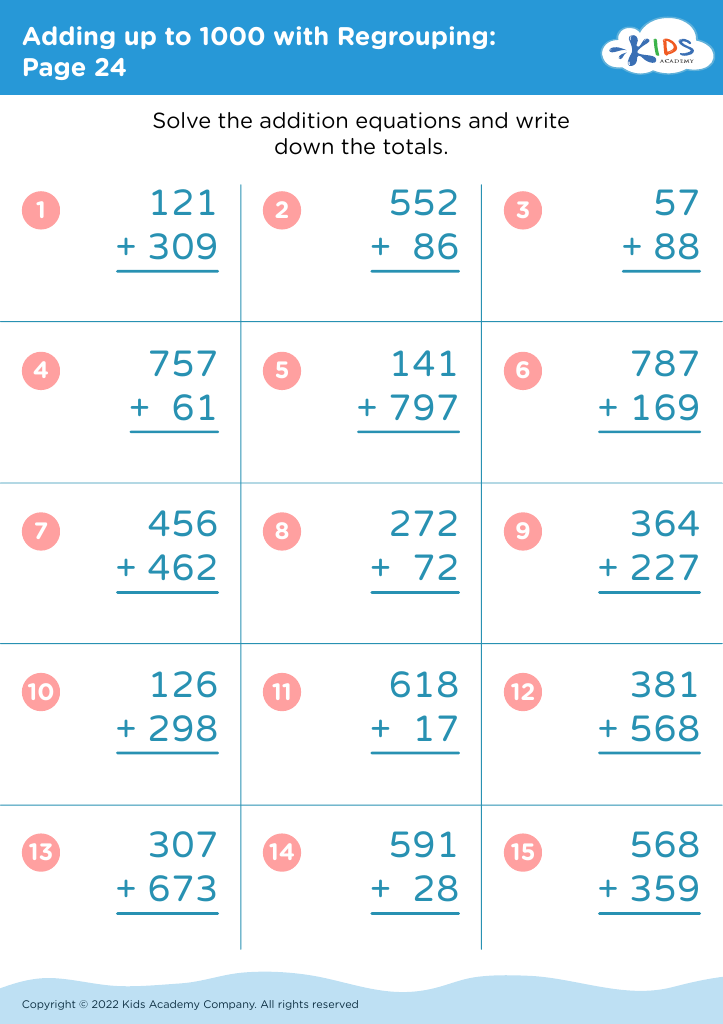
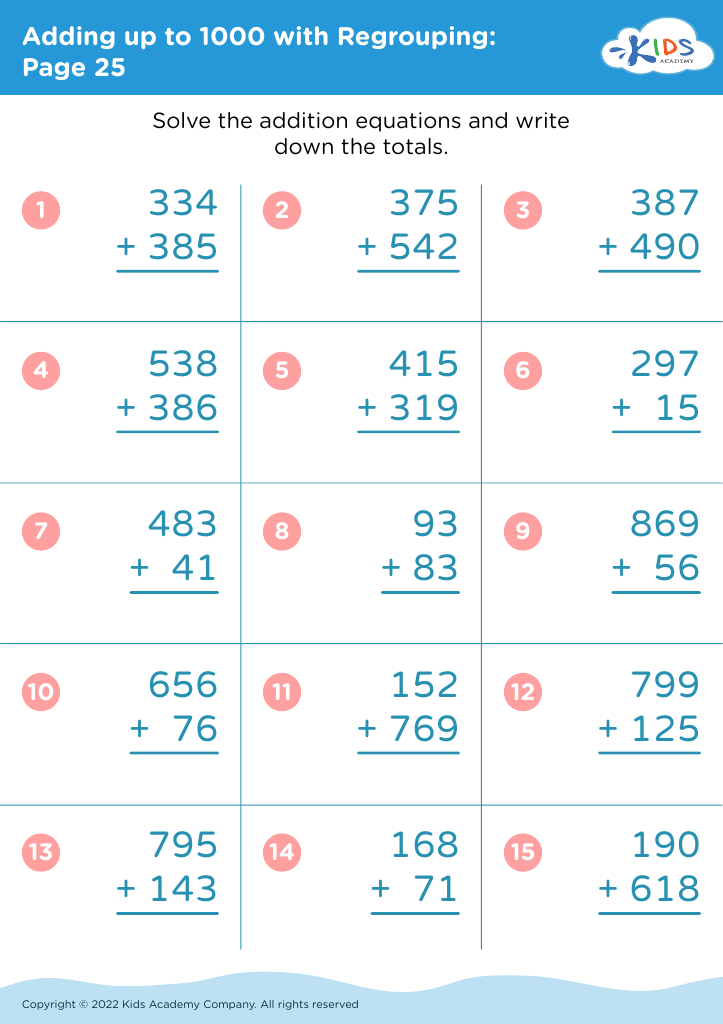


Parents and teachers should place importance on teaching fraction comparison and addition with regrouping up to 1000 for children aged 5-9, as these foundational math skills are critical for future academic success and everyday problem-solving. Teaching fraction comparison helps young learners develop a solid understanding of the relationship between numbers and parts of a whole, laying the groundwork for more complicated math concepts later on. It helps children visually and conceptually grasp how different fractions relate to each other, thereby enhancing their number sense.
Similarly, learning to add large numbers with regrouping introduces children to the intricacies of place value and the importance of carrying over numbers, which is essential for precise calculations. This skill is not just about getting the right answer but understanding the process, fostering a deeper appreciation for how numbers work together in larger systems. Additionally, mastering these skills builds self-confidence and promotes logical thinking, critical reasoning, and problem-solving abilities.
At ages 5-9, children's brains are incredibly receptive and capable of absorbing complex information. By introducing these concepts early, educators and parents ensure that children develop a strong mathematical foundation, helping them succeed in higher levels of education and in real-life tasks involving math, such as budgeting or cooking, in the future.