Math problem-solving Adding up to 1000 with Regrouping Worksheets for Ages 5-9
3 filtered results
-
From - To
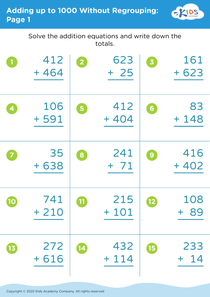
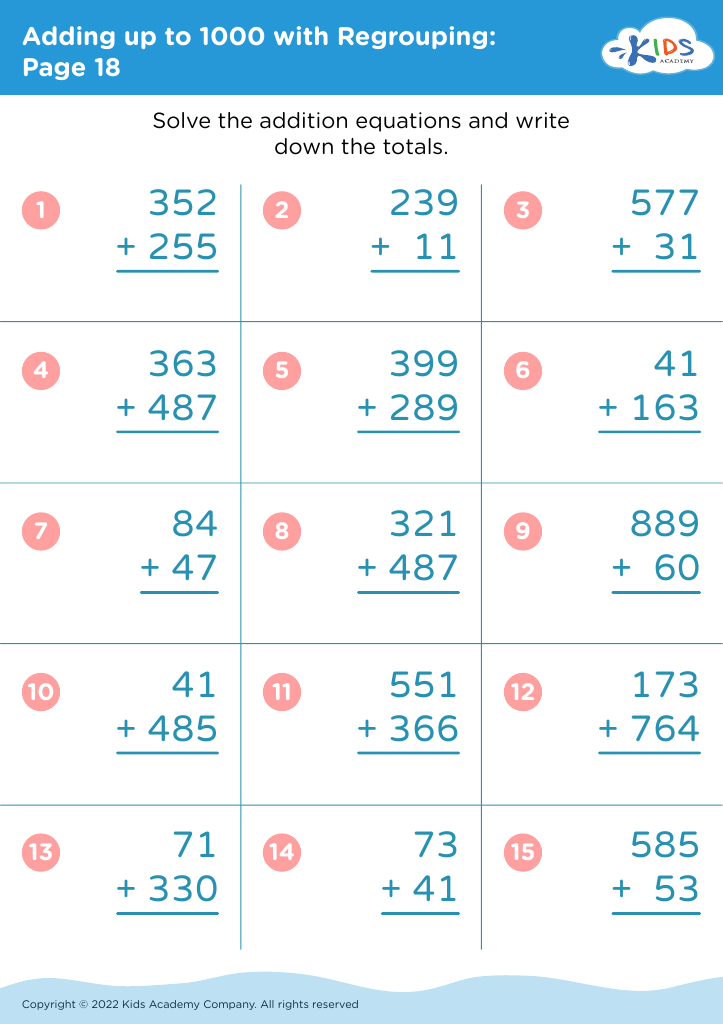
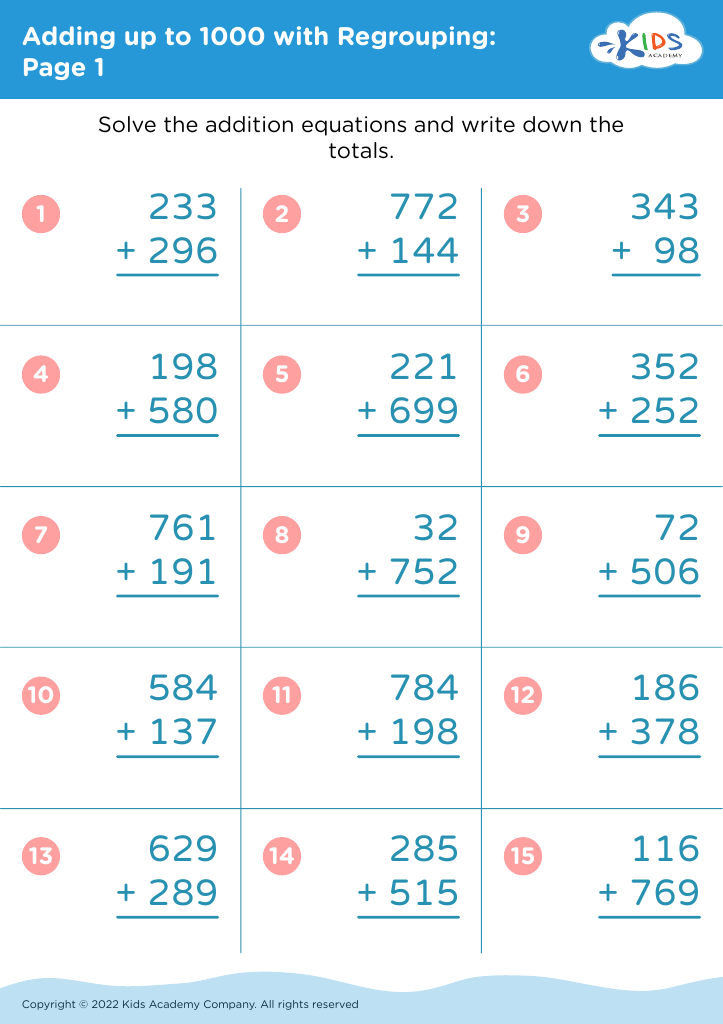
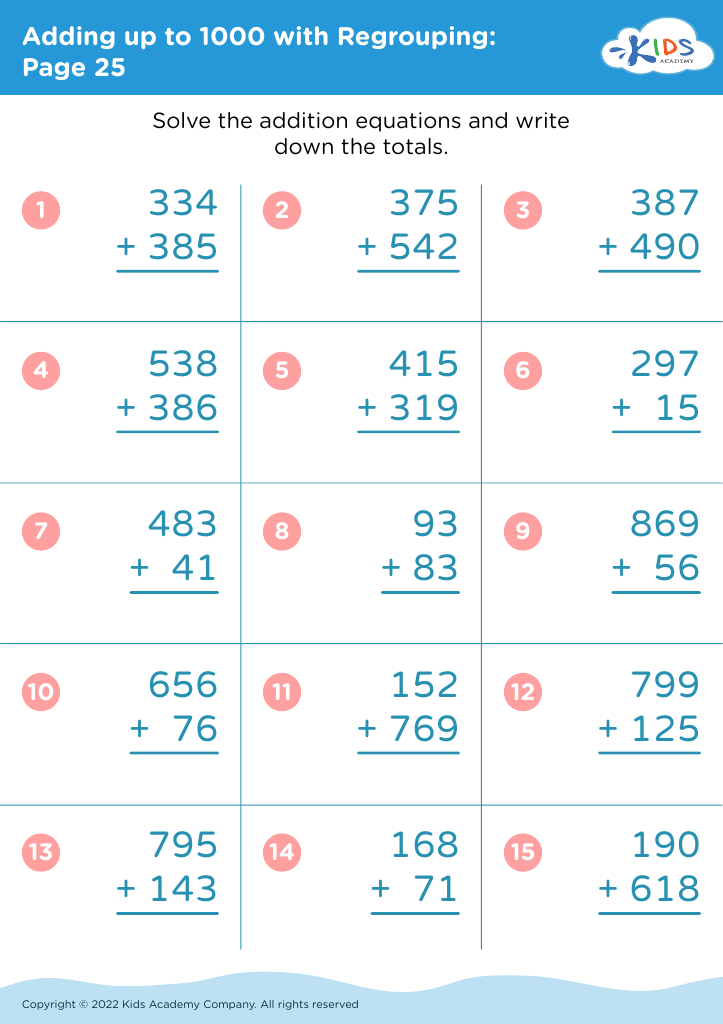
Unlock your child's mathematical potential with our "Adding Up to 1000 with Regrouping Worksheets," designed for ages 5-9. These engaging, printable worksheets provide essential practice in math problem-solving, emphasizing the skill of regrouping. Whether your child is struggling or looking to master their addition skills, our resources offer a variety of problems that boost confidence and understanding. Each worksheet features colorful illustrations and age-appropriate challenges to make learning fun and effective. Support your young learners by helping them navigate the world of addition, ensuring they can confidently tackle math problems with regrouping. Start enhancing their math journey today!


Parents and teachers should prioritize math problem-solving skills, including adding up to 1000 with regrouping, for children aged 5-9 because of its foundational role in early education. Understanding regrouping helps children develop essential number sense and improve their ability to handle larger calculations. It enhances cognitive skills, as regrouping requires students to think critically, analyze numbers, and effectively break them down into more manageable parts.
Moreover, mastering this technique promotes confidence in young learners, making them more willing to engage with math as they progress through school. This age group is highly receptive to abstract concepts, thus learning regrouping in a concrete way through practical examples will ease anxiety around math and foster a positive attitude.
Fostering problem-solving skills in early education establishes a strong backbone for advanced mathematical concepts later on. It also translates to real-life scenarios—such as budgeting, time management, and making informed decisions—all of which are critical skills in adulthood.
Additionally, parent engagement with their children's learning processes in math can reinforce these skills at home, creating a supportive environment where children feel empowered to take risks and ask questions in their educational journey.